
What Causes a High Water Bill With No Visible Leak?
Last Updated: November 16, 2026
Quick Summary
A high water bill with no visible leak usually comes from a running toilet, a dripping faucet or spigot, outdoor water use like irrigation or a pool auto-fill, or a hidden leak in a wall, slab, or service line. Run a water meter leak test to see whether water is moving while everything is off.
- A worn toilet flapper can leak silently all day and is the most common cause of a surprise high water bill.
- Put food coloring in the toilet tank and wait 15 minutes; color in the bowl means the flapper leaks.
- Shut off every water user, note the meter reading, wait 30 to 60 minutes, then read again.
- Compare gallons used and billing period days, not the dollar total, before assuming a leak.
- Call a plumber when the meter indicator spins with all fixtures off or a leak is inside a wall or slab.
Table of Contents
- Why Is My Water Bill So High All of a Sudden?
- Common Causes of High Water Bills in a Minnesota Home
- High Water Bill With No Visible Leak? Check These Hidden Spots
- How to Do a Water Meter Leak Test at Home
- Can a Running Toilet Cause a High Water Bill?
- How to Read Your Bill and Dispute a High Water Bill
- When to Call a Plumber About a High Water Bill
- Frequently Asked Questions
Why Is My Water Bill So High All of a Sudden?
A high water bill with no obvious explanation usually comes down to one of three things: a leak you can’t see, a fixture that runs without you noticing, or a real change in how much water your household used. The good news is that you can narrow it down yourself in about an hour. A billing cycle that jumps without warning is one of the most common reasons homeowners start looking into this problem.
Start with the simplest question: did anything change? Houseguests, a new sprinkler schedule, a pool top-off, a teenager taking longer showers. If nothing changed, the meter test below will tell you whether water is leaving your home when it shouldn’t.
The common causes of high water bills fall into a short list, and most of them are fixable without tearing into a wall.
Common Causes of High Water Bills in a Minnesota Home
Most sudden spikes trace back to a running toilet, a dripping faucet, or water going outside the house. Minnesota homes add a few seasonal twists, like irrigation running longer in July and frozen pipe issues in January.
Here’s how the usual suspects break down.
Running Toilets and Dripping Faucets
A running toilet is one of the most common culprits behind a sudden high bill.
Dripping faucets waste water too, though usually less than a running toilet. A slow drip from a showerhead or a leaky outdoor spigot adds up over a full billing period.
Two quick checks:
- Put a few drops of food coloring in the toilet tank. Wait 15 minutes without flushing. Color in the bowl means the flapper is leaking.
- Listen at each faucet and spigot for a hiss or drip when everything is off.
If your toilet is the problem, our team handles toilet repair and replacement across Plymouth and the West Metro.
Irrigation, Pools, and Seasonal Water Use
Summer bills jump for reasons that have nothing to do with a leak.
A stuck sprinkler valve is sneaky.
Watch for these seasonal drivers:
- Sprinkler zones that run longer than scheduled
- A pool auto-fill valve that never fully closes
- New sod or garden beds getting daily watering
Compare the same month last year. A summer spike that matches your watering habits is normal. A spike in February is not.
Here is a quick look at the usual suspects behind a sudden spike, and how to check each one.
| Cause | How to check it | What it means |
|---|---|---|
| Running toilet | Food coloring in tank, wait 15 minutes | Color in bowl means flapper is leaking |
| Dripping faucet or spigot | Listen for a hiss or drip when off | Slow drip adds up over a billing period |
| Stuck sprinkler valve | Zone runs when controller says it is off | Water goes into yard without running a head |
| Pool auto-fill valve | Valve that never fully closes | Constant topping off pulls a lot of water |
| New sod or garden beds | Daily watering in first season | New landscaping drinks more than established plants |
| Outdoor spigot split inside wall | Leaks only when the valve is open | Common after a freeze if not drained |
| Service line leak | Meter moves with house valve closed | Sometimes a soft, sunken strip in the yard |
| Slab leak | Warm spot, musty smell, meter movement | Pipes beneath the floor, needs a licensed plumber |
High Water Bill With No Visible Leak? Check These Hidden Spots
Hidden leaks live where you don’t look: under sinks, behind the washing machine, under the dishwasher, inside walls, and underground.
Work through this list in order, starting with the spots that are easiest to reach.
Indoor supply and drain connections
- Under every sink. Run a finger along the supply lines and the cabinet floor. Damp wood or a white mineral crust means a leak.
- Behind and under the washing machine. Check both hoses and the floor behind the unit. A pinhole in a rubber hose can spray a fine mist for months.
- Around the water heater. Look for moisture at the base, rust on the fittings, or water pooling in the drain pan. A failing tank can also drive up your gas or electric bill, so if you spot trouble here, have a professional take a look before it turns into a bigger problem. Water heater repair is one of the services we offer.
Outdoor and underground leaks
- Outdoor spigots and the irrigation shutoff. A frost-proof spigot can split inside the wall and only leak when the valve is open. In a Minnesota climate, a spigot that wasn’t drained before the first hard freeze is a common culprit.
- The irrigation system. A cracked lateral line or a stuck zone valve can push water into the yard without ever running a sprinkler head. Look for a soggy patch, a greener strip of grass, or a section that stays wet when the system is off.
- The service line between the meter and the house. This is the pipe most homeowners never think about. A leak here shows up as unexplained meter movement even when the house valve is closed, and sometimes as a soft, sunken strip in the yard or a higher-than-usual water bill that never resolves.
Signs that point to a hidden leak rather than a usage change
- The meter leak indicator moves with every fixture off.
- Water pressure at the taps has dropped noticeably.
- You hear water running when nothing is on.
Found water under a sink? Our guide on how to stop a water leak under the sink walks you through shutting it down and limiting damage.
How to Do a Water Meter Leak Test at Home
A water meter leak test tells you in about 30 minutes whether water is moving through your system when nothing is running.
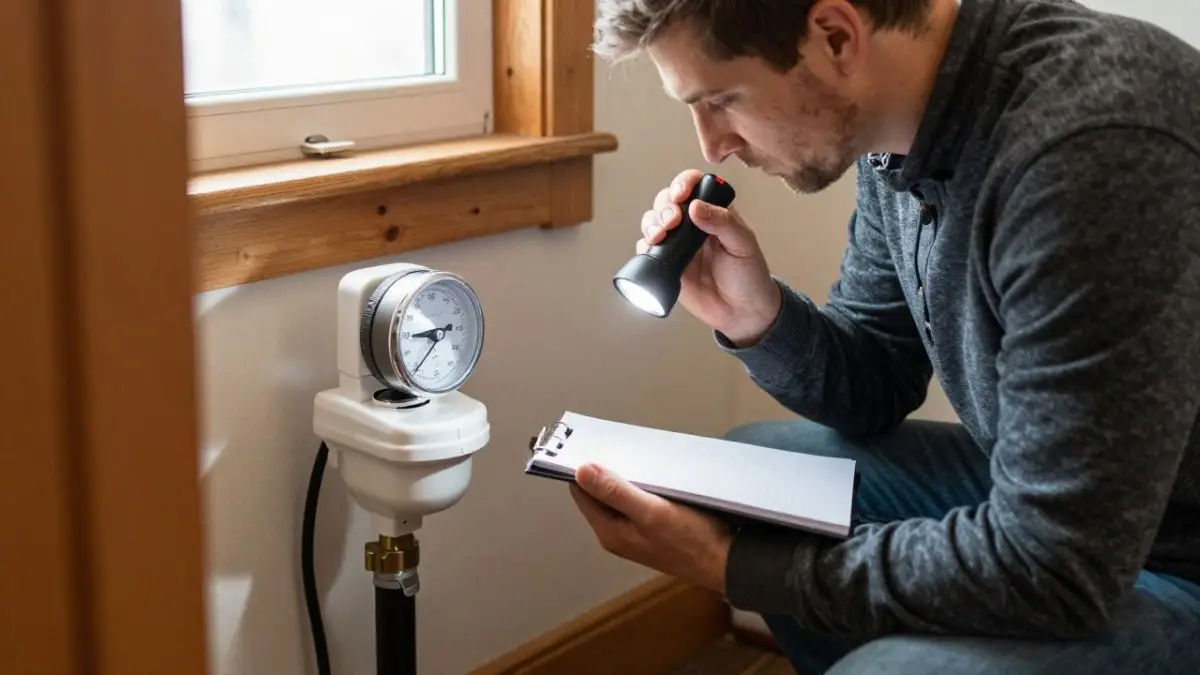
Here’s the step-by-step:
- Shut off every water user. No faucets, no ice maker, no washing machine, no irrigation cycle running.
- Find your meter. Usually in the basement, utility closet, or a pit near the curb.
- Watch the leak indicator. Most meters have a small dial or triangle that spins when water moves. If it’s spinning with everything off, water is flowing.
- Write down the reading. Note the numbers on the main dial.
- Wait 30 to 60 minutes. Don’t use any water during this window.
- Read the meter again. Any change means a leak somewhere between the meter and your fixtures.
- Isolate the house side. If you have an indoor shutoff valve after the meter, close it and repeat the test. Movement with the house valve closed points to a leak in the service line.
If the indicator stays still, your bill is likely a usage issue, not a leak. Our plumbing maintenance tips for homeowners cover the checks that catch these problems early.
Can a Running Toilet Cause a High Water Bill?
Yes. A running toilet is the most common cause of a surprise high water bill, and it’s often completely silent.
The fix is usually cheap: a new flapper or fill valve. If you’d rather check it yourself first, our step-by-step toilet repair guide covers the diagnosis and the parts.
Watch out: a toilet that runs only at night, or one in a guest bathroom nobody uses, can leak for a full billing cycle before anyone notices.
How to Read Your Bill and Dispute a High Water Bill
Before you assume a leak, read the bill closely.
Compare the right numbers
- The billing period dates. A 35-day cycle costs more than a 28-day cycle even if your daily use is identical. Count the days before you panic.
- The usage number, in gallons. Most bills show gallons used, not just the dollar total. Gallons are the number that matters.
- The meter readings. Compare the start and end readings printed on the bill to the readings on your actual meter. If they don’t match, the bill may be based on an estimate.
How to run a bill comparison
- Pull the last 12 months of bills, either from the utility’s online portal or from paper copies.
- Write down the gallons used and the number of days in each billing period.
- Divide gallons by days to get a daily average for each month.
- Compare this month’s daily average to the same month last year and to the month before.
- If the daily average jumped and nothing in the household changed, run the meter test described above before calling anyone.
When the bill looks wrong
If the usage itself jumped, you likely have a real change or a leak. If only the dollar amount moved, check the rate and the period length first. When you suspect a meter or billing error, call your water utility and ask for:
- The actual meter reading on the date the bill closed
- Whether the read was estimated or actual
- A re-read of the meter if the numbers don’t match
Utilities deal with these questions regularly, and a polite call with your meter readings in hand gets results.
Watch out: an estimated read can carry forward for more than one cycle, so a bill that looks wrong this month may correct itself next month when the utility does an actual read.
When to Call a Plumber About a High Water Bill
Call a plumber when the meter test shows movement with everything off, when you can’t find the source, or when a leak is inside a wall, slab, or the service line.
Signs it’s time to bring someone in:
- The meter indicator spins with all fixtures off
- Water stains, soft drywall, or a musty smell near a wall or floor
- A water bill that stays high after you’ve fixed the obvious issues
A licensed plumber can trace a hidden leak with the right tools instead of opening walls at random. If you want to understand how that process works before you book, read about honest plumbing diagnostics in the West Metro.
A high water bill is usually a small problem wearing a big price tag. Run the meter test, check every toilet, and compare your gallons from one cycle to the next.
When the source isn’t obvious, Brass Tacks Plumbing, Heating & Cooling is a family-owned company with licensed technicians that can help track it down.
Frequently Asked Questions
Why did my water bill triple in one month?
A sudden jump that large usually points to one of three things: a toilet that runs continuously, a hidden leak in a supply line or irrigation zone, or a meter or billing error. Start by shutting off every fixture and watching your meter for movement. If the dial still spins, water is moving somewhere you cannot see. A running toilet alone can waste hundreds of gallons a day, which adds up fast over a billing period.
How can I check for a water leak if I cannot see one?
Use a water meter leak test. Turn off all faucets, appliances, and outdoor spigots, then note the meter reading. Wait 30 to 60 minutes without using any water and read it again. Any movement means water is flowing somewhere. Check toilet flappers with a dye test, inspect the water heater and supply lines, and look at your irrigation controller before assuming the worst.
Am I responsible for a high water bill caused by a leak?
In most cases, yes. Utility policies vary, but leaks on the homeowner’s side of the meter are typically the homeowner’s responsibility, including the cost of the water. Some utilities offer adjustments for qualifying leaks, so call and ask what your provider allows. Fix the leak first, keep your repair receipts, and then request a review of the bill with your water utility.
Can a water softener or irrigation system cause a high water bill?
Both can. A softener that regenerates constantly because of a stuck valve or timer fault wastes water around the clock. Irrigation systems are a frequent culprit too: a stuck zone valve, broken head, or controller running after heavy rain can push outdoor watering far past what your lawn needs. Check the controller schedule and look for soggy patches in the yard.

