7 Alternatives to Traditional Tank Water Heaters
Quick Summary
Tankless, heat pump, and hybrid water heaters are the main alternatives to a traditional tank water heater. Tankless units heat water only on demand and save floor space, while heat pump models use far less electricity but work best in warmer spaces. The right choice depends on household hot water use, available space, and gas or electrical service.
- Tankless units heat water only when a tap or appliance calls for it.
- Tankless units avoid standby heat loss that a storage tank wastes all day.
- Heat pump units lose efficiency when the surrounding air is cold.
- An undersized tankless unit can fall short at peak demand and in winter.
- Electrical panel, gas line, and venting needs can raise total installation cost.
Table of Contents
- Why Homeowners Look Beyond the Traditional Tank
- Tankless Water Heaters: On-Demand Hot Water
- Heat Pump Water Heaters and How They Save Energy
- Tankless vs Tank Water Heater Energy Savings in Real Homes
- Hybrid, Solar, and Other Less Common Options
- Matching a Water Heater to Your Household and Minnesota Winters
- Schedule a Water Heater Assessment With Brass Tacks
- Frequently Asked Questions
Before you buy or replace a water heater, know that the traditional tank is not your only option. Brass Tacks Plumbing, Heating & Cooling works with homeowners across the West Metro, including Plymouth, Wayzata, Minnetonka, and Maple Grove. A storage tank is still a sound choice for many homes, but tankless units, heat pump water heaters, and a few less common systems can fit specific households better, especially in a Minnesota winter when incoming water is very cold.
Last Updated: November 16, 2026
Why Homeowners Look Beyond the Traditional Tank
Most West Metro homes still have a conventional storage tank, usually 40 to 50 gallons, that keeps water heated all day whether anyone is home or not.
A tank reheats stored water continuously, losing some heat to the surrounding room even when no one is using it. That standby loss is the main reason newer designs are attractive. Tankless and heat pump models change how the heat is produced, which changes the trade-offs in cost, space, and performance.
Tankless Water Heaters: On-Demand Hot Water
A tankless water heater, sometimes called a tank water heater alternative, heats water only when a tap or appliance calls for it. Our guide on whether the upgrade is worth the cost walks through the numbers before you commit.
The main limitation is flow rate. A tankless unit delivers hot water at a set temperature rise, so when two showers and a dishwasher run at once, output can drop unless the unit is properly sized.
Tankless Water Heater vs Tank Cost
Upfront cost is where tankless units look most expensive. See the pipe, gas line, PEX, venting, and flushing details that affect the total job. You can read what tankless installation typically involves and what drives the final price for West Metro homes.
The longer-term picture is different. Tankless units generally last longer than tanks and waste less energy keeping water hot, so total cost of ownership can narrow over time.
Heat Pump Water Heaters and How They Save Energy
A heat pump water heater keeps a storage tank but heats the water with a heat pump instead of a resistance element or burner.
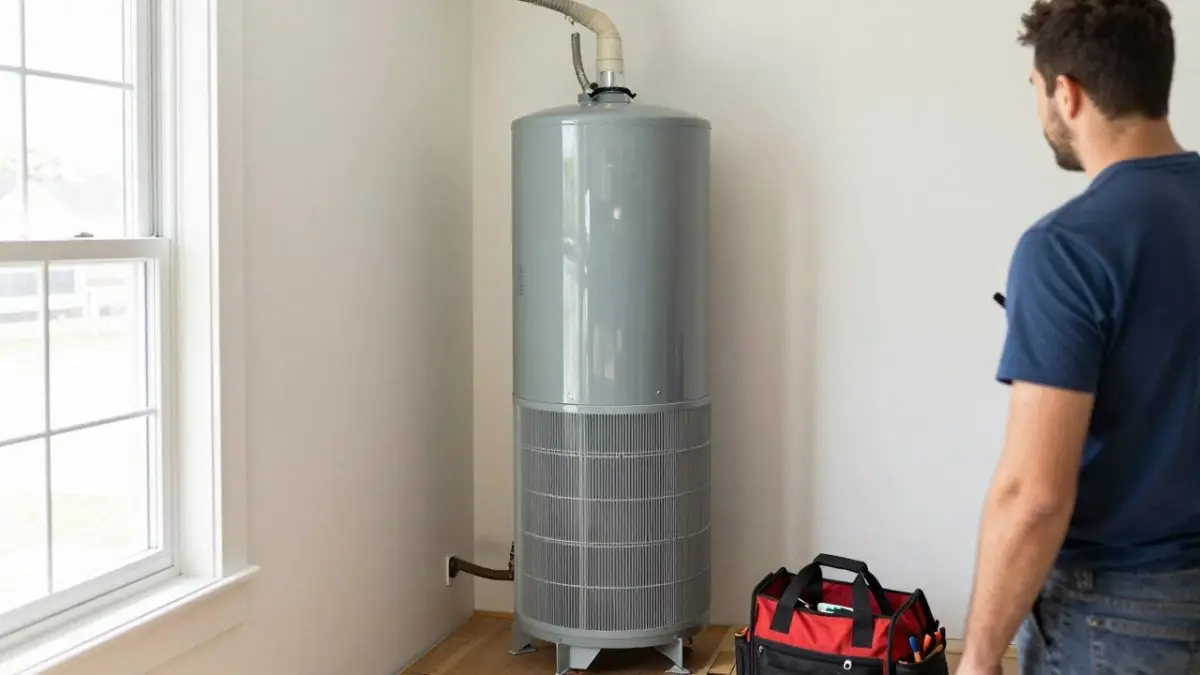
Heat pump units have trade-offs for Minnesota homes. Their efficiency drops in cold air, so a unit in an unheated basement or garage during January will work harder and produce less hot water than one in a heated space.
Tankless vs Tank Water Heater Energy Savings in Real Homes
Energy savings are real, but not automatic, and the size of the gain depends on three things: how much hot water you use, how much standby loss your current tank has, and how cold the incoming water is. Understanding those mechanisms is more useful than a generic percentage, because the same tankless unit can save a lot in one home and very little in another.
Where the savings actually come from
A storage tank keeps a full cylinder of water hot around the clock. Even a well-insulated tank loses heat to the surrounding room, and the burner or element fires back up to replace it.
A common pattern is that a two-person household with short, spread-out hot water use sees the clearest benefit from tankless, because the tank would otherwise sit hot all day for very little draw.
How to estimate your own case
You do not need a lab to get a rough read. Start with your current tank’s age and insulation. Older tanks lose more standby heat, so replacing one with tankless tends to show a bigger difference.
Watch out: an undersized tankless unit runs continuously and can waste energy while still disappointing at the tap, and an oversized unit short-cycles. Both erase the savings you were counting on, which is why sizing against real peak demand and winter inlet temperature matters more than the efficiency number on the box.
The maintenance side of savings
Tankless savings also depend on upkeep. In areas with harder water, scale can build up in the heat exchanger and reduce efficiency over time. A tank has its own maintenance needs, including flushing sediment, but the failure modes differ. To protect performance and lifespan, ask about maintenance options and whether a water softener makes sense for your home. Hard water is common in parts of the West Metro and affects both tankless and tank performance.
What this means for your decision
The honest answer is that tankless can save energy, but the amount varies enough that it should not be the only reason you choose it. If you want to check whether an electric unit suits your home, electrical needs, sizing, and maintenance are covered on our page for West Metro homes. Space, venting, gas capacity, and how your household uses hot water often matter more.
Hybrid, Solar, and Other Less Common Options
Beyond tankless and heat pump tanks, a few other systems come up, and each has practical installation requirements that decide whether it is even feasible in your home. This is the part most guides skip, and it is often where a promising option falls apart after the quote.
Hybrid water heaters
A hybrid unit pairs a heat pump with electric resistance backup. The heat pump handles routine demand efficiently, and the resistance element kicks in during cold snaps or high demand. That flexibility is useful in Minnesota, but hybrids need more space and airflow than a standard tank and still rely on the surrounding air temperature. In a cold, unfinished basement, the heat pump portion works harder and the backup element does more of the heating, narrowing the efficiency advantage.
Solar water heating
Solar water heating uses rooftop collectors and a storage tank, and it works best with a backup heater because winter daylight is short and panels can be snow-covered. The practical requirements are significant: roof space with good sun exposure, structural suitability, a place for the storage tank, and freeze protection for the collector loop in cold weather. Many systems use a closed loop with antifreeze to avoid freezing, which adds components and maintenance.
Indirect water heaters
An indirect water heater uses a boiler to heat stored water through a heat exchanger. It can be a strong fit in homes that already have a boiler for space heating, because it leverages equipment you are already maintaining. The trade-off is that it ties your hot water to the boiler, so a boiler outage means no hot water, and it needs space near the boiler and proper controls.
The retrofit details that decide feasibility
Before any of these options is realistic, a few practical checks matter:
- Electrical panel capacity. Heat pump and hybrid units, and electric tankless, draw significant power. An older panel may not have room for the required circuit, and a panel upgrade adds cost and scope.
- Gas line sizing. Gas tankless units often need a larger gas line than a tank, and the meter and piping have to support the unit’s input. This is a common hidden cost.
- Venting. Gas tankless and some other units need a vent path through a wall or roof, and venting rules and clearances affect where the unit can go.
- Condensate drainage. High-efficiency gas units and heat pump water heaters produce condensate that has to drain somewhere, which may mean a pump or a new drain line.
Watch out: a unit that fits the budget on paper can become a much larger project once panel capacity, gas sizing, venting, and drainage are accounted for. Getting those checked before you commit is the difference between a smooth install and a surprise.
How to weigh these options
For most homes, the realistic shortlist is a standard tank, a gas or electric tankless unit, or a heat pump tank. Hybrid, solar, and indirect systems make sense in specific situations, such as a home with an existing boiler or a homeowner planning a larger energy upgrade. If you are considering one of these, an onsite assessment will tell you what your electrical service, gas supply, venting, and space can actually support.
Matching a Water Heater to Your Household and Minnesota Winters
Start with your household. Count the people who live in the home, note when hot water runs most, and think about whether multiple bathrooms are in use at the same time.
Minnesota winters add a factor many guides ignore. Incoming water temperatures can drop sharply in January, so any water heater has to work harder to reach the same output.
Here is a summary of how the main options compare for a typical West Metro home:
| Option | Best For | Main Trade-Off |
|---|---|---|
| Storage tank | Standard budgets and simple swaps | Standby heat loss and floor space |
| Gas tankless | Households with high peak demand and limited space | Higher upfront cost and venting work |
| Electric tankless | Smaller households or homes without gas | Electrical capacity and flow limits |
| Heat pump tank | Warm, well-ventilated spaces | Lower output in cold air and more space needed |
Do not take the table as a verdict. Your home, your water use, and your electrical or gas service decide which option makes sense.
Schedule a Water Heater Assessment With Brass Tacks
If you are weighing these options, the most useful next step is an onsite assessment. You can also review the full range of water heater services offered locally before booking. An onsite assessment can look at your current unit, your gas or electrical service, your venting, and how your household uses hot water, then explain which options may fit your home.
Frequently Asked Questions
What are some alternatives to a traditional water heater?
The main alternatives are tankless (on-demand) water heaters, heat pump water heaters, hybrid models that combine a heat pump with a tank, and solar water heaters that use rooftop collectors to preheat water. Each one trades upfront cost, installation complexity, and efficiency differently. A tankless unit heats water only when a tap opens, which can reduce standby heat loss but may require a larger gas line or electrical service. A heat pump unit pulls heat from the surrounding air into a tank, which is efficient but needs enough space and air volume to work well. Solar systems depend on sun exposure and usually still need a backup heater, which matters during long Minnesota winters.
Why don’t plumbers like tankless water heaters?
Many plumbers are not opposed to tankless water heaters, but installations are more demanding. Tankless units often need upgraded gas piping or a higher-amperage electrical circuit, proper venting for condensing models, and a service plan for periodic descaling where water is hard. Those requirements can add time and cost to an installation. When a tankless system is sized and installed correctly, it performs well, and a licensed installer can confirm whether your home is a good fit before you commit.
How does a heat pump water heater compare with a traditional tank?
A heat pump water heater keeps a storage tank but uses a compressor to move heat from the surrounding air into the water, so it uses substantially less electricity than a standard electric resistance tank. It needs more space, typically a utility room or basement area with enough air volume, and it can cool that space slightly as it runs. In a cold basement in Minnesota, output and efficiency drop as the air gets colder, so the unit may rely on its electric backup heating element more often in winter. Confirm the expected performance for your installed location before buying.
Are tankless water heaters worth considering for a home?
They can be, especially for households that use hot water in short bursts and have room for a wall-mounted unit. The most common reasons to choose tankless are continuous hot water, space savings, and a longer expected service life for the unit itself. The main drawbacks are higher installation costs in many homes, the need for periodic maintenance in hard-water areas, and flow rate limits when several fixtures run at once. Compare your household demand, your fuel source, and the cost of any required upgrades before deciding. Brass Tacks can assess your home during a service visit.

