

RADIANT FLOOR HEATING
Radiant Floor Heating in Plymouth & the West Metro
Brass Tacks Plumbing, Heating & Cooling installs and repairs hot-water (hydronic) in-floor heating for homes, garages and shops in Plymouth and the West Metro. We also purge air from the lines, track down cold zones and service the boiler or water heater that runs the system.
How Hydronic Floor Heat Works
Hydronic radiant heat pumps warm water through tubing in the floor, so the floor itself becomes the heater. The U.S. Department of Energy calls hydronic systems the most popular and cost-effective radiant heating for heating-dominated climates like Minnesota.
Tubing in the floor
Loops of tubing run through a concrete slab or a thin layer over the subfloor (a “wet” install), or under the floor in the joist space (a “dry” install, which has to run hotter).
A heat source
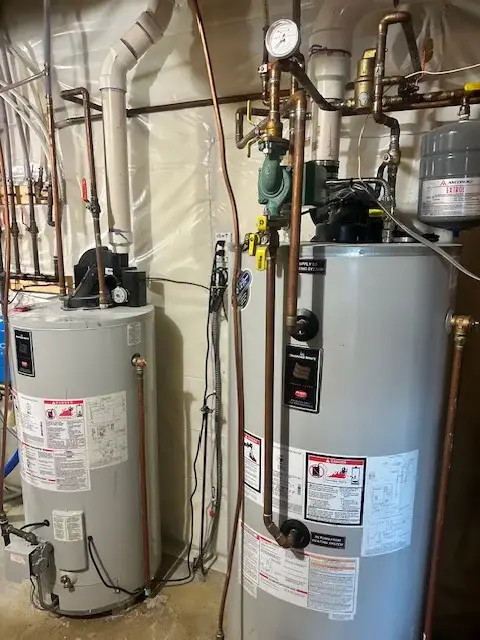
A boiler heats the water in most systems, and some smaller systems use a dedicated water heater. A circulator pump moves the water through the loops.
Zones and thermostats
Each zone has its own loop and thermostat. Zone valves or pumps control how much hot water each loop gets, so rooms can be kept at different temperatures.
No duct losses
The DOE says radiant heating is more efficient than baseboard heat and usually more efficient than forced air, partly because no heat is lost through ducts.
Source: U.S. Department of Energy, Energy Saver: Radiant Heating
Where In-Floor Heat Works Best
Radiant floor heat is at its best where floors are hard and cold, and where you can plan the tubing before the floor goes in.
Garages and shops
Tubing laid on foam insulation before the concrete is poured turns the whole slab into a heater. It’s a common choice for heated garages and shop buildings.
Basements and slab homes
Concrete floors feel cold underfoot. Floor heat warms the slab and the room evenly, without blowing air.
Tile bathrooms and kitchens
The DOE notes ceramic tile is the most common and effective floor covering for radiant heat. Carpet insulates the floor, so if you use it, choose thin carpet with dense padding.
Additions and remodels
New floors are the easiest place to add tubing. In existing homes, a dry install under the subfloor can work where the joists are accessible.
Source: U.S. Department of Energy, Energy Saver: Radiant Heating
Recent Floor Heat Jobs
Recent in-floor heating installs and repairs from our records, with names and addresses left out.
NOV 2025 · NOWTHEN
In-floor heat for a new shop
Installed in-floor heating in a new shop building, built to the contractor’s plans with all materials on site.
AUG 2025 · DAYTON
In-floor heat and a gas piping test
Installed in-floor heating and air-tested the building’s gas piping.
DEC 2025 · NOWTHEN, 2006 HOME
Floor heat not working
The home’s floor heat runs off its own water heater, separate from the one for household hot water. Domestic hot water was fine but the floors weren’t heating, so we troubleshot the system.
JAN 2026 · SAINT FRANCIS, 2002 HOME
Purging air from the floor heat
Purged trapped air from the in-floor heating loops and talked with the homeowner about flushing the combination water heater that supplies them.
JUN 2026 · OAK GROVE
Troubleshooting and repair
The floor heat system wasn’t working correctly. We tracked down the problem and repaired it.
How We Install In-Floor Heat
A radiant system is planned before the floor goes in, so most of the work happens early in a build.
Plan zones and loops
We work from your plans or the contractor’s to lay out zones, loop lengths and where the manifold and heat source will go.
Lay and test the tubing
Tubing is fastened over insulation before the slab is poured, then pressure-tested so any leak is found before it is buried in concrete.
Set up the mechanical room
We install the heat source, circulator pump, expansion tank, valves, gauges and controls, and connect the gas line where needed.
Fill, purge and start up
We fill the system, purge the air, check pressure and temperatures, and set the thermostats. Slabs warm slowly, so the first heat-up takes time.
Pay Over Time
Brass Tacks offers financing through GreenSky, so you can add in-floor heat now and pay over time with approved credit. Financing is subject to credit approval and terms offered by participating lenders.
Radiant Floor Heating FAQs
Planning In-Floor Heat or Fixing a Cold Floor?
Tell us about your project or what your floor heat is doing. We’ll explain your options and give you an upfront price before any work begins.