

GARAGE HEATERS
Garage Heater Installation in Plymouth & the West Metro
Brass Tacks Plumbing, Heating & Cooling installs gas and electric garage heaters for homes in Plymouth and the West Metro. For gas heaters we handle the gas line, venting and hookup, and we can also connect a heater you already bought. We size the heater for your garage, mount it to code and test it before we leave.
Gas or Electric Garage Heater?
The right heater depends on the size of the garage, how often you use it and what is already there: a gas line nearby, room for a vent, or spare electrical capacity.
Vented gas unit heaters
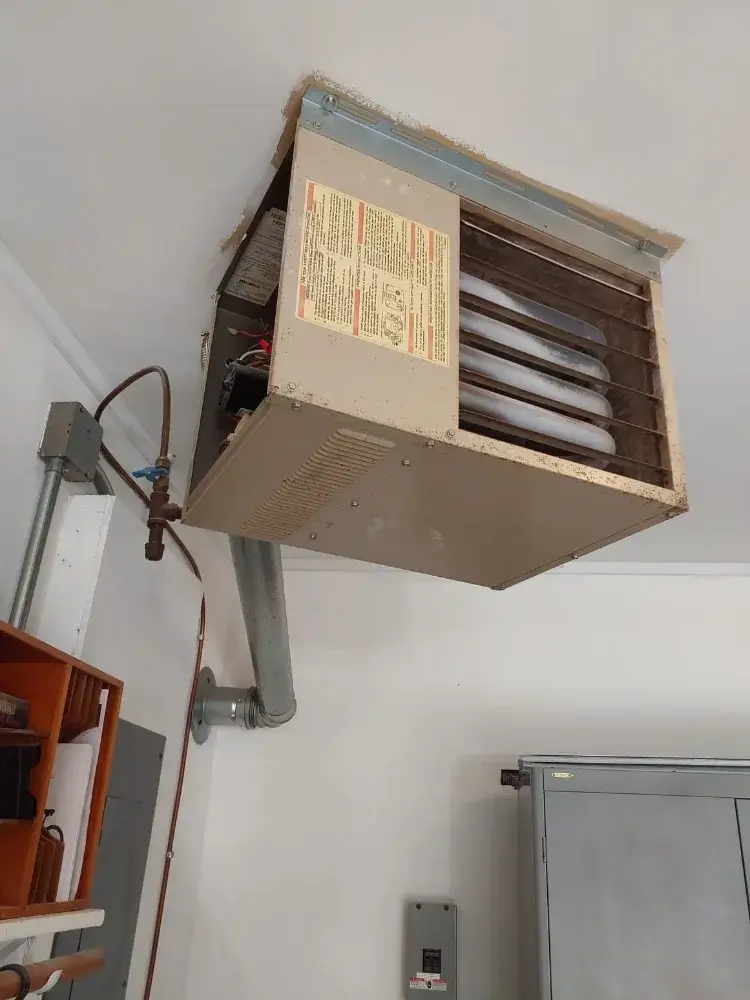
A ceiling-hung gas unit heater warms a garage quickly and suits larger garages, shops and spaces you use often. It needs a gas line sized for the heater and a vent to the outdoors.
Electric garage heaters
An electric heater needs no gas line or vent, which makes it simpler for smaller garages or occasional use. It does need a dedicated electrical circuit sized for the heater.
Sizing the heater
Square footage, ceiling height, insulation, the garage door and how warm you want the space all affect the size you need. An insulated garage door and sealed walls make a smaller heater go further.
No unvented gas heaters
Minnesota’s mechanical code does not allow unvented fuel-burning heating appliances in a dwelling, so a permanent gas garage heater should be a vented model.
What a Safe Garage Heater Install Looks Like
Garages hold cars, gasoline and solvents, so gas appliances there have extra rules. These come from the 2020 Minnesota Mechanical and Fuel Gas Code as summarized by the City of Mounds View.
Mounted high enough
In a private garage, appliances must be at least 6 feet above the floor unless they are protected from being hit by a vehicle, and the ignition source must be at least 18 inches above the floor.
Clearance to combustibles
Suspended unit heaters need 18 inches of clearance to combustibles on the sides, 12 inches below and 6 inches above.
Vented to the outdoors
The vent is sized, installed and terminated according to the heater and vent manufacturers’ instructions and the code, and the installation instructions must be on site for the inspection.
Carbon monoxide alarms
An attached garage shares air with the house. Minnesota law requires a working carbon monoxide alarm within 10 feet of every sleeping room, so make sure yours are in place and working.
Recent Garage Heater Jobs
Two recent garage heater calls from our records, with names and addresses left out.
APR 2026 · ELK RIVER, 1990 HOME
Swapping out an old garage heater
We disconnected the gas line from an old ceiling-mounted heater about 9 feet up so the homeowner could replace it, then came back and connected the gas line to the new heater.
NOV 2026 · OTSEGO
Gas line for a new garage heater
The homeowner had already hung and vented a new garage heater. We looked at the route for the gas line and gave an estimate to run it and hook the heater up.
Our Garage Heater Installation Process
Whether you want us to supply the heater or connect one you bought, the steps are the same.
Look at the garage
We measure the space, check insulation and the garage door, and find the best mounting spot with the right clearances.
Plan gas or power
For gas, we check that your gas piping can carry the extra load and plan the new line and vent route. For electric, we confirm the heater’s circuit requirements.
Mount and connect
We hang the heater at the required height, run and connect the gas line with a shut-off valve, and install the vent.
Test and walk through
We check for gas leaks, start the heater, confirm it vents and cycles correctly, and show you the thermostat and shut-off.
Pay Over Time
Brass Tacks offers financing through GreenSky, so you can add a garage heater now and pay over time with approved credit. Financing is subject to credit approval and terms offered by participating lenders.
Garage Heater FAQs
Ready for a Warm Garage?
Tell us about your garage and whether you want gas or electric heat. We’ll look at the space, explain your options and give you an upfront price before any work begins.