Why Is My Furnace Blowing Cold Air?
Last Updated: November 11, 2026
Quick Summary
A furnace blowing cold air is usually a setting problem, a clogged filter, or an ignition fault. Check that the thermostat is set to Heat and the fan is on Auto, replace a dirty filter, and try one reset. A brief cool blast at startup is normal, but cold air that continues for several minutes means the furnace needs service.
- Set the thermostat to Heat and the fan setting to Auto.
- Replace the air filter if you cannot see light through it.
- A short cold blast at startup is normal; continuous cold air is not.
- Try no more than one or two resets before calling for service.
- Smell gas or hear hissing? Leave the home and call your gas utility or 911.
Table of Contents
- Why Your Furnace Might Be Blowing Cold Air
- Is It Normal for Cold Air to Come Out at Startup?
- Check the Thermostat and Fan Settings First
- Check and Replace a Dirty Air Filter
- How to Reset a Furnace That Has Shut Down
- Furnace Flame Sensor Cleaning and Ignition Problems
- When to Turn Off the Furnace and Call a Technician
- Schedule a Furnace Check With Brass Tacks
- Frequently Asked Questions
Why Your Furnace Might Be Blowing Cold Air
A furnace blowing cold air in a Minnesota winter is more than an annoyance. Homeowners across the West Metro often run into this problem during the cold months.
A furnace blows cold air when it is running but not heating, or when it is circulating air that never reaches temperature. Some causes are harmless.
Common reasons include:
- The thermostat is set to the wrong mode or temperature
- The fan is set to “On” when it should be on “Auto”
- A dirty or clogged air filter is restricting airflow
Work through the checks in order. If the cold air keeps coming after you have checked the basics, a furnace repair visit from Brass Tacks can pinpoint the cause.
Is It Normal for Cold Air to Come Out at Startup?
A short burst of cool air at the start of a heating cycle is normal. What matters is how long it lasts and what the furnace does afterward. Understanding the sequence helps you tell a healthy startup from a fault.
Here is what typically happens when your thermostat calls for heat:
- The inducer motor starts. On most gas furnaces, a draft inducer fan starts first and clears the combustion chamber. You may hear a steady hum before anything else happens.
- The igniter heats up or the pilot is established. Modern furnaces use a hot surface igniter or an electronic spark. Burners do not light instantly, and this stage can take several seconds.
- The burners ignite and the flame sensor confirms the flame. If the sensor does not detect flame, the control board may shut the gas off and try again.
- The heat exchanger warms up. Metal takes time to heat. Until the exchanger is warm enough, the blower stays off on purpose, so the cool air you feel in the first moments is usually from the air already sitting in the ducts.
- The blower starts. Once the heat exchanger reaches its set temperature, the blower begins moving air. Early blower operation on a cold exchanger would push room-temperature air through the vents.
The entire sequence from thermostat call to warm air at the register usually takes a short time, and a brief cool blast during that window is expected.
What Normal Cycle Timing Looks Like
Your furnace should settle into a steady pattern. Watch for these signs of healthy operation:
- Warm air builds steadily at the registers after the initial delay
- The blower keeps running for a short period after the burners shut off, often a minute or two, which pulls remaining heat out of the exchanger
- The furnace runs for a reasonable length of time before the thermostat is satisfied
After the burners turn off, a brief blower run is normal and helpful. It moves residual heat into the house rather than wasting it in the furnace.
Signs the Startup Is Not Normal
These patterns point to a fault rather than normal cycle behavior:
- Cold air keeps blowing for several minutes after the burners should have lit
- The furnace starts, runs a few seconds, and shuts off, then repeats
- You hear repeated clicking, the igniter glowing without ignition, or the inducer running with no burner activity
If you see the burners light but cold air continues well past the normal window, the problem may be airflow, a limit switch, or a heat exchanger issue, and a technician should check it.
Watch out: Do not repeatedly restart a furnace that will not stay lit. Repeated failed ignition attempts can allow unburned gas to build up. Stop after one or two reset attempts and call for service.
Call for Help If
- Cold air continues for several minutes after the burners should be running
- The furnace short cycles or never completes a heating cycle
- You smell gas, hear a hissing sound, or notice soot or scorching near the unit
A short cold blast at startup is fine. Continuous cold air, or a furnace that never settles into a heating cycle, is not.
Check the Thermostat and Fan Settings First
Start with the thermostat. Many “broken furnace” calls turn out to be a setting problem.
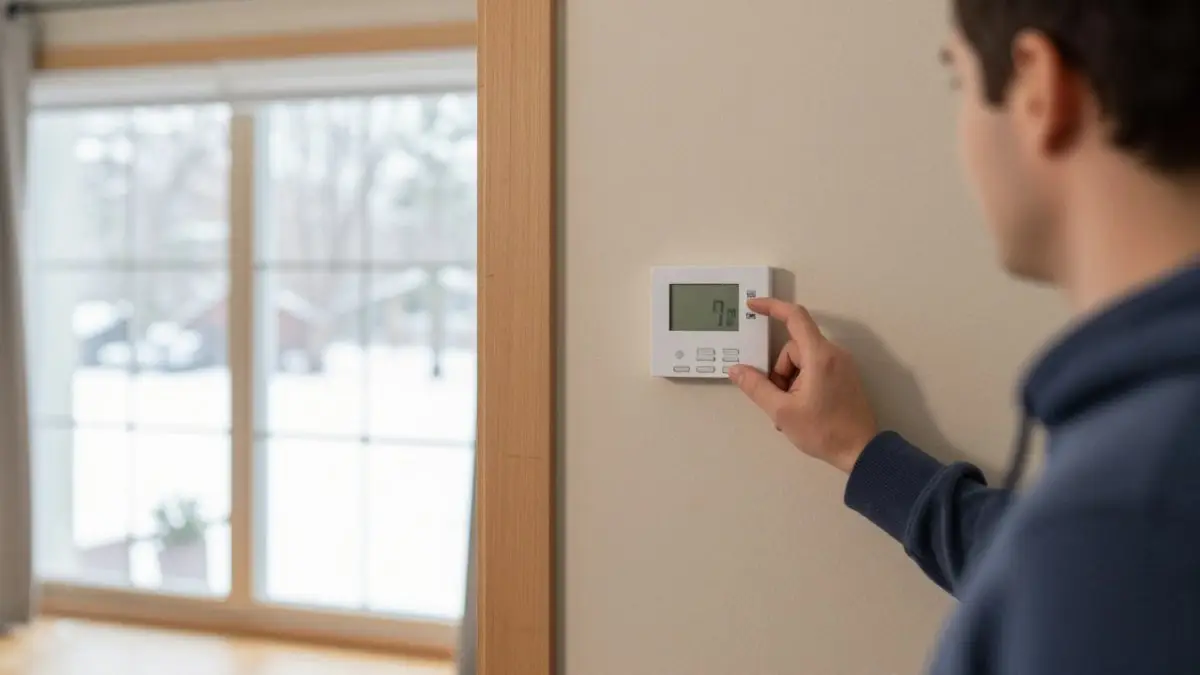
Make sure the thermostat is set to Heat, not Cool or Off.
Next, check the fan setting. The fan has two modes:
- Auto: The blower runs only when the furnace is heating. This is the setting most homes should use.
- On: The blower runs all the time, even when the burners are off. This can push room-temperature air through the ducts between heating cycles.
If the fan is set to On, switch it to Auto and wait a few minutes.
We recommend this quick check before anything else. It takes less than five minutes.
Before calling for service, run through these quick settings and maintenance checks, which can often explain cold air from a furnace.
| Check | What to look for | Time needed |
|---|---|---|
| Thermostat mode | Set to Heat, not Cool or Off | Under 1 minute |
| Temperature setting | A few degrees above room temperature | Under 1 minute |
| Fan setting | Auto, not On | Under 1 minute |
| Thermostat batteries | Replace if screen is dim or unresponsive | About 5 minutes |
| Air filter | Replace if light cannot pass through it | About 5 minutes |
Check and Replace a Dirty Air Filter
A clogged filter restricts airflow.
Locate the filter near the blower or return air grille. Pull it out and hold it up to a light.
Filters should be checked regularly during heavy heating season and replaced when dirty. Use the size printed on the filter frame.
Watch out: A filter that looks only a little dusty can still restrict airflow in a busy Minnesota heating season.
How to Reset a Furnace That Has Shut Down
If the furnace has shut down because of overheating or a safety trip, a reset may get it running again. Follow these steps carefully.
- Turn the thermostat to Off. Wait about 30 seconds.
- Find the furnace power switch. It is often a light switch-style box on or near the unit. Turn it off.
- Check the circuit breaker. Look for a breaker labeled for the furnace and make sure it is not tripped. Reset it if needed.
- Turn the power back on and set the thermostat to Heat.
- Wait several minutes. Listen for the igniter, then the burners, then the blower.
If the furnace starts and runs warm air, keep an eye on it.
For a more detailed guide to resetting a furnace after a power outage, see how to reset a furnace after a power outage.
Furnace Flame Sensor Cleaning and Ignition Problems
The flame sensor tells the furnace that the burners are lit.
Ignition problems can look similar. A failed igniter or pilot light means the burners never fire, so the furnace circulates cold air.
Signs of a flame sensor or ignition issue:
- The furnace starts, then shuts off after a few seconds
- The blower runs with no warm air
- The furnace makes repeated clicking or ignition attempts
Flame sensor cleaning involves turning off power and gently removing the sensor to clean it with fine emery cloth.
Repeated ignition failure is a sign to stop troubleshooting and schedule a professional visit.
When to Turn Off the Furnace and Call a Technician
Some furnace problems are safety emergencies, not troubleshooting puzzles. If any of the signs below appear, act first and diagnose later.
Emergency Situations: Leave the Home First
If you smell gas, which often has a rotten-egg odor, or hear hissing near the furnace or gas line:
- Do not turn lights or electrical switches on or off, and do not use a phone inside the house.
- Leave the home immediately and keep everyone with you.
- From a safe distance outside, call your gas utility’s emergency line or 911.
- Do not go back inside until emergency responders say it is safe.
If your carbon monoxide alarm sounds, the response is the same. Carbon monoxide is odorless and colorless, so a working alarm is the only early warning most people get. Move everyone outside to fresh air, then call 911 or your fire department. Do not re-enter until it has been cleared. If anyone feels dizzy, nauseated, or has a headache, tell the responders so they can assess the situation.
Warning Signs That Need Service Soon
These symptoms do not always mean an immediate emergency, but they mean you should shut the furnace down and call a licensed technician:
- Burning smells, smoke, or a scorched wiring odor
- Soot or dark staining around the burner area or the furnace cabinet
- A flame that looks yellow or lifts off the burner instead of burning steady blue
If you have a sensor problem, ignition trouble, or any of the warning signs above, call the team at Brass Tacks for emergency plumbing and heating help so a technician can make the unit safe.
How to Shut the Furnace Down Safely
If you decide to shut the unit off, set the thermostat to Off, then switch the furnace power switch to Off if one is present near the unit. Shutting the furnace off is a safe step when you are unsure. Do not keep running a unit that is showing danger signs.
When Cold Air Is the Only Symptom
If the only problem is cold air with no safety signs, you have time to work through the checks in this guide.
Learn more about why HVAC maintenance matters and how regular service prevents breakdowns. You can also review when to call an HVAC professional so you know what counts as an urgent problem.
Most homeowners can avoid unnecessary service calls by checking the basics first. Our guide on how to avoid unnecessary HVAC repairs covers the habits that help.
Schedule a Furnace Check With Brass Tacks
If the cold air continues after you have worked through these steps, it is time for an onsite diagnosis.
At Brass Tacks Plumbing, Heating & Cooling, we aim to give honest recommendations with upfront pricing. We will tell you what is wrong, explain your options, and let you decide.
For a furnace that needs attention, schedule a furnace check with Brass Tacks to get it running warm again.
Frequently Asked Questions
How do I fix a furnace that blows cold air?
Start with the simple checks. Confirm the thermostat is set to Heat and the temperature is set above the current room temperature. Set the fan to Auto so it runs only when the furnace is heating. Check the air filter and replace it if it is clogged. If the furnace is running and still producing cold air, or if it shuts down, the cause may be a flame sensor or ignition problem. Those repairs need a licensed technician, so call for service rather than taking the furnace apart.
Should I turn off my furnace if it is blowing cold air?
If the furnace is blowing cold air only briefly when it first starts, that can be normal, and you can leave it running. If it blows cold air for an extended period while the heat is on, switch the system off at the thermostat to prevent further problems and to avoid running the blower with no heat. Turn the furnace off completely if you smell gas, see unusual smoke or scorching, or hear loud banging. Then call a technician.
Can a dirty air filter cause my furnace to blow cold air?
Yes. A clogged filter restricts airflow across the heat exchanger, which can cause the furnace to overheat and shut down its burners. The blower may keep running while the heat stops, so the air coming out feels cool or cold. Check the filter regularly during heating season and replace it when it is visibly dirty or according to the manufacturer’s schedule.
How do I know if my furnace pilot light is out?
On older furnaces with a standing pilot, the pilot flame is visible through a small window and should be steady and blue. If it is out, the furnace will not produce heat. Many newer furnaces use electronic ignition instead of a pilot light, so there is no flame to see and the system may simply fail to ignite. If you are unsure which type you have, or if the pilot will not stay lit, contact a licensed technician rather than relighting it repeatedly.

