
How to Prevent Frozen Pipes in Minnesota This Winter
Last Updated: November 9, 2026
Quick Summary
To prevent frozen pipes in Minnesota, insulate pipes in unheated spaces, disconnect garden hoses, winterize outdoor faucets before the ground freezes, and keep your heat set to a steady temperature. Watch the forecast, and open cabinet doors under sinks on exterior walls during cold snaps.
- Disconnect garden hoses and drain outdoor spigots before the first hard freeze.
- Seal air leaks around pipes where they enter the house using caulk or foam.
- Insulate pipes in crawl spaces, attics, and garages with foam pipe sleeves.
- Keep the thermostat at a steady temperature, even when you are away.
- Locate your main water shut-off valve now so you can act fast if a pipe bursts.
Table of Contents
- How to Prevent Frozen Pipes in Minnesota Before the First Hard Freeze
- Which Pipes in Your Minnesota Home Are Most at Risk
- How to Insulate Pipes in Unheated Spaces Like Crawl Spaces, Attics, and Garages
- Winterizing Outdoor Faucets Before the Ground Freezes
- Keeping the Heat On and Your Home Warm During a Cold Snap
- Signs of Frozen Pipes in Walls and What to Do If One Freezes
- How to Thaw Frozen Pipes Safely and Locate the Main Water Shut-Off Valve
- Booking a Winter Plumbing Check Before the Next Cold Snap
- Frequently Asked Questions
Frozen pipes are one of the most expensive surprises a Minnesota homeowner can face. A single split pipe can release hundreds of gallons of water before you notice it, and cleanup often costs far more than prevention. Most of these mistakes take less than an afternoon to fix. This guide covers how to prevent frozen pipes in Minnesota before the first hard freeze, where the risks hide, and what to do if a pipe freezes.
How to Prevent Frozen Pipes in Minnesota Before the First Hard Freeze
Start before the temperature drops. Most freeze damage happens during the first deep cold snap, before homeowners have adjusted their habits or checked their pipes.
Work through this list in the fall:
- Disconnect garden hoses from outdoor spigots and drain them.
- Seal air leaks around pipes where they enter the house, using caulk or foam.
- Set the thermostat to a steady temperature, even when you are away.
Watch the forecast. When overnight lows drop toward the single digits, take extra steps. Open cabinet doors, let faucets drip, and keep the heat running.
Which Pipes in Your Minnesota Home Are Most at Risk
Not every pipe freezes at the same rate. Pipes that run through cold areas or close to outside walls are the most likely to fail.
Focus your attention on these spots:
- Exterior walls on the north and west sides of the house
- Crawl spaces and unfinished basements
- Attics where supply lines run across the top floor
Water service lines from the street to your home can also freeze. They sit underground, but in a hard winter frost can reach them if insulation or snow cover is thin.
How to Insulate Pipes in Unheated Spaces Like Crawl Spaces, Attics, and Garages
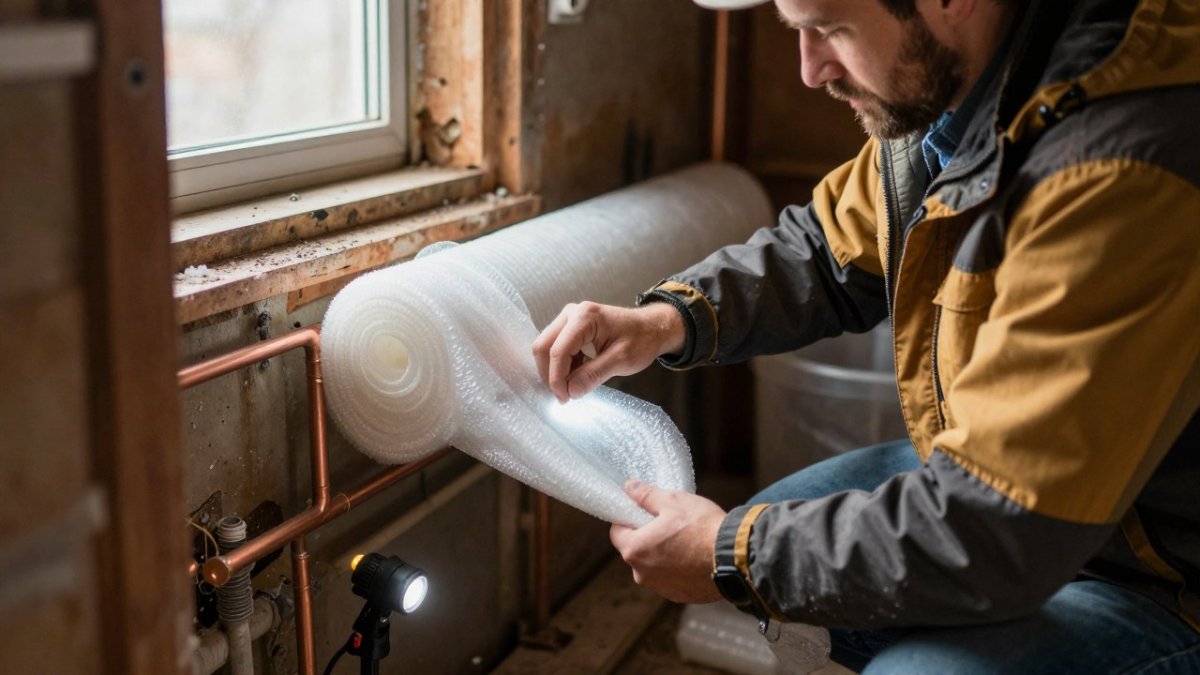
Insulation is the most effective long-term fix. Foam pipe sleeves cost little and take minutes per pipe. Focus on lines running through unheated areas first.
Follow these steps:
- Measure the pipe diameter so you buy sleeves that fit snugly.
- Cut the sleeve to length, then slit it lengthwise.
- Wrap the sleeve around the pipe and seal the seam with tape.
- Insulate the joints and elbows, since they are weak points.
- Check exposed areas for gaps where cold air can reach the pipe.
Heat tape or heat cable is another option for pipes that stay cold even after insulation.
Watch out: heat tape that is wrapped over itself or left plugged in during warm months can overheat and create a fire risk.
Winterizing Outdoor Faucets Before the Ground Freezes
Outdoor faucets are a common source of frozen pipes. Water trapped between the wall and the spigot expands when it freezes and can crack the pipe inside your home.
Take these steps before the ground freezes:
- Shut off the interior valve that feeds the outdoor faucet, if your home has one.
- Open the outdoor faucet to let water drain out.
- Close the faucet once it stops dripping.
Frost-free hose bibs drain back into the house when shut off, but they still need the hose disconnected to work properly.
Before the ground freezes, check each step and compare them side by side:
| Step | What to do | Timing |
|---|---|---|
| Shut off interior valve | Stop water feeding the outdoor faucet, if your home has one | Before the ground freezes |
| Open outdoor faucet | Let water drain out | Before the ground freezes |
| Close faucet | Close once it stops dripping | Once drainage stops |
| Insulated faucet cover | Add extra protection | Before the ground freezes |
| Disconnect hose | Required for frost-free hose bibs to drain properly | Before the ground freezes |
Keeping the Heat On and Your Home Warm During a Cold Snap
Your heating system does more than keep you comfortable. It keeps the air around your pipes above freezing. A common mistake is turning the thermostat way down while away for the weekend, then coming home to frozen pipes.
Before a cold snap arrives
Watch the forecast a few days out. When overnight lows are projected to fall into the single digits or below zero, treat it as a preparation window rather than a wait-and-see event.
- Set the thermostat to a steady temperature and leave it there. A common guideline is to keep it at 55 degrees or higher, even when you are away. Many homeowners keep it closer to their normal daytime setting during a deep cold stretch, since the cost of extra heat is usually far less than a burst pipe repair.
- Confirm your heat source is working before the cold arrives. If the furnace is short-cycling, blowing cold air, or struggling to keep up, address it before the cold front rather than during it. Furnace repair is worth scheduling ahead of the next stretch of subzero nights.
- Check the garage. If pipes run through a garage, keep the garage door closed and, if the space has a heater, keep it running at a low setting. If you need one, you can review gas and electric garage heater installation options.
During a prolonged subzero stretch
Minnesota cold snaps often last several days, and duration matters more than a single cold night. The longer the cold holds, the deeper frost drives into the ground and the colder exterior wall cavities become.
- Keep the thermostat steady for the duration. Do not drop it overnight or while running errands.
- Let a faucet drip if you have pipes in an exposed location. See the guidance below on how to decide.
- Keep the cabinet doors open the whole time, not just at night.
How to decide whether to drip a faucet
Dripping a faucet is one of the most repeated pieces of winter advice, but it is not always necessary and not always done correctly. Here is how to think it through.
- When dripping helps: A slow drip or a thin stream keeps water moving through the line, which makes it harder for ice to form and gives expanding ice somewhere to go. It is most useful for pipes that run through exterior walls, crawl spaces, or other spots you cannot easily warm.
- Which faucet to choose: Pick the faucet served by the most vulnerable line, usually the one on an exterior wall or the one farthest from where the water enters the house. If you are unsure, the kitchen sink and the bathroom sink on the coldest exterior wall are common choices.
- How much to run: A slow drip, roughly the thickness of a pencil lead, is usually enough. A full stream wastes water and is rarely necessary.
Watch out: a dripping faucet can mask a problem. If the drip slows to nothing or stops entirely while the handle is open, that is a sign the line may already be freezing, and you should treat it as a frozen pipe rather than a plumbing nuisance.
After temperatures rise
When the cold breaks, do not assume the risk is over. A pipe that froze and cracked may not leak until the ice thaws and water pressure returns.
- Turn off the dripping faucets and close the cabinet doors.
- Walk the basement, crawl space, and utility room and look for water stains, damp insulation, or dripping you did not have before.
- Check under sinks for moisture around the supply lines and shut-off valves.
If you find a leak after a cold stretch, shut off the main water valve and call a professional. A pipe that survived the freeze can still fail once pressure returns.
Signs of Frozen Pipes in Walls and What to Do If One Freezes
Frozen pipes inside walls are harder to spot than the ones in your basement, so the warning signs matter. Look for these:
- Little or no water from a faucet, even though the handle is on
- Frost or bulging on exposed pipe sections
- A strange smell or discoloration in the water
Step-by-step response when a pipe freezes
If you suspect a pipe is frozen, act in this order.
- Shut off the water if you see any leaking, bulging, or water staining. Turn the main valve clockwise until it stops. If you are not sure where it is, find it now, before you need it.
- Open the faucet served by the frozen line. This relieves pressure and gives melted water a place to go.
- Locate the frozen section. Feel along the pipe for the coldest spot, or look for frost. Start near the faucet and work back toward the supply.
- Apply gentle heat to the frozen section. A hair dryer on a low setting, heated towels, or a heat lamp placed at a safe distance all work. Start at the faucet end and work toward the frozen section so melted water can drain instead of building pressure behind the ice.
- Keep the faucet open while you thaw. Once water flows steadily, you have cleared the blockage.
- Watch for leaks as the ice melts. A pipe that froze and cracked may only start leaking once water pressure returns.
What not to do
- Do not use an open flame, torch, or blowtorch. This is a fire risk and can damage the pipe.
- Do not use a space heater placed against wood or insulation. Keep heaters at a safe distance and never leave them unattended.
- Do not pour boiling water on a pipe, especially PVC, which can crack from the sudden temperature change.
Watch out: if you cannot reach the frozen section, if the pipe is inside a wall or ceiling, or if you see water leaking from drywall, stop and call a licensed plumber. Thawing a hidden line without knowing where the ice is can lead to a burst inside the wall.
When to call a professional
Some frozen pipe situations are safe to handle yourself, and some are not. Call a licensed plumber when:
- The frozen section is inside a wall, ceiling, or floor you cannot access
- You see water leaking from drywall, a ceiling, or a wall cavity
- The pipe has already burst or you cannot stop the flow at the main valve
If water is actively leaking, shut off the main valve first, then call. For burst pipes or sudden freeze damage, you can contact our emergency plumbing team.
Service lines and meters: who is responsible
The pipe from the street to your home is the water service line, and the meter is usually inside where the line enters.
If you have had freeze problems before, or your home has older plumbing, a professional inspection can catch weak spots before the next cold snap. You can schedule winter plumbing service with Brass Tacks Plumbing, Heating & Cooling and get your home ready for the cold.
How to Thaw Frozen Pipes Safely and Locate the Main Water Shut-Off Valve
Thawing a pipe takes patience. Start at the faucet end and work toward the frozen section so melted water drains out instead of building pressure behind the ice.
Use these methods to thaw safely:
- Warm air from a hair dryer on a low setting
- Heated towels wrapped around the pipe
- A heat lamp placed at a safe distance
Keep the faucet open so water can flow once the ice melts. If the pipe bursts during thawing, shut off the main valve immediately.
Your main water shut-off valve is usually where the water line enters the house.
Booking a Winter Plumbing Check Before the Next Cold Snap
A professional inspection catches problems homeowners miss. A professional inspection can check exposed lines, test heat tape, and look for weak spots in insulation before winter sets in.
You can schedule winter plumbing service with Brass Tacks Plumbing, Heating & Cooling and get your home ready for the cold. For sudden freezes or burst pipes, you can reach our emergency plumbing team.
Winter in Minnesota is hard on pipes, but a few hours of prep can keep your home safe. Start with insulation, check your heat, and know where your shut-off valve is.
Frequently Asked Questions
At what temperature do pipes in a Minnesota home typically freeze?
Pipes can freeze whenever temperatures stay below freezing for an extended period, and the risk rises sharply in unheated areas. Exterior walls, crawl spaces, attics, and garages are the first places to freeze during a Minnesota cold snap, especially when the wind is strong. Even a heated home can lose enough warmth through poorly insulated walls to freeze a pipe. Keep your thermostat steady, avoid letting rooms drop well below your normal setting, and check vulnerable spots whenever temperatures fall into the single digits or below zero.
Should I leave faucets dripping during a deep freeze?
A small, steady drip can help keep water moving through a pipe so pressure does not build up as easily, which is the main reason a frozen pipe bursts. Focus on faucets served by pipes in exterior walls or unheated spaces, and let a thin stream run rather than a heavy flow. Dripping faucets do add to your water use, so reserve this step for the coldest nights and the most exposed fixtures. If a faucet already has no water, do not keep running it. That can mean a blockage has formed and needs attention.
Can I shut off water to prevent frozen pipes?
Yes. If you will be away from home for an extended period, such as a winter trip or a vacant property, shutting off the main water supply and draining the system can prevent freeze damage. Locate your main shut-off valve first so you know where it is. Draining the lines requires opening faucets at the lowest and highest points of the home. If your home is occupied and heated, leaving the water on with proper insulation and warm air circulation is usually the safer approach for everyday winter conditions.
What should I do if I think a pipe is already frozen?
Do not use an open flame or a heat gun on a frozen pipe, as this can damage the pipe or start a fire. Open the nearest faucet so water can move once the ice begins to melt, then warm the section gently with a hair dryer or heat lamp. If you cannot find the frozen section, or if the pipe has already split, shut off the main water valve and call a licensed plumber. A licensed plumber can inspect the problem onsite and help you decide the safest next step.

