
Signs Your Water Heater Needs Replacing Right Now
Quick Summary
Water heater replacement is usually needed when the tank is near the end of its typical lifespan, when water leaks from the bottom of the tank, or when rusty, smelly, or discolored hot water persists. Check the manufacture date on the label first, since age is one of the most useful clues. Leaks from fittings can often be repaired, but a leaking tank body generally cannot.
- Check the manufacture date on the label, usually on the top or side of the tank.
- A leak from the bottom of the tank usually means the inner tank has corroded and needs replacement.
- Shut off the cold-water supply valve on top of the tank to stop more water from entering.
- Never stand in standing water to reach a breaker or unplug a heater.
- Set the thermostat near 120 degrees Fahrenheit and wait before assuming the unit is failing.
Table of Contents
- Why Water Heater Age Matters More Than You Think
- Signs Your Water Heater Needs Replacing: Leaks and Water on the Floor
- Rusty, Discolored, or Smelly Hot Water
- Not Enough Hot Water or Temperature That Keeps Changing
- Popping, Rumbling, or Knocking Noises From the Tank
- Repair or Replacement: How to Decide
- Booking Your Water Heater Assessment in the West Metro
- Frequently Asked Questions
Why Water Heater Age Matters More Than You Think
Most homeowners don’t think about their water heater until hot water stops. By then, the tank may have been quietly wearing out for years. Age is one of the most useful clues you have, and it’s easy to check.
Look for the manufacture date on the label, usually on the top or side of the tank. Many tank water heaters are built to last a set number of years, and once a unit passes that point, the risk of leaks and failure climbs.
Here’s what that means for you: if your heater is past its typical lifespan, start planning for replacement rather than waiting for a flood. A planned replacement lets you choose the size and type that fits your home, instead of rushing to find whatever is in stock during an emergency.
How Long a Water Heater Typically Lasts by Type
Lifespan depends on the type of heater and how it’s used. These are general ranges, and your actual results will vary with water quality, maintenance, and usage.
If your tank is approaching or past the upper end of its range, plan ahead. Our guide on how to know when to replace your hot water heater walks through the signs to watch for. An inspection can confirm its condition, and a repair or replacement assessment can help you decide what makes sense.
Signs Your Water Heater Needs Replacing: Leaks and Water on the Floor
Water around the base of your water heater is one of the clearest warning signs, and it is also the one most likely to cause expensive damage if you wait. A small puddle today can mean a soaked subfloor, ruined drywall, or a mold problem by the weekend. Treat any water near the tank as urgent until you know where it is coming from.
First, Make the Area Safe
Before you inspect anything, protect yourself and your home.
- If you smell gas or hear hissing near the gas line, leave the house and call your gas utility or 911 from outside. Do not flip switches or use your phone inside.
- If water is near electrical outlets, the breaker panel, or the heater’s power connection, do not touch the unit. Shut off power at the breaker only if you can reach it safely and it is not wet.
- Shut off the cold-water supply valve on top of the tank (usually a handle valve on the cold inlet) to stop more water from entering.
Watch out: Never stand in standing water to reach a breaker or unplug a heater. Water and electricity together are a lethal combination, and no repair is worth that risk.
Trace the Leak to Its Source
Where the water comes from tells you whether you are looking at a repair or a replacement.
- Fittings and connections: A drip at the cold inlet, hot outlet, or a union nut is often a loose connection, a worn washer, or failed thread sealant. These are usually repairable.
- T&P relief valve: A drip from the temperature and pressure relief valve can mean excess pressure, a failed valve, or a thermal expansion issue. Sometimes the valve needs replacing; sometimes the cause is a closed system without an expansion tank.
- Drain valve: A leak here is often a worn washer or a valve that was left partially open. Usually repairable.
A simple test: dry the area completely, lay a paper towel or dry rag around the base, and check back in an hour. If the towel is wet but the fittings are dry, the tank itself is the source.
Why a Leak at the Bottom of the Tank Is Usually a Replacement Issue
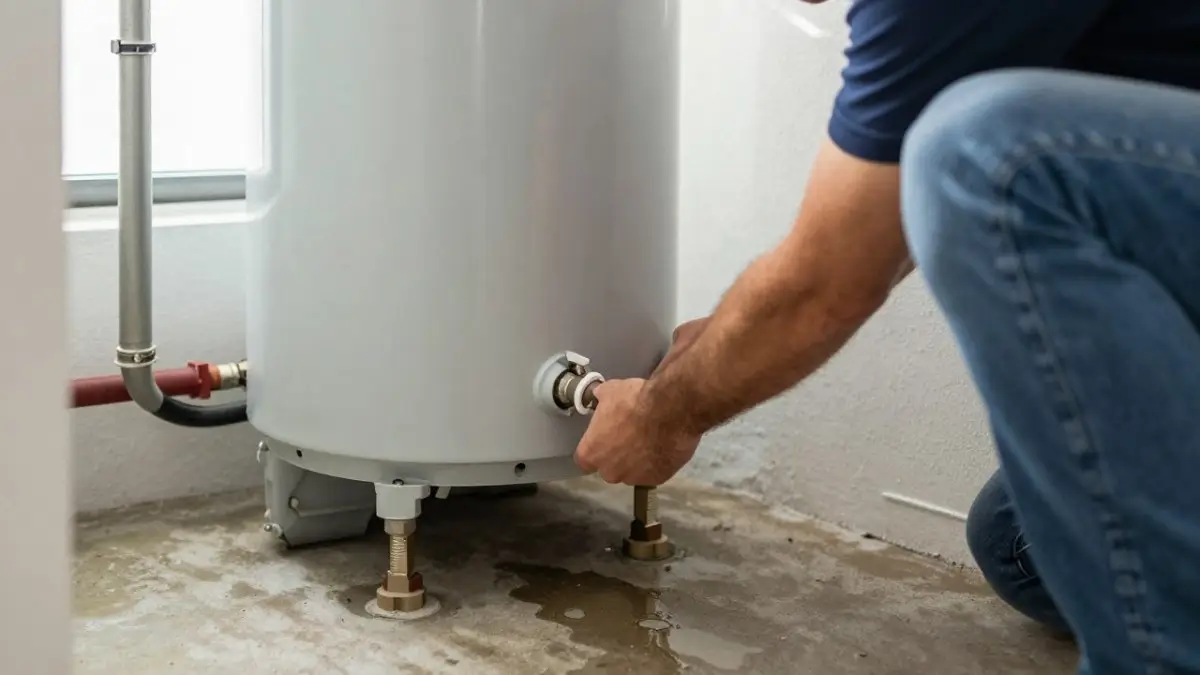
A leak from the bottom of the tank is different from a leak at a fitting. Water seeping from the base usually means the inner tank has corroded or cracked.
Here is what that means for you:
- A fitting or valve leak may be repairable
- A leak from the tank body usually means replacement
- Waiting too long can cause water damage to flooring, drywall, and stored items
In Minnesota, that risk is higher in winter.
If you are not sure where the water is coming from, a leak diagnosis and repair can tell you whether the unit can be repaired or should be replaced.
Rusty, Discolored, or Smelly Hot Water
Hot water that looks or smells wrong is worth paying attention to.
Common causes include:
- Corrosion of the inner tank or anode rod
- Sediment buildup at the bottom of the tank
- Bacteria growth in the water
Run the hot tap for a minute and check the color.
Sediment is a frequent cause in Minnesota homes, especially where water is hard. Sediment buildup can reduce efficiency, cause noise, and shorten the life of the heater.
If you’re seeing rusty water, a water heater repair visit can help you sort out whether the tank can be saved.
Not Enough Hot Water or Temperature That Keeps Changing
Running out of hot water fast or getting lukewarm showers are two of the most common complaints.
Watch for these patterns:
- Hot water runs out sooner than it used to
- Water temperature swings between hot and cold during a shower
- The unit takes longer to heat up than it did before
Sediment buildup, a failing heating element or burner, and a faulty thermostat can all cause these symptoms.
Before you assume the worst, check the thermostat setting.
Here is a quick look at the signs covered in this article and what each one usually points to.
| Sign | Possible cause | Next step |
|---|---|---|
| Hot water runs out sooner | Sediment buildup or failing heating element | Check thermostat, then have it inspected |
| Shower temperature swings | Faulty thermostat or burner issue | Have the unit checked |
| Slow heat-up time | Sediment or worn heating parts | Schedule an inspection |
| Thermostat set too low | Hot water recovery is slow | Set near 120 degrees Fahrenheit and wait |
Popping, Rumbling, or Knocking Noises From the Tank
Noise from a water heater is common, but loud or frequent sounds often mean sediment has built up at the bottom of the tank.
Noises to pay attention to:
- Popping or crackling during heating
- A rumbling or roaring sound
- Knocking or banging in the pipes when water runs
Sediment noise is often a sign the heater is working harder than it should, which wastes energy and wears the tank faster.
If the noise is getting louder, or you hear it with less hot water or leaks, it’s time to have the system evaluated.
Repair or Replacement: How to Decide
Not every problem means you need a new water heater. Some repairs are simple and worth it, while others only delay the inevitable. The trick is to weigh four things together: the age of the unit, the cost of the repair relative to a new unit, your warranty status, and whether the same problem keeps coming back.
A Simple Decision Framework
Work through these questions in order. The more of them that point the same way, the clearer your answer.
- How old is the heater compared with its expected lifespan? A tank unit near or past 8 to 12 years is on borrowed time. A tankless unit at 15 to 20 years with regular maintenance may still have years left.
- Is the problem a single part or the tank itself? Valves, thermostats, heating elements, burners, and igniters are replaceable. A corroded or leaking tank is not.
- How does the repair cost compare with a new unit? When a repair starts to approach the price of a new heater and the unit is already old, replacement often makes more sense. Ask for the repair estimate and a replacement estimate side by side so you can compare.
- Is the unit still under warranty? A tank or parts warranty can change the math. Check your paperwork before you decide, because a covered part may make a repair the obvious choice.
- Has this happened before? One repair on a young heater is normal. Two or three repairs in a few years on an aging unit is a pattern, and patterns usually end in replacement.
How the Answer Changes by Heater Type
The same symptom can mean different things depending on what kind of system you have.
- Gas tank: A failed thermocouple, igniter, or gas valve is often a straightforward repair. A leaking tank or a cracked flue is a replacement. Gas units also need proper venting, so any exhaust or carbon monoxide concern should be evaluated by a professional right away.
- Electric tank: Heating elements and thermostats are common, replaceable parts. A leaking tank or a failed inner tank is not. Electric units also draw heavy current, so wiring and breaker issues should be checked by a licensed pro.
- Tankless: These units often last longer but depend on regular descaling, especially in areas with hard water. A tankless unit that is not maintained can scale up and lose capacity. Many tankless problems are service issues rather than replacement issues, which is why maintenance history matters.
When Replacement Is the Clearer Choice
Consider replacement when:
- The tank is near or past its expected lifespan
- You see leaks from the bottom of the tank
- Repairs have happened often in the past few years
A planned replacement also lets you choose the right size and type for your home, including efficiency options, instead of taking whatever is available during an emergency.
Ask for a clear recommendation and a written explanation of why.
If you have decided to replace, a water heater installation and replacement in Plymouth can help you choose the right size and type for your household.
Booking Your Water Heater Assessment in the West Metro
If you’ve noticed any of these signs, don’t wait for a flood or a cold shower to act.
At Brass Tacks Plumbing, Heating & Cooling, we’re a locally owned team serving Plymouth, Wayzata, Minnetonka, Maple Grove, and nearby West Metro communities.
Ready to find out what your water heater needs? Schedule your plumbing and HVAC service now and get a clear answer.
Brass Tacks Plumbing, Heating & Cooling serves homeowners across the West Metro with honest plumbing and HVAC service.
Frequently Asked Questions
How can I tell if my hot water heater needs to be replaced?
Look for a combination of signs rather than a single symptom. Common indicators include a tank that is roughly 10 to 15 years old, water pooling at the base, rusty or discolored hot water, frequent running out of hot water, and popping or rumbling noises from sediment buildup. Any one of these can have a simpler cause, such as a faulty valve or a sediment flush, so a technician should check the heater before you decide. If several signs appear together, especially an older tank that is leaking, replacement is usually the more practical choice. A licensed plumber can inspect the unit and explain the options clearly.
Is a leaking water heater always a sign it needs replacing?
Not always, but a leak from the bottom of the tank is usually a sign the tank itself has failed. Leaks from the pressure relief valve, drain valve, or fittings at the top are sometimes repairable. Water coming from the base of the tank generally means internal corrosion has cracked the steel, and that cannot be fixed. Check the source before assuming the worst. Turn off the power or gas supply and shut off the cold water inlet if the leak is active, then call a professional for an onsite diagnosis.
Should I flush a 15-year-old water heater?
A flush can help remove sediment and extend the life of a tank that is still in good condition, but a 15-year-old water heater is already near the end of its typical service life. Flushing an aging unit may improve performance temporarily, yet it will not reverse corrosion. If the tank is leaking, making loud noises, or producing rusty water, flushing is unlikely to solve the underlying problem. A technician can tell you whether a flush makes sense for your specific unit.
How does hard water affect a water heater’s lifespan?
Hard water leaves mineral deposits that settle at the bottom of the tank and form sediment. That layer insulates the water from the burner or heating element, forcing the heater to work harder and run longer. Over time it can cause overheating, popping noises, and corrosion around the tank base. Homes with hard water often benefit from regular maintenance or a water softener, which can reduce sediment buildup and help the heater last longer.

