When to Replace Heating and Air Conditioning Systems
Last Updated: November 7, 2026
Quick Summary
Replace heating and air conditioning systems when repairs start to outpace the value of the equipment, not when it finally quits. Age sets the baseline, but remaining life, repair history, and operating costs decide the timing. Planning ahead gives you more control over equipment choice and installation.
- Plan ahead, since waiting for a total breakdown leaves less time to compare options.
- Rising energy bills and uneven room comfort are early signs of an aging system.
- Ask technicians how many heating or cooling seasons the equipment can reasonably provide.
- Compare the cost of a major repair against what the system still has left to offer.
- Size the replacement with a load calculation rather than copying the old unit’s size.
Table of Contents
- Why Timing Matters More Than Most Homeowners Expect
- How Long Heating and Air Conditioning Systems Typically Last
- Signs Your HVAC System Needs Replacement
- Repair or Replace HVAC: How to Run the Numbers
- Should You Replace HVAC Before It Breaks?
- Sizing, Efficiency, and Incentives to Consider Before Buying
- Scheduling Your Heating and Cooling Evaluation with Brass Tacks
- Frequently Asked Questions
Why Timing Matters More Than Most Homeowners Expect
Knowing when to replace heating and air conditioning equipment can save you money and a lot of stress.
Waiting for a total breakdown often leaves you with less time to compare options or size the new unit correctly. Planning ahead gives you more control over timing and equipment.
Here’s the short version: Replace a system when repairs start to outpace the value of the equipment, not when it finally quits.
How Long Heating and Air Conditioning Systems Typically Last
Every system has a general service life. Age alone does not decide replacement, but it sets the baseline for what to expect. Learn how regular service helps extend equipment life and what happens during a typical tune-up. Regular maintenance and proper installation can push a system toward the longer end of its range.
Lifespan Ranges by System Type
Most residential equipment falls into these general ranges:
Service life varies widely by equipment type, use, and maintenance. Ask your technician what to expect for your specific system.
These are general expectations, not guarantees. Your actual results depend on the equipment, how hard it runs, and how well it has been maintained.
Why Installation Quality and Maintenance Change the Math
A poorly sized or poorly installed system can wear out early. Likewise, a neglected system with clogged filters and dirty coils works harder and fails sooner. Annual tune-ups catch small problems before they become expensive ones.
Ask yourself whether the system has been serviced regularly. If the answer is no, expect a shorter remaining life and plan accordingly. Read the full guide on when to replace an HVAC system for more warning signs and a clear framework.
Signs Your HVAC System Needs Replacement
Some warning signs point to an aging system that is nearing the end of its useful life. Watch for these patterns.
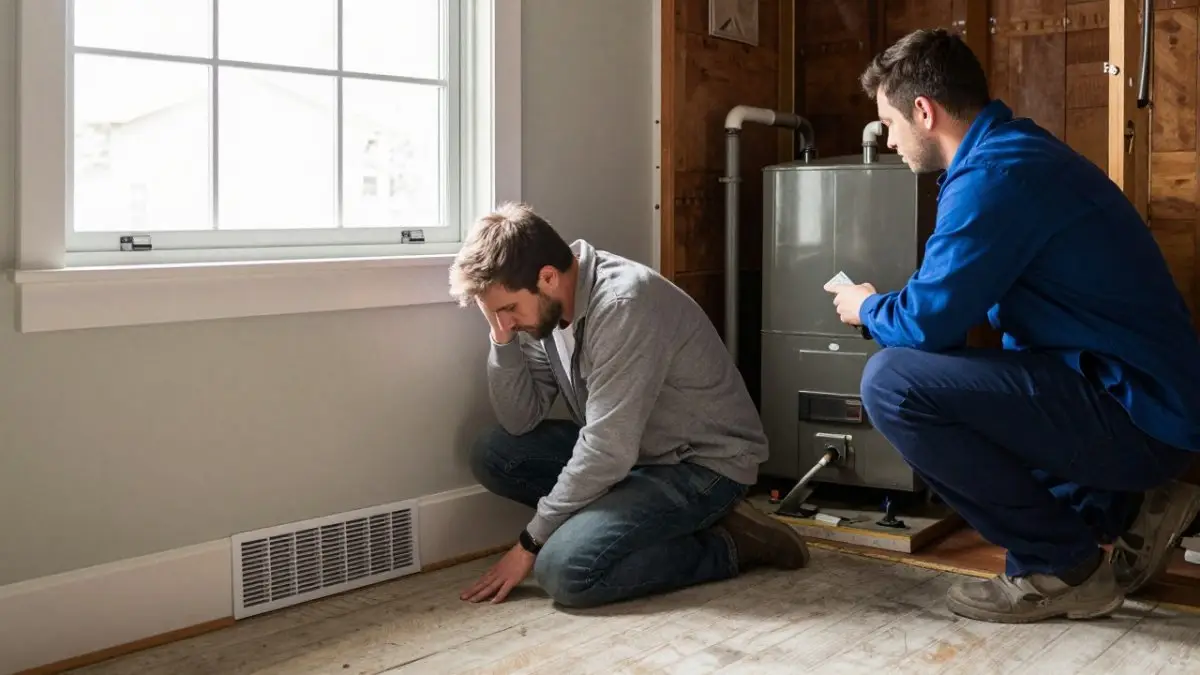
Rising Energy Bills and Uneven Comfort
A system that loses efficiency often shows up on the utility bill first. If your heating or cooling costs climb even when usage stays about the same, the equipment may be struggling.
Uneven comfort is another clue. Some rooms run hot or cold while others stay fine. The system may still run, but it no longer moves air or conditions your home evenly.
- Energy bills rise without a clear cause
- Some rooms never reach the set temperature
- The system runs longer to hold the same comfort level
Frequent Breakdowns, Strange Noises, and Odors
Repeated repairs are a red flag. When you call for service every season, the cost adds up quickly. Each new repair also puts money into a system that may be near the end of its life.
Pay attention to new sounds and smells, too. Grinding, squealing, or banging can signal worn parts. A burning or musty odor should always be checked by a professional.
Repair or Replace HVAC: How to Run the Numbers
Most homeowners get stuck here because the decision feels like a gut call. It does not have to be. A short, honest calculation using four inputs will usually point you in one direction.
Step 1: Start With Remaining Life, Not Just Age
Age tells you where a system sits in its expected service life. Remaining life tells you what you are actually protecting by paying for a repair.
Ask the technician two questions: how old is the equipment, and how many more heating or cooling seasons is it reasonable to expect? That second answer is the one that matters.
Step 2: Compare the Repair to What You Are Protecting
A repair is only worth it if it buys you meaningful time on a system that still has life left. Replacement deserves serious consideration when a major repair is needed on equipment that is already past its typical lifespan.
Watch out: a low repair quote can hide a bigger problem. Ask what else the technician found and what is likely to fail next, because a second repair in the same season changes the math.
Step 3: Weigh Repair History and Efficiency Loss
A system that has needed one repair after another is telling you something. Each service call is money into equipment that is not getting younger.
Add up what you have spent on repairs over the last few years. If that total is climbing and the system is also past its expected life, replacement tends to be the more predictable path.
Step 4: Look at Operating Cost, Not Just Purchase Price
A newer, higher-efficiency system can lower monthly heating and cooling costs, but the savings depend on how much you run it and how efficient your current equipment is. Ask for the efficiency numbers on your existing unit and on any replacement you are considering, then compare them against your actual usage. In a cold climate with a long heating season, efficiency differences can show up on the bill more noticeably.
A Simple Way to Frame the Decision
- If the system is young, well maintained, and needs a minor repair, repair it.
- If it is near or past its expected lifespan and needs a major repair, lean toward replacement.
- If repairs are stacking up and comfort is slipping, replacement usually wins even if no single repair looks huge.
- If you are unsure, ask for a written estimate on both paths so you can compare them side by side instead of guessing.
This is educational guidance, not a substitute for an onsite diagnosis. A technician who has looked at your equipment can tell you what the repair actually involves and how much life is realistically left. See how honest diagnosis helps you avoid paying twice for an AC repair.
Four inputs, all covered in this section, will usually point you toward one clear answer. Use this framework to decide whether to repair or replace your AC based on age, repair history, and long-term costs.
| Step | What to check | Why it matters |
|---|---|---|
| 1. Remaining life | Age and expected seasons left | Shows what a repair actually protects |
| 2. Repair size | Minor or major, and what fails next | A low quote can hide a bigger problem |
| 3. Repair history | Total spent on repairs over recent years | Rising costs on an aging system favor replacement |
| 4. Operating cost | Efficiency of old unit versus replacement | Affects monthly bills, especially in cold climates |
Should You Replace HVAC Before It Breaks?
Sometimes, yes. Replacing on your own schedule usually beats an emergency call. You can compare equipment, schedule installation during a slower season, and avoid going without heat or cooling.
Consider replacement sooner if your system is near the end of its life, you are facing a costly repair, or your home has comfort problems that repairs have not solved.
If the system still runs well, has been maintained, and needs only minor work, keeping it may be the better choice.
Sizing, Efficiency, and Incentives to Consider Before Buying
Choosing a replacement is not just picking a newer model. Three things decide whether the new system actually performs: correct sizing, the right efficiency level for your home, and whether you take advantage of available incentives. Here is how to think it through.
Why Sizing Comes From a Load Calculation, Not the Old Unit
A common mistake is to replace equipment with the same size as what came out.
Proper sizing starts with a load calculation, which looks at your home’s square footage, insulation, windows, air sealing, and local climate to determine how much heating and cooling the house actually needs.
Ask whether a load calculation is part of the estimate. If it is not, ask why.
Matching Efficiency to How You Actually Use the System
Efficiency ratings let you compare equipment, but higher efficiency is not automatically the right buy. The savings depend on how much you run the system and how efficient your current equipment is. A high-efficiency unit in a home that barely uses it may never pay back the difference.
Ask for the efficiency numbers on your existing unit and on the replacement options, then compare them against your usage. That comparison is more useful than the rating alone.
What a Good Replacement Estimate Should Include
A clear estimate should spell out the equipment being installed, the size and why it was chosen, the efficiency rating, what work is included (such as ductwork adjustments, line set, or thermostat), and what is not. It should also explain any warranty terms.
Watch out: an estimate that lists only equipment and a total, with no sizing explanation or scope of work, is hard to compare against another quote. Ask for the details in writing.
Rebates, Tax Credits, and Financing
Incentives change over time, and eligibility depends on the equipment and your situation. Utility rebates, tax credits, and manufacturer promotions may affect the net cost, but the rules vary and are updated periodically.
Financing is worth asking about too. Many homeowners spread the cost over time, and the terms matter as much as the rate. Ask what the financing options are and read the terms before committing.
Why Installation Quality Decides the Outcome
Even correctly sized, efficient equipment underperforms if it is installed poorly. Ductwork that leaks or is improperly connected, refrigerant charge that is off, or a rushed startup can erase the benefits you paid for. Ask what the installation includes and whether the technician will verify performance after startup. A properly commissioned system is the difference between equipment that lasts and equipment that disappoints.
Scheduling Your Heating and Cooling Evaluation with Brass Tacks
If you are not sure whether your system needs replacement, a professional evaluation is the best next step. At Brass Tacks Plumbing, Heating & Cooling, our licensed technicians will explain what they find and show you the options.
Our team serves Plymouth and surrounding West Metro communities. Find local water heater repair, replacement, and tankless installation in Plymouth and the West Metro. You can book a heating and cooling evaluation or learn more about furnace replacement in Plymouth, MN to plan your next step.
Schedule your plumbing and HVAC service now and get a clear answer before the next breakdown.
Frequently Asked Questions
How do I know when my HVAC system needs to be replaced?
Look for a combination of signs rather than one symptom. A system approaching its expected lifespan, repairs that keep recurring, energy bills that climb without a clear reason, uneven temperatures from room to room, and unusual noises or odors all point toward replacement. A technician can evaluate the age, repair history, and condition of the equipment to help you decide whether a repair still makes sense.
Should I replace my 20-year-old air conditioner?
A 20-year-old air conditioner is at or beyond the typical lifespan for most central cooling equipment, so replacement is worth serious consideration. Before deciding, ask whether the unit has needed frequent repairs, whether it still cools evenly, and how efficient it is compared with newer models. If the repair cost is high relative to the age of the unit, replacement often provides better long-term value.
Is it better to repair or replace an aging HVAC system?
The answer depends on the age of the system, the cost of the repair, and how often problems occur. A single inexpensive repair on a relatively young system usually makes sense. If the system is near the end of its expected life and a major repair is needed, replacing it may be the more practical choice, especially when you factor in rising energy costs and the risk of another breakdown soon after.
Should I replace a furnace and air conditioner at the same time?
Replacing both at once can make sense when they are both old and near the end of their service life, because the two components are designed to work together as a matched system. Installing them together can also help ensure proper sizing and compatibility. A professional evaluation can show whether replacing both now is more practical than replacing one at a time.

