7 Emergency Plumbing Services West Metro Homeowners Need
Last Updated: November 12, 2026
Quick Summary
Emergency plumbing covers any water or sewage problem actively causing damage, cutting off a basic necessity, or creating a safety hazard right now. Shut off your main water supply first, then call a licensed plumber. Burst pipes, sewer backups, and no water at all are always emergencies.
- Shut off the main water valve before calling anyone, because every minute of running water adds damage.
- Turn a lever a quarter turn across the pipe, or a wheel valve clockwise until it stops.
- Move people out if water is near outlets, a ceiling is sagging, or sewage is in a living space.
- Take photos and video before cleanup so your insurer can process the claim.
- Open the affected faucet and warm a frozen pipe gently with a hair dryer, never an open flame.
Table of Contents
- What Qualifies as a Plumbing Emergency
- How to Shut Off the Main Water Supply
- What to Do While Waiting for an Emergency Plumber
- Burst Pipes, Backed-Up Drains, and Other Emergency Plumbing Services
- Frozen Pipe Emergency Plumber: Minnesota Cold Snap Calls
- Emergency Plumbing Services Across the West Metro
- When to Call Brass Tacks for Emergency Plumbing
- Frequently Asked Questions
What Qualifies as a Plumbing Emergency
A plumbing emergency is any water or sewage problem that is actively causing damage, cutting off a basic necessity, or creating a safety hazard right now. A slow drip under a bathroom sink can wait for a weekday appointment. Water pouring through a ceiling cannot.
At Brass Tacks Plumbing, Heating & Cooling, we talk with West Metro homeowners every winter who aren’t sure whether their situation is a true emergency plumbing call or something that can hold until morning. The distinction matters, because it decides whether you shut off water and call now or write it down for the week.
Here’s the short version: if water is escaping where it shouldn’t, if you have no water at all, or if sewage is coming back into the house, treat it as an emergency. Those three conditions cover most of what we see.
How to Shut Off the Main Water Supply
Shutting off the main water supply means closing the valve where water enters your home, which stops flow to every fixture at once. Do this first, before you call anyone, because every minute of running water adds to the damage.
Your main shutoff is usually near where the water line comes in: a basement wall facing the street, a utility closet, or a crawl space. Look for a lever handle or a round wheel valve on the pipe. Turn a lever a quarter turn so it sits across the pipe. Turn a wheel clockwise until it stops.
If you can’t find it or the valve won’t budge, the curb stop at the street is the backup, and your city water utility can help with that. We walk through the options in more detail in our guide on how to shut off your main water valve.
What to Do While Waiting for an Emergency Plumber
While you wait, the goal is to limit damage and keep everyone safe. That means containing water, protecting what you can move, and not making the problem worse by poking at it.
1. Stop the water. Shut off the main if the leak is widespread, or the fixture valve if the problem is isolated to one sink or toilet.
**2.
3. Kill power only if you can do it safely. If water is near electrical outlets, appliances, or a panel, shut off the affected circuit at the breaker panel, but only from a dry spot.
4. Contain and protect. Put towels or buckets under active drips, spread towels along the water’s path, and move furniture, rugs, and electronics away from the wet area.
5. Document for insurance. Take photos and a short video before you clean anything up. Wide shots of the room, close-ups of the source, and a shot of any damaged belongings help your insurer process the claim.
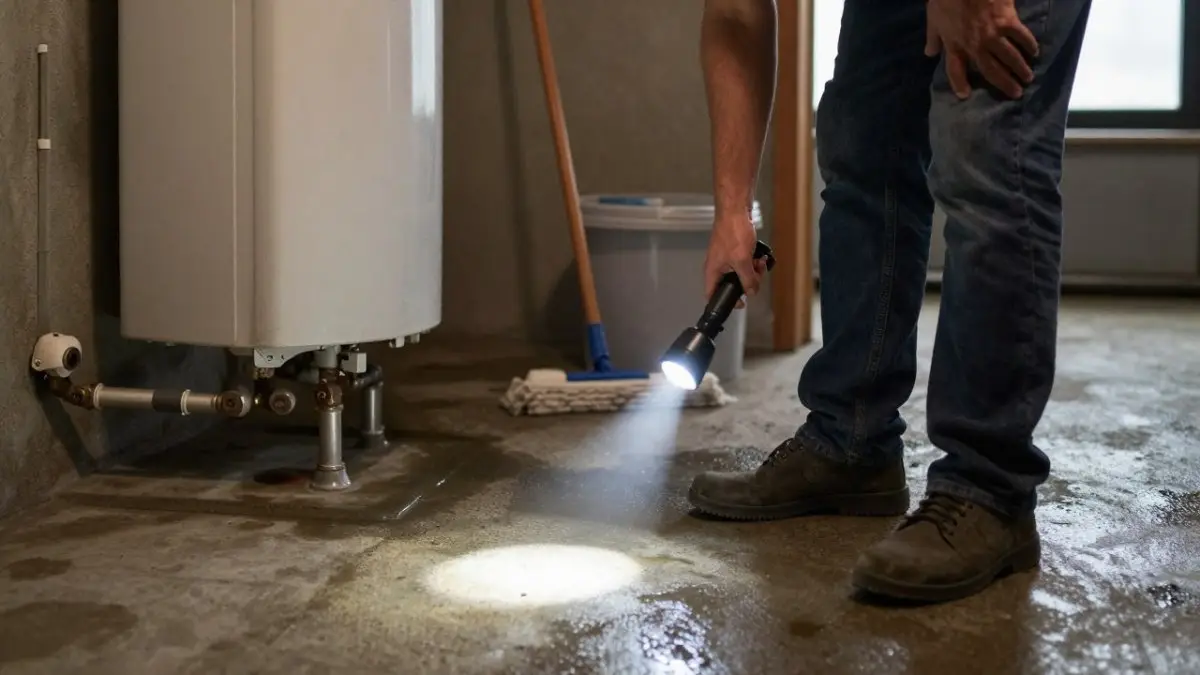
6. Handle sewage carefully. If the backup is sewage, keep kids and pets away, wear gloves and boots if you have to be near it, and wash up afterward.
7. Don’t attempt the repair. Poking at a joint, tightening a fitting under pressure, or using a torch near a wet area can turn a leak into a burst. Leave the repair to the technician.
Watch out: a bulging ceiling can release a large volume of water at once. If you see one, clear the room and put a bucket or tub underneath from a safe distance rather than standing directly under it.
What to have ready when the technician arrives. Know where the main valve is, whether the water is currently off, and what you’ve already tried. If you took photos for insurance, have them handy.
Burst Pipes, Backed-Up Drains, and Other Emergency Plumbing Services
The most common emergency calls break down into a handful of categories. Knowing which one you’re dealing with helps you describe it clearly on the phone, which speeds up dispatch.
Burst or leaking pipes. A split supply line, a failed joint, or a pinhole leak in copper can release a lot of water fast. Shut the main off, then call.
Backed-up drains and sewer backups. A single slow drain is annoying. Sewage coming up through a floor drain in the basement is an emergency, and it’s a health issue as much as a plumbing one. Our team handles main sewer drain cleaning across Plymouth and the West Metro when a line is blocked.
No hot water or a leaking water heater. A tank that’s rusted through and pooling water needs attention now. A water heater that’s simply stopped heating can usually wait for a scheduled repair.
Hidden leaks. If you hear water running when nothing is on, or a ceiling stain is growing, we can trace it with leak detection and repair instead of cutting into walls and hoping.
Frozen and burst pipes. Minnesota’s cold snaps push this to the top of the list every January. We cover that next.
Frozen Pipe Emergency Plumber: Minnesota Cold Snap Calls
Frozen pipes are the defining emergency plumbing services problem in this climate. When the temperature drops hard and stays there, unheated spaces like attics, crawl spaces, garages, and exterior walls are the first to freeze.
The warning signs are worth memorizing: a faucet that trickles instead of flowing, frost on a visible pipe, or a section of pipe that feels ice cold when nearby pipes are warm. If you spot those, act before the pipe splits.
What to do:
- Open the affected faucet so melting water has somewhere to go
- Warm the pipe gently with a hair dryer or space heater, starting at the faucet end
- Never use an open flame or a torch on a pipe
- If the pipe has already burst, shut off the main and call
Prevention beats the call every time. Our guide on preventing frozen pipes in winter covers insulation, heat tape, and the habits that keep lines flowing through a cold snap.
Emergency Plumbing Services Across the West Metro
Response time depends heavily on where you are and what the roads are doing. During a January cold snap, every plumbing company in the metro is busy, and the honest answer is that some calls take longer than others. What you can control is how clearly you describe the problem and how ready your home is for a technician to walk in and get to work.
We serve homeowners throughout Plymouth, Wayzata, Minnetonka, Maple Grove, and the surrounding West Metro communities. If you’re not sure whether your address is in our service area, our Twin Cities West Metro service area page lists the communities we cover.
A few practical notes for getting help faster:
- Call rather than email when water is actively running
- Have your address, the type of problem, and whether the water is shut off ready
- Clear a path to the water heater, main valve, or basement stairs if you can
- Ask what the service call and diagnostic process looks like before anyone arrives
How after-hours calls usually get triaged. A dispatcher’s first questions are almost always the same: is water actively running, is sewage involved, and is anyone unsafe. Those answers decide whether a call goes out immediately or gets scheduled for the next available window. A burst supply line or a sewer backup moves to the front.
What affects how fast a technician reaches you. Distance is only part of it. Snow and ice on residential streets, a driveway that hasn’t been cleared, and a locked gate or inaccessible crawl space all add time. If you can shovel a path to the main valve or the basement stairs before the truck arrives, you save everyone a step.
What to have ready when the technician arrives. Know where the main water valve is, whether the water is currently off, and what you’ve already tried. If you took photos for insurance, have them handy. If the problem is a water heater, note whether it’s gas or electric and whether the pilot or breaker has been checked. None of this replaces an onsite diagnosis, but it shortens the conversation.
On pricing: we give you the numbers upfront before work begins, so there are no surprises on the invoice. You can see how we handle estimates and service calls on our pricing page.
| Situation | Urgency | First Move |
|---|---|---|
| Water pouring from a pipe or ceiling | Emergency, call now | Shut off main, kill nearby power |
| Sewage backing up into the house | Emergency, call now | Stop using water, keep kids and pets away |
| No water anywhere in the house | Emergency, call now | Check with neighbors, then call |
| Frozen pipe, no burst yet | Urgent, act today | Open faucet, warm gently |
| Water heater leaking from the tank | Urgent, call today | Shut off water and gas or power to unit |
| Single slow drain | Can usually wait | Try a plunger, schedule service |
When to Call Brass Tacks for Emergency Plumbing
Call us when water is where it shouldn’t be, when you’ve lost water or hot water, or when you’re not sure and want a straight answer from someone who does this every day. We’re a family-owned company, and our technicians are licensed and skilled. We explain what’s wrong before we start charging you for work, and we don’t push replacements you don’t need.
If you’re in Plymouth, Wayzata, Minnetonka, Maple Grove, or anywhere nearby and something is leaking, backing up, or frozen, reach out to our emergency plumbing team. We’ll tell you what to do right now and get a technician headed your way.
A plumbing emergency is stressful enough without wondering whether the person on the other end is being straight with you. We built Brass Tacks around upfront pricing, honest recommendations, and technicians who treat your home like their own. When water is running where it shouldn’t, call us and we’ll walk you through shutting it down, then send a licensed technician to fix it right.
Frequently Asked Questions
How much does an emergency plumbing call cost?
Pricing depends on the problem, the parts needed, and the time of day, so no honest company can quote a firm number before seeing the issue. Brass Tacks publishes pricing information on its website and gives upfront pricing before work begins, so you know the cost before approving anything. Ask about any after-hours charges when you call, and get the estimate in writing before the technician starts.
What qualifies as a plumbing emergency?
A true emergency plumbing situation means active water damage, no water at all, sewage backing up, or a total loss of heat in freezing weather. A dripping faucet or slow drain can usually wait for a scheduled visit. If water is spreading across a floor, soaking drywall, or you smell gas, treat it as urgent and call right away.
Can I call 911 for plumbing issues?
Call 911 only when there is a real threat to life or property, such as a gas leak, a fire, or water near electrical panels that cannot be shut off safely. A routine burst pipe or clogged drain is not a 911 matter. For those, shut off the main water supply and call an emergency plumber in the West Metro.
How can I prevent pipes from freezing during a Minnesota cold snap?
Keep the thermostat set to a consistent temperature day and night, open cabinet doors under sinks on exterior walls so warm air reaches the pipes, and let a thin trickle run from the faucet farthest from the main during extreme cold. Disconnect garden hoses and shut off outdoor spigots before the first hard freeze. If a pipe does freeze, call a frozen pipe emergency plumber rather than thawing it with an open flame.

