

Clogged A/C Drain Line: How to Clean It Step by Step

Table of Contents
- What a Clogged A/C Drain Line Actually Does to Your System
- Signs of A/C Water Leak You Should Never Ignore
- Tools and Safety Precautions Before You Start
- Step-by-Step: How to Unclog a Clogged A/C Drain Line
- How to Use a Wet/Dry Vac on A/C Drain
- A/C Condensate Drain Pan Cleaning and Preventative Maintenance
- When to Call an HVAC Technician
- Frequently Asked Questions
Last Updated: September 30, 2026
What a Clogged A/C Drain Line Actually Does to Your System
A clogged A/C drain line is the most common reason an air conditioner leaks water inside a home. Your system pulls moisture from the air all summer, and when the line backs up, that water lands on your floor.
When that happens:
- Water overflows the drain pan and soaks drywall, ceilings, and flooring
- Mold growth starts fast in warm, damp spaces
- A float switch may shut the system down to prevent flooding
- Your home gets warm while you figure out why
Signs of A/C Water Leak You Should Never Ignore
The first sign of an A/C water leak is usually water, but not always where you’d expect. It can show up as a ceiling stain below your air handler, a puddle near the furnace, or a musty smell that won’t go away.
Watch for these warning signs:
- Water pooling around the indoor unit
- Stains or soft spots on ceilings and walls
- A musty, damp smell near the system
- The A/C shutting off before the house cools
- Gurgling sounds from the drain line
- Visible algae or sludge at the drain exit
Healthy vs. Clogged: What to Look For
A healthy drain line drips steadily into a floor drain or outside. The water runs clear, and the pipe feels cool but not slick.
A clogged line tells a different story:
- Healthy: steady drip, clear water, no odor
- Clogged: no drip, standing water in the pan, slimy residue
- Partially clogged: slow trickle, gurgling, occasional overflow
Tools and Safety Precautions Before You Start
You’ll need:
- A wet/dry vacuum
- A bucket and old towels
- A stiff brush or pipe brush
- Distilled white vinegar
- Warm water
- Gloves and eye protection
- A flashlight
Never pour drain cleaner into a condensate line. The harsh chemicals can crack PVC pipe and damage the drain pan, turning a simple clog into a repair job.
Also, don’t skip the power. The air handler has moving parts and electrical connections near the drain pan. Cutting power protects you and the equipment.
Step-by-Step: How to Unclog a Clogged A/C Drain Line
Follow these steps to clear a clogged A/C drain line safely.
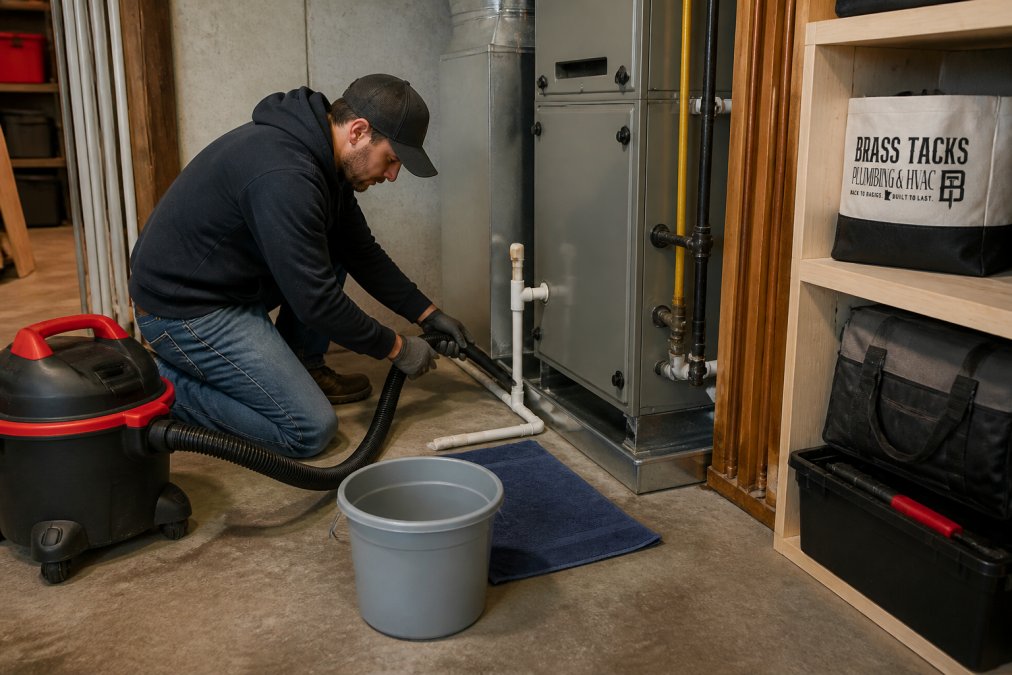
- Turn off power to the air handler at the breaker or service switch. If you have a condensate pump, unplug it too.
- Find the drain line. Look for a white PVC pipe leaving the indoor unit. It usually runs to a floor drain, a utility sink, or outside through a wall.
- Identify your configuration. Look for one of these three setups:
- Gravity-fed: The pipe slopes continuously downhill to a drain. No pump, no reservoir.
- Pump-assisted: A small plastic box (the condensate pump) sits near the unit, with tubing running up and out. You will hear it hum when the pan fills.
- P-trap inline: A U-shaped section of pipe holds a water seal. Common on systems tied to a sewer drain.
- Locate the access point. Many lines have a T-shaped cap, a threaded plug, or a capped standpipe you can open. If there is no access point, you may need to disconnect the line at the air handler.
- Check the drain pan. Empty standing water with a cup or wet/dry vacuum. Look at the pan floor for rust, cracks, or a slimy film.
- Clear the opening. Wipe away visible sludge and debris with a rag. Algae often looks like dark green or black film.
- Flush the line. Pour warm water slowly and watch for flow at the exit. If water backs up, the clog is still there.
- Repeat if needed. Two or three flushes usually clear a light clog. If water still will not move, move to the wet/dry vacuum method below.
- Restore power and run the A/C for 15 to 20 minutes. Confirm steady drainage at the exit before you walk away.
What the Float Switch Is Telling You
If your A/C shut off on its own before you started, a float switch likely tripped. This small device in the drain pan or pump reservoir cuts power when water rises too high. It’s a safety feature, not a failure.
Gravity vs. Pump: Why the Fix Is Different
A gravity line clogs because debris settles in low spots. A pump line clogs because the reservoir fills with sludge and the impeller loses its grip. Flush only the tubing on a pump system and skip the reservoir, and the clog returns within days.
For pump systems, also check:
- The discharge tubing for kinks or a frozen section in winter
- The check valve at the pump outlet, which can stick
- The reservoir floor, which collects a biofilm that vinegar alone will not break down
Flushing With Vinegar and Other Eco-Friendly Options
Diluted vinegar is the go-to for routine flushing. Mix equal parts distilled white vinegar and warm water, pour it slowly down the access point, let it sit about 30 minutes, then flush with plain water.
For a greener approach, some homeowners use:
- A cup of hydrogen peroxide mixed with water to break down algae
- Warm water alone for light buildup
- A mild dish soap solution for greasy residue
- An enzymatic drain cleaner labeled safe for PVC and condensate systems, which digests the biofilm instead of just killing surface growth
If you use an enzymatic cleaner, give it time to work. Most need several hours or overnight to break down a biofilm. Pour it in before bed and flush in the morning.
How to Use a Wet/Dry Vac on A/C Drain
A wet/dry vacuum pulls stubborn clogs out instead of pushing them through, and it often clears a blocked line. The trick is knowing which end to pull from.
Which End to Suction From
Most drain lines have two openings: the indoor access point near the air handler and the outdoor or floor-drain exit. Which one you use depends on where the clog sits.
- Clog near the pan (indoor side): Suction from the outdoor exit. You are pulling the debris toward you and out.
- Clog near the exit (outdoor side): Suction from the indoor access point. Same idea, opposite direction.
- Clog in a P-trap: Suction from the indoor side first. If nothing moves, you may need to open the trap by hand.
Step-by-Step Suction
- Set the vac to the wet setting and remove the filter if your model requires it. A wet filter clogs fast and kills suction.
- Find the drain line exit. This is often a pipe stub outside the foundation or a line ending over a floor drain.
- Press the hose tightly against the pipe opening to create a seal. Wrap a rag around the hose end if the fit is loose.
- Run the vac for 30 to 60 seconds. Listen for a change in pitch, which usually means water and debris are moving.
- Watch for a rush of water and debris into the vac tank.
- If nothing moves, switch to the indoor access point and suction from there.
Why the Seal Matters More Than the Vac
A shop vac only pulls as hard as its seal allows. If air leaks around the hose end, you lose most of the suction, which is the most common reason homeowners think the vacuum method does not work.
A few ways to improve the seal:
- Wrap the hose end with a wet rag and press it into the pipe
- Use a rubber plumbing boot or a reducer coupling that matches the pipe size
- Tape the hose to the pipe with painter’s tape as a temporary seal
When Suction Alone Will Not Work
Some clogs are too solid or too far down the line for a shop vac. Signs you have hit that wall:
- The vac pulls water but the line refills within a day
- You hear gurgling but no water moves
- The line is sagging and holding water in a low spot
- The clog is past a P-trap you cannot easily open
Never use a shop vac on a line that has been treated with chemical drain cleaner. The vac can aerosolize residue and the fumes are dangerous. Flush with plain water first, and ventilate the area.
A/C Condensate Drain Pan Cleaning and Preventative Maintenance
A/C condensate drain pan cleaning prevents most clogs before they start. The pan collects water and debris, and if it’s dirty, that gunk washes into the line.
To clean the pan:
- Power down the unit
- Remove standing water
- Scrub the pan with warm water and mild soap
- Rinse and dry it fully
- Check the pan for cracks or rust
Mark your calendar for a spring flush before the first hot stretch. Algae grows fastest in the first weeks of heavy use, and a clean line in May saves you a flooded basement in July.
Handling Condensate Pumps and Unusual Drain Configurations
Not every system drains by gravity. Some homes use a condensate pump to push water up and out, and those fail differently.
If your system has a pump:
- Listen for a humming sound when the pan fills
- Check that the tubing isn’t kinked or pinched
- Clean the pump reservoir, not just the line
When to Call an HVAC Technician
Call a technician when water keeps coming back after you’ve cleared the line, or when you see damage you can’t fix yourself. Recurring clogs usually point to a deeper issue, like a sagging drain line or a cracked pan.
Reach out if you notice:
- Water stains spreading on ceilings or walls
- A float switch that keeps tripping
- A drain line that won’t clear after two attempts
- Rust or cracks in the drain pan
- Musty odors that return after cleaning
Frequently Asked Questions
What can I pour down my A/C drain to unclog it?
Diluted white vinegar is the safest option for routine flushing. Mix equal parts vinegar and water and pour it slowly down the access port or drain opening. Avoid full-strength bleach, which can damage PVC pipe over time and harm the aluminum components it touches. For stubborn blockages, a wet/dry vacuum applied to the drain exit often clears debris better than any liquid. If the line stays clogged after both approaches, call a licensed HVAC technician.
How do I know if my A/C drain line is clogged?
The clearest signs of an A/C water leak from a clog include water pooling around the indoor air handler, a drain pan that stays full, musty odors near the unit, or visible mold growth on the cabinet. You may also notice the system shutting off unexpectedly if a float switch trips. A healthy line drips steadily at the drain exit; a clogged one produces little to no flow. When in doubt, inspect the pan and the drain exit before assuming the worst.
How often should I clean my A/C drain line?
In Minnesota, where humid summers push air conditioners hard, flush the condensate drain line at least once per cooling season, ideally in late spring before the first hot stretch. Homes with older PVC pipe, visible algae buildup, or a history of clogs benefit from a flush every two to three months during peak use. Pairing that flush with A/C condensate drain pan cleaning keeps the whole drainage path clear and reduces the chance of overflow.
What happens if I ignore a clogged A/C drain line?
Water backs up into the drain pan and eventually overflows onto the floor, ceiling, or walls near the air handler. Over time, that moisture feeds mold growth, damages drywall and insulation, and can rust the unit’s cabinet. A float switch may shut the system down to prevent flooding, which means no cooling on the hottest days. Long-term damage assessment often reveals warped flooring or stained ceilings that cost far more to fix than a routine drain line cleaning.
