

How to Stop Sewer Gas Smell in House: 7 Fixes

Table of Contents
- What Causes Sewer Gas Smell in a House?
- Dry P-Trap Symptoms: Why Empty Traps Let Gas In
- How to Check for Sewer Gas Leaks Step by Step
- Toilet Wax Rings, Overflow Drains, and Hidden Leaks
- Plumbing Vent Stack Freezing and Blocked Venting Systems
- When to Call a Professional Plumber
- Frequently Asked Questions
Last Updated: October 1, 2026
What Causes Sewer Gas Smell in a House?
If you smell sewer gas in your house, the cause is almost always a broken seal in your plumbing system. Traps hold water to block gas, and vents carry gas out the roof. When either fails, that rotten egg odor slips inside.
How Sewer Gas Enters Your Home
Every drain in your home connects to the sewer. Each one has a trap, a curved section of pipe that holds water. That water is the seal that keeps methane and hydrogen sulfide in the pipe.
- A dry trap that has lost its water seal
- A failing wax ring under a toilet
- A cracked or loose sewer pipe
- A blocked or frozen plumbing vent
- A sink overflow drain coated in bacterial buildup
Find the opening, and you find the fix.
Dry P-Trap Symptoms: Why Empty Traps Let Gas In
A dry P-trap is the number one cause of sewer gas smell in a house, and the easiest to fix. The trap only works when it holds water. Let that water evaporate, and the pipe is wide open to the sewer.
- A sewer smell that is strongest in one room
- A gurgling sound when nearby fixtures drain
- An odor that shows up in a guest bath or basement you rarely use
If a rarely used drain dries out again within a week or two, the trap may be siphoning. That points to a venting problem, not just evaporation. That is worth a professional look.
Which Fixtures Are Most Likely to Dry Out
Any fixture you rarely use is a candidate. In West Metro homes, we see it most in:
- Guest bathrooms and half baths
- Basement floor drains
- Laundry tubs
- Utility sinks in the garage
How to Check for Sewer Gas Leaks Step by Step
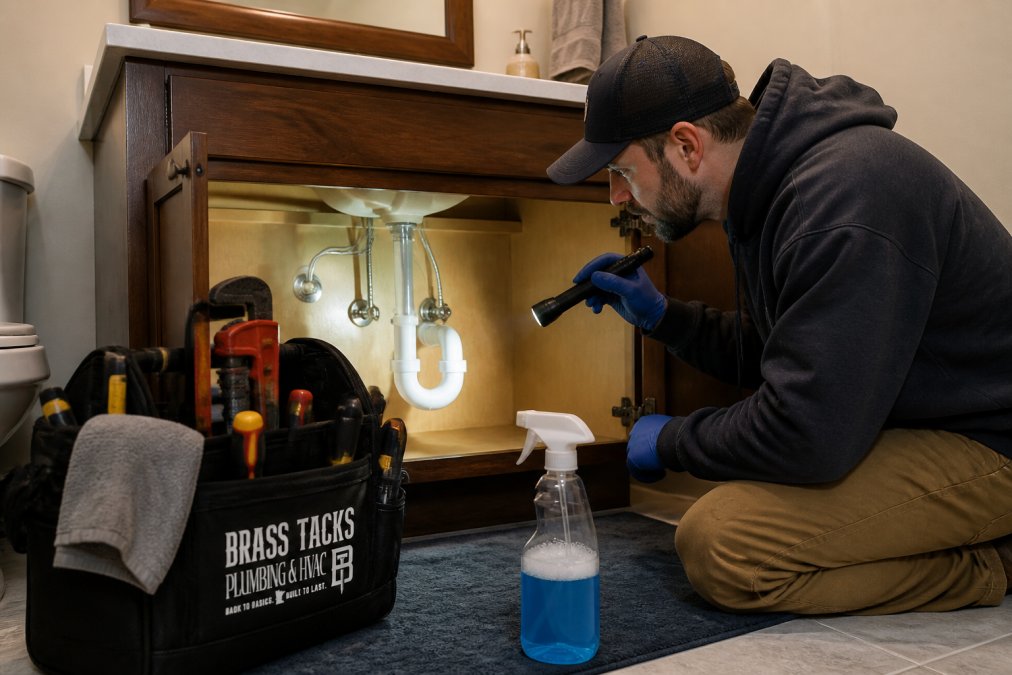
Learning how to check for sewer gas leaks starts with a simple soapy water test. It takes about 20 minutes and needs no special training. Work from the fixture with the strongest smell outward.
Why the Soapy Water Test Works
Sewer gas sits under slight pressure inside the drain system. When a joint, gasket, or wax seal fails, gas pushes out through the gap. Soapy water forms a thin film over the joint, and escaping gas pushes through and forms bubbles. No bubbles means no leak at that spot.
The Room-by-Room Diagnostic Path
A faster approach is to let the room tell you where to look first:
- Smell in one bathroom only. Start at the toilet base and the sink P-trap. Those are the two most common failure points in a single bathroom.
- Smell in the basement or near a floor drain. Check the floor drain trap first, then any laundry tub or utility sink nearby. Basement drains dry out fastest because they see the least use.
- Smell in the kitchen. Check the sink P-trap, the dishwasher connection, and the disposal flange. A loose disposal flange or a dried-out dishwasher loop is a frequent culprit.
- Smell in a laundry room. Check the washer standpipe trap and the drain pan under the machine.
- Smell that moves between floors or fills the whole house. Stop checking fixtures. That pattern points to the vent stack or a cracked drain line, not a single trap.
The Step-by-Step Test
Here is the process we use on a service call:
- Ventilate first. Open windows and doors so you are not breathing concentrated gas.
- Mix a few drops of dish soap with water in a spray bottle. A weak mix bubbles faster than a thick one.
- Spray every drain connection, trap joint, supply escutcheon, and the caulk line around each toilet base.
- Watch for bubbles for a full 30 seconds. Small leaks bubble slowly.
- Sniff near each fixture, one at a time. Cup your hand and wave air toward your nose rather than putting your face at the drain.
- Mark any spot that bubbles with tape so you can tighten or reseal it.
- Re-test after any repair. A fixed joint should show no bubbles on a second pass.
Tools You Will Need
You do not need a full pro kit to start. Gather these:
- A spray bottle with soapy water
- A flashlight or headlamp so both hands stay free
- A bucket and rags for drips
- A drain snake for clogs that may be masking a vent issue
- A screwdriver and adjustable wrench for tightening fittings
- A wax ring kit if a toilet base is the suspect
- A mirror on a stick for looking behind a toilet or under a vanity
Sewer gas is not just a smell. Methane is flammable, and hydrogen sulfide can cause headaches, dizziness, and nausea in high concentrations. If the odor is strong or you feel unwell, leave the house and call a professional.
Toilet Wax Rings, Overflow Drains, and Hidden Leaks
A toilet wax ring seals the toilet base to the floor flange. When it fails, sewer gas leaks out at the base of the toilet. You may not see water, but you will smell it.
Signs of a bad wax ring:
- Sewer smell near one toilet
- A toilet that rocks or shifts
- Water staining around the base
| Problem | Likely Symptom | First Fix |
|---|---|---|
| Dry P-trap | Smell in one room | Pour water down drain |
| Bad wax ring | Smell at toilet base | Replace wax ring |
| Overflow drain | Musty sink odor | Baking soda and vinegar |
| Frozen vent | Smell across whole house | Thaw vent, call a pro |
Plumbing Vent Stack Freezing and Blocked Venting Systems
Watch for these signs:
- A sewer smell that spreads through the whole house
- Gurgling from multiple fixtures at once
- Slow drains that are not actually clogged
If the smell is everywhere instead of one room, suspect the vent, not a single fixture. A whole-house smell points to a venting system problem.
Never climb onto a snowy roof to clear a vent yourself. That is a job for a licensed plumber with the right fall protection.
When to Call a Professional Plumber
Some sewer gas problems need a pro. Call a licensed plumber if:
- The smell returns after you refill every trap
- You find bubbles at a joint you cannot tighten
- The whole house smells, not just one room
- You suspect a cracked sewer line
- The odor comes with headaches, dizziness, or nausea
- You have a septic system and the smell is outdoors near the tank or drain field
What a Professional Actually Does Differently
A plumber does not just sniff around. A plumber may use a smoke test, which reveals every leak point at once. From there, a camera inspection can look inside the drain line for cracks, root intrusion, or a sagging pipe that traps waste. A manometer or gas detector can confirm whether the vent stack is pulling air the way it should.
The Multi-Story Problem
In a two-story or split-level home, gas does not stay where it starts. Shared wall cavities, vent chases, and the gap around a plumbing stack let gas travel between floors. A failed wax ring in a basement bathroom can smell like it is coming from an upstairs hall bath. That is why a whole-house smell is so hard to trace alone, and why a plumber will often check fixtures on every level.
The Safety Case for Calling Sooner
Hydrogen sulfide is the gas behind the rotten egg smell. At low levels it is a nuisance; at higher levels it can cause headaches, nausea, and dizziness, and it can deaden your sense of smell, so a strong leak can seem to fade when it is actually getting worse. Methane, the other main component, is flammable. A persistent smell is not a wait-and-see problem.
Cracked Sewer Line: The Worst Case
A cracked sewer line is the most serious cause. Signs include a sewage smell in the yard, soggy patches in the lawn, and repeated drain backups. That needs a camera inspection, not a DIY fix. If you have a septic system, a smell near the tank or drain field can point to a full tank, a failing baffle, or a saturated drain field.
What to Expect on the Visit
A good plumber will start with a real diagnosis before quoting any work: locating the source, explaining what failed, and giving you options. If a simple repair will fix it, that is what you should hear. The fix should match the cause, not just mask the smell.
A sewer gas smell that comes back after you refill the traps, spreads between floors, or shows up with headaches is a signal to stop guessing and get a diagnosis. The sooner the source is found, the sooner the air in your home is safe to breathe.
Frequently Asked Questions
What is the main cause of sewer gas smell in a home?
A dry P-trap is the most common cause. The curved section of pipe under a sink, tub, or floor drain holds a small amount of water that blocks sewer gas from rising into your home. When that water evaporates, usually in a guest bathroom, basement drain, or vacation home, methane and hydrogen sulfide travel straight up the drain. A failed toilet wax ring, a blocked plumbing vent, or a cracked sewer pipe can also release sewer gas smell indoors.
How do I know if my sewer trap is dry?
Dry p-trap symptoms are easy to spot once you know them. You will usually notice a sewer smell that is strongest right at one fixture, plus gurgling sounds when nearby drains run. Shine a flashlight down the drain. If you see no standing water in the curve, the trap is dry. Pour a quart of water down the drain and wait a few hours. If the smell returns, the trap is losing water faster than normal and needs a closer look.
Can a cracked vent pipe cause sewer smells?
Yes. The plumbing vent stack carries sewer gas up through your roof, and any crack, loose joint, or blockage along that run lets gas escape inside walls or the attic. In Minnesota, plumbing vent stack freezing is a common winter problem because frost and ice can seal the top of the pipe. A blocked vent pushes gas back down into the house and often causes gurgling drains along with the smell. A licensed plumber can inspect the vent and confirm the location.
Is it safe to sleep in a house with sewer gas?
It is not something to ignore. Sewer gas contains methane, which is flammable, and hydrogen sulfide, which causes headaches, nausea, and dizziness at higher concentrations. Low-level sewer gas exposure over time can worsen symptoms, and anyone with asthma or a weakened immune system is more vulnerable. Open windows, avoid flames or sparks, and call a plumber if the smell is strong or will not go away. If you ever smell gas heavily and feel ill, leave the home and call 911.
