

How to Clear a Plumbing Drain Clog: 2026 Guide

Table of Contents
- Is It a Clog or Something Worse? A Visual Diagnostic Guide
- Safety First: What to Do Before You Start
- DIY Methods to Clear a Plumbing Drain Clog
- Chemical vs. Enzymatic Cleaners: What’s Safe for Your Pipes?
- Signs of a Main Sewer Line Clog (And What to Do)
- Preventing Sink Drain Clogs: A Simple Maintenance Plan
- When to Call a Professional Plumber
- Frequently Asked Questions
Last Updated: September 29, 2026
Is It a Clog or Something Worse? A Visual Diagnostic Guide
A plumbing drain clog usually announces itself with slow drainage, gurgling sounds, or a bad smell. But the same symptoms can point to a failing pipe or a blocked sewer line, so it pays to look before you poke.
Here is what each sign tends to mean:
- One slow drain: Almost always a local clog in the P-trap or the fixture’s tailpiece.
- Gurgling sounds: Air is trapped behind a blockage, often deeper in the pipe.
- Unpleasant odor: Debris is sitting in the pipe and rotting.
- Multiple slow drains at once: The main household drain or sewer line is the likely culprit.
- Water backing up in a tub when you run the sink: The two fixtures share a line that is blocked.
The Brass Tacks Plumbing, Heating & Cooling team sees this mix-up often. One clogged fixture is a simple fix. Several backed-up fixtures at the same time is a different problem, and it needs a different response. If you are not sure which one you have, stop and read on before you reach for a chemical drain cleaner.
Safety First: What to Do Before You Start
Before you touch a drain, protect yourself and your pipes. A little prep prevents bigger damage, and it also keeps you from making a clog worse.
- Shut off the water supply to the fixture if you can.
- Put on rubber gloves and safety glasses.
- Lay towels or a bucket under the P-trap and any open pipe.
- Open a window or run the exhaust fan if you are working in a small bathroom.
- Keep children and pets out of the work area.
- Never mix chemical drain cleaner with a plunger or snake.
- Skip chemical cleaner entirely if you have a septic system.
Why Chemical Cleaner and a Plunger Are a Bad Combination
This is the mistake that sends people to urgent care. A caustic drain cleaner is mostly sodium hydroxide or bleach. It does not dissolve instantly. If the drain is fully blocked, the liquid just sits in the pipe above the clog, still active.
When you plunge, you are pushing air and water against that standing pool. The pressure has to go somewhere, and the path of least resistance is often back up through the drain opening. That splash carries caustic liquid with it. It can burn skin, and a single drop in the eye is a medical emergency.
The same logic applies to a snake. Feeding a cable into a pipe full of chemical cleaner stirs it up and can splash it back at you. Use one method at a time, and if you have already poured chemical cleaner, do not plunge or snake. Flush with plenty of water first, or call a plumber and tell them what you used.
Septic System Safety
If your home has a septic system, the rules change. Chemical drain cleaners kill the bacteria that break down waste in the tank. That bacteria is the whole engine of the system. A single strong dose can set the tank back for weeks, and repeated use can lead to solids building up faster than they should.
For septic homes, stick with a plunger, a snake, or an enzymatic cleaner.
If you have already poured chemical cleaner and the drain is still blocked, do not plunge, snake, or add a second product. Call a plumber and tell them exactly what you used so they can work safely.
DIY Methods to Clear a Plumbing Drain Clog
Most household clogs clear with a plunger, a snake, or a simple natural mix. Try the gentlest method first, then work up. Match the tool to the clog, and you will save yourself a messy afternoon.
Using a Plunger Effectively
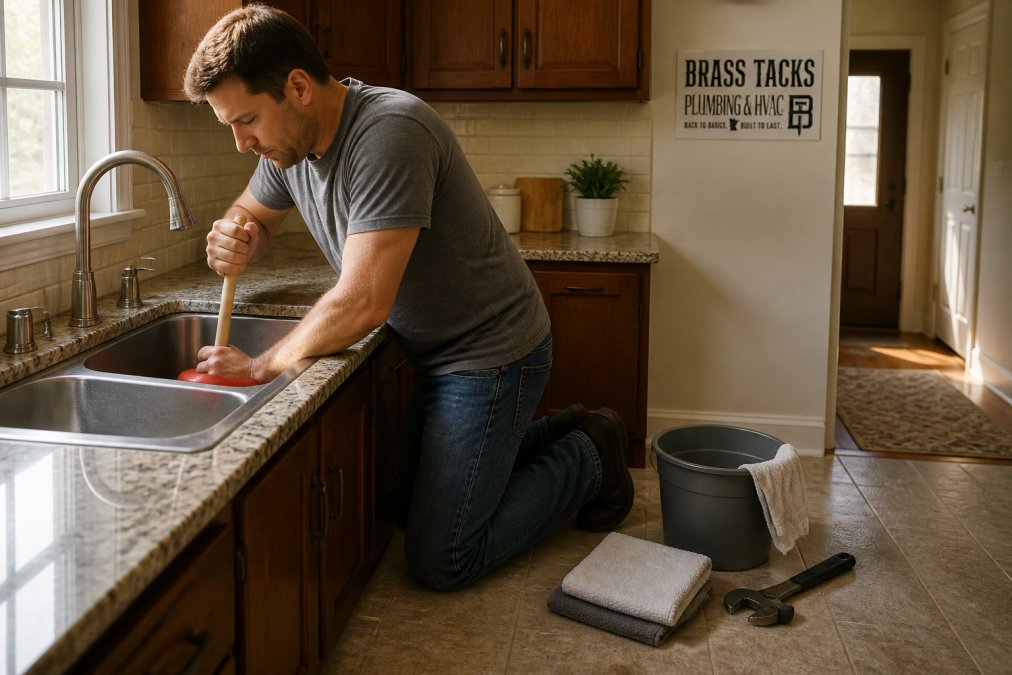
A plunger works by pushing and pulling water to break up the clog. The seal matters more than the force.
- Remove the drain stop or strainer so the plunger can seal.
- Block the second drain in a double sink with a wet rag.
- Add enough water to cover the plunger cup.
- Press down to seal, then plunge 15 to 20 times with steady rhythm.
- Keep the seal. Do not lift the plunger between strokes.
- Pull up fast on the last stroke to break the clog loose.
- Run hot water to check the flow.
Natural DIY Cleaning Methods
Baking soda and vinegar loosen light buildup without harming pipes. This mix works well for routine maintenance and mild clogs.
How to Use a Plumbing Snake
A plumbing snake, also called an auger, reaches clogs that a plunger cannot. Learning how to use a plumbing snake takes a few minutes.
Cleaning and Storing Your Tools
A dirty snake or plunger is a problem waiting to happen. After every use, wipe the cable or cup with a rag, then rinse it with hot water and a little dish soap. Dry it fully before you put it away. A wet steel cable rusts, and rust flakes can end up in your drain the next time you use it.
Run hot water for 30 seconds after any DIY fix. It flushes loose debris out of the pipe so the clog does not rebuild in the same spot.
Chemical vs. Enzymatic Cleaners: What’s Safe for Your Pipes?
Chemical drain cleaners are the fastest option on the shelf, but they are also the harshest. Enzymatic cleaners work slower and are gentler on pipes. The right pick depends on your plumbing and your patience.
| Cleaner Type | Speed | Safe for Septic | Safe for Older Pipes |
|---|---|---|---|
| Chemical | Fast | No | Risky |
| Enzymatic | Slow | Yes | Yes |
| Baking soda and vinegar | Moderate | Yes | Yes |
Signs of a Main Sewer Line Clog (And What to Do)
Signs of a main sewer line clog show up in more than one place. When several fixtures act up at once, the problem is in the main line, not a single drain.
Watch for these red flags:
- Two or more drains backing up at the same time.
- Sewage smell in the basement or lowest bathroom.
- Gurgling from the toilet when you run the washer.
- Water pooling around the floor drain.
- Slow drains throughout the whole house.
If sewage is backing into your home, stop using water right away. Every flush adds more to the backup. Call a plumber and keep everyone away from the affected area.
Preventing Sink Drain Clogs: A Simple Maintenance Plan
Preventing sink drain clogs comes down to a few habits you repeat each month. Small steps keep grease, hair, and soap scum from building up.
Try this routine:
- Weekly: Run hot water for 30 seconds after each heavy use.
- Monthly: Pour baking soda and vinegar down kitchen and bathroom drains.
- Monthly: Use an enzymatic cleaner overnight in slow drains.
- Always: Wipe grease from pans into the trash, not the sink.
- Always: Use a hair catcher in tubs and showers.
- Seasonally: Flush the water heater and check for slow drains before winter.
When to Call a Professional Plumber
Call a professional plumber when a clog returns, when several fixtures back up, or when you smell sewage. These point to a problem past the trap that DIY tools cannot fix.
Reach out if you see any of these:
- The same drain clogs again within weeks.
- Multiple fixtures back up at once.
- Water backs up in a tub when you run another fixture.
- You smell sewage anywhere in the home.
- The pipe is old, corroded, or has visible damage.
- You have already tried a plunger, a snake, and a natural cleaner.
One slow drain is usually a simple fix. Several backed-up drains, sewage smells, or a clog that keeps coming back means it is time to call a pro.
Frequently Asked Questions
What do plumbers recommend to unclog drains?
Plumbers typically recommend starting with a plunger or a drain snake before trying chemicals. For a simple sink clog, a cup plunger often works. For deeper blockages, a hand auger or drain snake is more effective. If those fail, or if you have signs of a main sewer line clog like multiple slow drains, it’s best to call a professional. They can use hydro-jetting or a camera inspection to clear and diagnose the issue safely.
Does pouring boiling water down a drain help unclog it?
Boiling water can help with light grease or soap scum clogs in metal pipes, but it’s not a cure-all. It can melt grease temporarily, but the grease may re-solidify further down the pipe. More importantly, boiling water can damage PVC pipes, which are common in modern homes, and can cause leaks at joints. For a safer approach, try a mixture of baking soda and vinegar, or use a plunger first.
Are chemical drain cleaners safe for my pipes?
Chemical drain cleaners can be harsh. They often contain caustic ingredients that generate heat and can corrode pipes over time, especially older metal or PVC pipes. They also pose a safety risk to your skin and eyes, and can damage septic systems by killing beneficial bacteria. Enzyme-based cleaners are a gentler alternative that break down organic matter without harming pipes, but they work slower and are best for maintenance, not severe clogs.
How do I know if my main sewer line is clogged?
Signs of a main sewer line clog include multiple slow drains throughout the house, gurgling sounds from toilets or drains, sewage odors, and water backing up in unusual places like the basement floor drain. If you notice these signs, stop using water immediately and call a professional. A main line clog requires specialized tools like a sewer auger or hydro-jetter, and attempting to clear it yourself can damage your plumbing or cause a sewage backup.
A stubborn clog that keeps returning is a sign something deeper is wrong. Brass Tacks Plumbing, Heating & Cooling can clear the blockage, check the line with a camera, and explain your options with upfront pricing and no sales pressure. Our licensed technicians handle everything from a single slow drain to a full sewer line issue, and we leave your home as clean as we found it. Schedule your plumbing service now and get your drains flowing again.
