

Toilet Repair: Fix a Running Toilet and Cut Water Waste

Table of Contents
- Why a Running Toilet Costs You More Than You Think
- How to Fix a Running Toilet in 5 Steps
- Plumbing Repair Cost Factors That Decide Your Bill
- DIY Toilet Repair vs. Hiring a Plumber
- How to Vet a Plumber Before You Book
- 1. Are you licensed and insured?
- 2. Do you charge a diagnostic or trip fee, and is it applied to the repair?
- 3. Will I get a written price before work begins?
- 4. Can you explain what is wrong before you start charging?
- 5. Do you offer a warranty on parts and labor?
- 6. Will you protect the floor and clean up after?
- A vetting checklist you can actually use
- Minnesota Toilet Troubles: Cold Weather, Older Homes, and Hard Water
- When to Stop Troubleshooting and Call for Help
- Frequently Asked Questions
Last Updated: September 20, 2026
Why a Running Toilet Costs You More Than You Think
A running toilet can waste hundreds of gallons of water a day, and on a metered bill that adds up fast. The good news: most running toilets come down to one worn part, and toilet repair is one of the few plumbing fixes a careful homeowner can handle in an afternoon.
How to Fix a Running Toilet in 5 Steps
Fixing a running toilet takes about 30 to 60 minutes and usually requires one replacement part. The fix almost always involves the flapper, the fill valve, or the overflow tube.
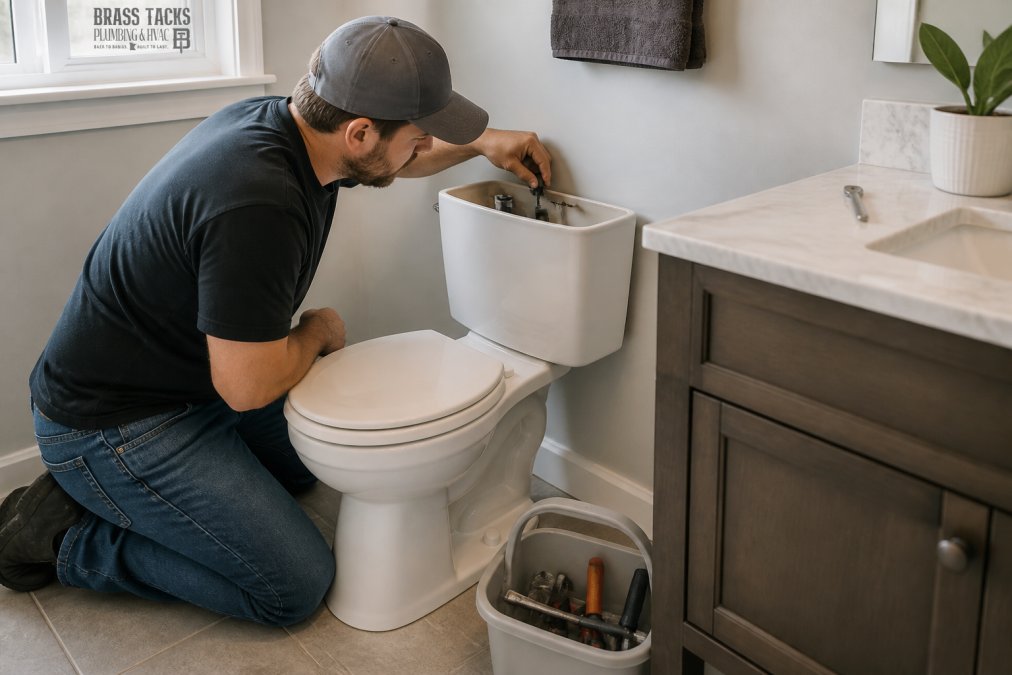
Step 1: Shut Off the Water and Check the Tank
Turn the shutoff valve behind the toilet clockwise until it stops, then flush to empty the tank. If the valve is stuck or corroded, stop and call a plumber rather than forcing it.
Step 2: Test the Flapper, Fill Valve, and Overflow Tube
Press down lightly on the flapper while the tank refills. If the running stops, the flapper is your problem.
Step 3: Replace Worn Parts and Confirm the Fix
Shut the water off again, unhook the old flapper, and take it to the hardware store so you match the model. Most toilets use one of a handful of standard shapes.
Before you buy anything, drop a few drops of food coloring into the tank and wait 15 minutes without flushing. If color shows up in the bowl, the flapper is leaking. It’s the fastest diagnosis in plumbing and costs nothing.
Plumbing Repair Cost Factors That Decide Your Bill
Most homeowners searching for toilet repair help are really asking one question: is this a small job or a big one? Understanding the factors that influence plumbing repair costs can help you anticipate which category your repair falls into before anyone shows up.
The part is almost never the expensive part
A flapper, a fill valve, and a tank-to-bowl gasket are often among the less expensive parts in a home. They are typically molded rubber and plastic, widely available, and tend to fail over time. When a running toilet is caused by one of these, the cost of the part is usually minor compared to the labor involved.
Labor is driven by access, not by difficulty
A toilet repair that takes twenty minutes in an open bathroom can take an hour in a tight powder room where the tank is against a wall and the shutoff valve is behind the bowl. Technicians often factor in the time required, which can be influenced by how much room they have to work.
Anything below the bowl changes the job category
This is the line that separates a repair from a project. As long as the problem lives inside the tank, you are looking at a parts-and-labor visit. The moment it moves below the bowl, the toilet has to come up.
Time of day and scheduling
Emergency and after-hours calls may have different rates than a scheduled weekday visit. This often reflects the cost of pulling a technician off a route or accommodating urgent requests. If your toilet is running but not flooding, scheduling a normal appointment window is often a more cost-effective option.
What actually helps you decide
The useful question is not “what does a toilet repair cost” but “which category is my repair in.” A running toilet with a soft flapper is typically a tank-parts job. A toilet that rocks, leaks at the base, or has a cracked tank is often a pull-and-reset job.
Before you call anyone, take a photo of the inside of the tank and a photo of the base of the toilet where it meets the floor. Those two images tell a plumber which category your repair is in before they ever leave the shop, which usually means a faster and more accurate visit.
DIY Toilet Repair vs. Hiring a Plumber
DIY toilet repair makes sense for a running toilet, a weak flush, or a worn flapper. Hiring a plumber makes sense when the problem involves the floor, the drain line, or anything you’d have to pull the toilet to reach.
| Situation | DIY or Pro | Why |
|---|---|---|
| Running toilet, worn flapper | DIY | One low-cost part, 30 minutes |
| Fill valve replacement | DIY | Standard part, straightforward swap |
| Water on the floor at the base | Pro | Likely wax ring or flange |
| Toilet rocks or shifts | Pro | Flange or floor damage |
| Cracked tank or bowl | Pro | Full replacement needed |
| Repeated clogging | Pro | May be a drain line issue |
Never force a corroded shutoff valve. If it snaps, you have an active leak with no way to stop it, and that turns a simple repair into an emergency call. If the valve won’t turn by hand, stop and call a plumber.
How to Vet a Plumber Before You Book
Most homeowners pick a plumber the way they pick a dentist: they wait until something hurts, then call whoever answers. This approach can sometimes lead to unexpected costs for work that may not have been necessary. Vetting a plumber can help you avoid a bill that does not match the quote.
1. Are you licensed and insured?
This is not a formality. A licensed plumber has passed a state exam and carries a credential you can look up. Insurance matters because if a technician damages a fixture or a floor, you want the company’s policy handling it, not your homeowner’s policy.
2. Do you charge a diagnostic or trip fee, and is it applied to the repair?
Some companies charge a fee just to come out. Some apply that fee to the repair if you move forward. Some do not charge one at all. None of these approaches is inherently wrong, but it’s helpful to know which one applies before you book, as it can influence the overall cost of a small job.
3. Will I get a written price before work begins?
This is a very important question. A written price given before the technician starts helps protect you from a surprise invoice. It also encourages the company to diagnose the problem before quoting it, which is a good sign in itself.
4. Can you explain what is wrong before you start charging?
A good technician will show you the failed part, explain why it failed, and tell you what the repair involves. That is not a sales pitch. It is how you learn whether the recommended work matches the problem.
5. Do you offer a warranty on parts and labor?
Parts fail. A flapper that was fine in July can stiffen by January. A warranty on both the part and the labor means a callback is covered rather than billed. Ask how long the warranty runs and what it covers.
6. Will you protect the floor and clean up after?
This sounds minor until a technician tracks grit across a bathroom floor or leaves old parts in the tank. A company that brings floor protection and hauls away the old parts treats your home like a home.
A vetting checklist you can actually use
- License number provided and verifiable
- Insurance confirmed
- Trip or diagnostic fee disclosed up front
- Written price given before work starts
- Problem explained before charges begin
- Parts and labor warranty stated in writing
- Floor protection and cleanup included
If a company answers all seven without hesitation, you are in good hands. If they dodge two or three, keep calling. The time you spend on the phone can provide valuable insights, complementing any reviews you may read.
A plumber who answers these seven questions clearly is almost always a plumber who will explain the work, quote it in writing, and stand behind it. The questions are not a test. They are a filter.
Minnesota Toilet Troubles: Cold Weather, Older Homes, and Hard Water
Minnesota homes put toilets through conditions that shorten part life. Cold snaps, hard water, and older plumbing all play a role, and each one shows up differently.
In this region, hard water is the leading cause of repeat flapper failures. If you’re replacing the same part every year, the water is the problem, not the part.
When to Stop Troubleshooting and Call for Help
Stop troubleshooting and call a plumber when water is pooling at the base of the toilet, when the toilet rocks or shifts, or when you’ve replaced the flapper and fill valve and it’s still running. Those point to problems below the bowl that you can’t reach from the tank.
Call right away if:
- Water is on the floor around the base
- The toilet rocks, shifts, or feels loose
- You see cracks in the tank or bowl
- The shutoff valve won’t close
- Sewer smell is coming from the bowl or floor
Frequently Asked Questions
When should I call a professional for toilet repair?
Call a pro if you have already replaced the flapper and fill valve and the toilet still runs, if water pools around the base, if the bowl drains slowly along with the running, or if the shutoff valve under the tank will not close. Those point to a worn flush valve seat, a failing wax ring, or a clog deeper in the drain line. A licensed plumber can diagnose the cause before charging for work and confirm the fix on site.
What drives plumbing repair cost factors on a toilet job?
The main plumbing repair cost factors are the part that failed, how hard it is to reach, and whether the problem is inside the tank or behind it. A flapper or fill valve swap is a simple repair. Pulling the toilet to replace a wax ring or a cracked flange takes more labor. Age of the fixture matters too: a toilet from the 1970s may have a corroded shutoff valve that needs replacing before any repair starts.
How do I choose a reliable plumber in the West Metro?
Ask three things before you book: whether the company is licensed and insured, whether it gives upfront pricing before work begins, and whether the technician will explain the problem before starting the repair. A local service provider that serves Plymouth, Wayzata, Minnetonka, and Maple Grove will also know how hard water and cold snaps affect fixtures in this area. Get the diagnosis in writing and confirm the price before you approve anything.
Can a running toilet wait until morning, or is it an emergency?
A running toilet is rarely an emergency, but it wastes water every hour it runs, which shows up on your next bill. If the tank is overflowing onto the floor, or if you cannot shut off the water at the valve, treat it as urgent. Otherwise, shut the supply valve, flush once to empty the tank, and schedule a repair. In Minnesota, a running toilet in an unheated cabin or garage can also freeze and crack the tank.
Why does my toilet run more in winter?
Cold water holds more dissolved minerals, and in older West Metro homes the same hard water that scales a water heater also coats the flapper and flush valve seat. That buildup keeps the flapper from sealing, so water trickles into the bowl. If your water softener is due for service or replacement, fixing it can extend the life of every fixture in the house, including the toilet.
