

Signs Your Furnace Needs Repair in 2026: What to Watch

Table of Contents
- Warning Signs Your Furnace Needs Repair in 2026
- Furnace Maintenance Checklist for Homeowners
- Troubleshooting a Furnace Not Blowing Hot Air
- Furnace Repair vs Replacement Cost in 2026
- 2026 Energy Efficiency Standards and Smart Thermostat Issues
- DIY vs Professional Furnace Diagnostics: What You Can Check
- Conclusion
- Frequently Asked Questions
Last Updated: September 23, 2026
Warning Signs Your Furnace Needs Repair in 2026
A furnace that needs repair rarely fails without warning. It hums louder, cycles more often, or leaves one room cold while the rest of the house stays warm. At Brass Tacks Plumbing, Heating & Cooling, we see these early clues turn into full breakdowns every winter, especially when temperatures drop below zero across Plymouth, Wayzata, and the West Metro.
Strange Noises and Uneven Heating
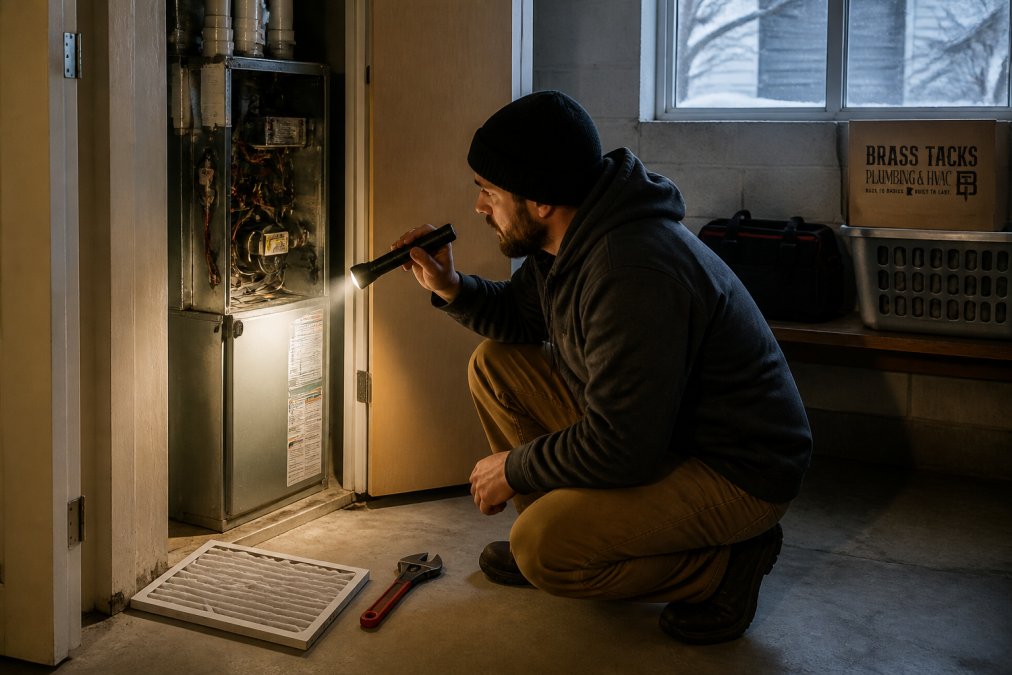
Rumbling, banging, or squealing from the furnace closet is never normal. A banging sound often points to delayed ignition or a failing blower motor, while a squeal usually means a worn belt or bearing. Uneven heating is the quieter problem: upstairs bedrooms stay chilly while the main floor roasts, usually from airflow trouble, a clogged filter, or ductwork never balanced for a Minnesota winter.
Yellow Flame, Rust, and Rising Energy Bills
A healthy gas furnace burns a steady blue flame. A yellow flame, soot streaks, or rust around the combustion chamber point to incomplete combustion, which can produce carbon monoxide. If utility bills climb while the thermostat stays the same, the system is working harder than it should. Any yellow flame or smell of gas means shut the furnace down and call a licensed technician.
A yellow burner flame is not a minor cosmetic issue. It can signal a cracked heat exchanger or blocked ventilation, both of which allow carbon monoxide into your home. Turn the furnace off and get it inspected before running it again.
Furnace Maintenance Checklist for Homeowners
A furnace maintenance checklist should cover what you can safely do yourself and what belongs to a professional. Most breakdowns we see in the West Metro trace back to skipped filter changes and ignored seasonal service, not sudden part failures.
- Replace or clean the air filter every one to three months, more often with pets or heavy winter use
- Keep supply and return vents clear of furniture, rugs, and snow buildup outside
- Test the thermostat against a separate thermometer to check calibration
- Listen for new noises at startup and shutdown
- Check the flame color through the sight glass; blue is normal, yellow is not
- Clear snow and ice from the intake and exhaust pipes after every storm
- Schedule a professional tune-up before the first hard freeze
The exhaust and intake pipes on a high-efficiency furnace sit close to the ground. After a heavy Minnesota snowfall, drifting snow can block them and trip the pressure switch, shutting the furnace down. Clear them by hand, never with a shovel blade.
Troubleshooting a Furnace Not Blowing Hot Air
Troubleshooting a furnace not blowing hot air starts with the simplest checks. Confirm the thermostat is set to Heat and the fan is on Auto, then check the air filter and breaker. If the furnace runs but the air stays cool, the problem is usually ignition, airflow, or a flame sensor that needs cleaning. If nothing runs, check the power supply and door safety switch.
| Symptom | Likely Cause | What You Can Check | When to Call a Pro |
|---|---|---|---|
| Warm air only, no heat | Pilot light or ignition issue | Thermostat setting, gas valve position | Ignition or flame sensor faults |
| Blowing cold air | Flame sensor or thermocouple | Air filter, breaker | Sensor cleaning or replacement |
| Weak airflow | Clogged filter or duct blockage | Filter, vent registers | Ductwork inspection |
| Short cycling | Oversized unit or airflow limit | Filter, thermostat calibration | System performance testing |
| No response at all | Power or safety switch | Breaker, furnace door | Electrical diagnostics |
Furnace Repair vs Replacement Cost in 2026
Furnace repair vs replacement cost 2026 decisions come down to four things: age, repair history, safety, and how the unit fits current efficiency rules. A furnace under 12 years old with a single failed part is usually worth repairing. A unit past 15 years with multiple repairs across two winters is a different conversation. We never push replacement when a repair will do, and we explain both paths before any work begins.
The Four Questions That Settle It
Work through these in order. The first “yes” usually points to replacement.
- Is the heat exchanger cracked or the combustion system compromised? This is a safety issue, not a repair decision. A cracked heat exchanger can allow carbon monoxide into the living space, and most manufacturers do not support repairing one.
- Is the furnace 15 years old or older? The average service life of a gas furnace is 15 to 20 years. Past 15, parts availability and efficiency both work against you.
- Have you paid for two or more repairs in the last two heating seasons? Stacking repairs is the clearest signal the unit is on its way out.
- Is the AFUE rating well below what a new unit delivers? Older furnaces often sit in the 80 percent AFUE range. Modern condensing furnaces run higher, which shows up on winter gas bills.
Why 2026 Changes the Replacement Math
New federal efficiency standards for residential furnaces took effect in 2026, changing what can be sold and installed in Minnesota. The practical effect is that a replacement is rarely a straight swap.
- Venting is the big one. Higher-efficiency condensing furnaces use PVC intake and exhaust pipes routed out a sidewall. Older 80 percent furnaces vent into a metal flue or chimney. Moving from one type to the other means reworking the venting, which is real labor, not a swap.
- Condensate management. Condensing furnaces produce acidic water that has to drain. In a Minnesota basement, a poorly routed drain line can freeze, so placement matters.
- Sizing. A replacement is not automatically the same size as the old unit. A proper load calculation accounts for insulation, windows, and ductwork, not just square footage.
- Combustion air. A high-efficiency unit in a tight, well-sealed modern home may need a dedicated combustion air source.
What Actually Drives the Cost
Repair and replacement costs vary widely based on the part, the system, and your home. The biggest factors:
- Part availability. A common igniter is a quick fix. A discontinued control board on a 20 year old unit can be hard to source.
- Access. A furnace in a tight closet or finished basement ceiling is harder to work on than one with clear space.
- Venting changes. Switching vent types adds material and labor.
- Ductwork. Undersized ducts for the new unit are a separate project.
- Electrical. Older homes sometimes need a circuit upgrade for a new furnace and its controls.
If the heat exchanger is cracked, the furnace is 15 or older, or you have paid for two or more repairs in two winters, replacement is usually the smarter long-term call. Anything short of that, repair first.
2026 Energy Efficiency Standards and Smart Thermostat Issues
Two things trip up homeowners in 2026 more than any other furnace topic: the new federal efficiency standards that changed what can be installed, and smart thermostats that stop talking to older furnaces.
What the 2026 Efficiency Standards Actually Changed
New federal efficiency standards for residential furnaces took effect in 2026. The headline is simple: furnaces available for installation are more efficient than the ones they replace, and they are not drop-in swaps.
Here is what that means in practice:
- Venting type changes. Higher-efficiency condensing furnaces use PVC intake and exhaust pipes routed out a sidewall. Older 80 percent furnaces vent into a metal flue or chimney. Moving from one to the other means new venting, which is real labor and material.
- Condensate lines can freeze. Condensing furnaces produce acidic water that has to drain. In a Minnesota basement or cold utility closet, a poorly routed drain line can freeze and shut the furnace down mid-winter. Placement and insulation matter.
- Sizing is not automatic. A proper replacement starts with a load calculation that accounts for insulation, windows, and ductwork, not just square footage. An oversized unit short cycles and wears out faster.
- Combustion air needs a plan. A high-efficiency unit in a tight, well-sealed home may need a dedicated combustion air source.
When the Problem Is the Thermostat, Not the Furnace
Many “furnace problems” we get called out for turn out to be communication issues between a smart thermostat and an older furnace. Before assuming the furnace is failing, rule these out:
- Wiring mismatch. Older furnaces and newer smart thermostats do not always speak the same language. A thermostat that needs a C wire but runs on battery power can behave erratically, especially in cold weather.
- Software that has not caught up. A thermostat firmware update can change how it talks to your furnace control board. If the problem started right after an update, that is a clue.
- Schedules fighting the furnace. A smart thermostat that drops the temperature aggressively overnight and calls for a big recovery in the morning can trigger short cycling, which looks like a furnace fault but is really a scheduling problem.
- Wi-Fi dropouts during a cold snap. If the thermostat loses its connection, it may fall back to a default schedule that does not match what you set. In a Minnesota January, that can mean a cold house by morning.
- Sensor placement. A thermostat on an exterior wall or near a drafty door reads the wrong temperature and runs the furnace longer than it should.
How to Tell the Difference
If your smart thermostat has been acting up since a firmware update or a Wi-Fi outage, check the thermostat settings and wiring before you call for furnace repair. A technician can verify the wiring and settings during a service visit, and it is often a quick fix rather than a parts replacement.
If you are weighing repair against replacement and want to understand how the new standards affect your options, our heating and cooling page walks through what we install and why. If your furnace is short cycling or not keeping up, our furnace repair page covers the diagnostic process.
DIY vs Professional Furnace Diagnostics: What You Can Check
DIY furnace diagnostics cover the safe, visible checks: filter condition, thermostat settings, breaker status, vent clearance, and flame color. Professional diagnostics cover what you cannot see or test safely, including the heat exchanger, gas pressure, combustion analysis, and electrical components. The line between them matters for your safety.
What you can check on your own:
- Air filter cleanliness and fit
- Thermostat mode, batteries, and calibration
- Breaker and furnace door switch
- Snow or debris around intake and exhaust pipes
- Visible rust, soot, or corrosion on the cabinet
What a licensed technician should handle:
- Heat exchanger inspection for cracks
- Carbon monoxide testing and combustion analysis
- Flame sensor and thermocouple testing
- Blower motor and control board diagnostics
- Gas pressure and ignition system checks
If you smell gas, see a yellow flame, or hear a loud bang at startup, stop and call a professional. Those three signs are not DIY territory.
Conclusion
A furnace rarely quits without warning, and the signs are usually there weeks before the cold night it stops. Strange noises, uneven heat, a yellow flame, and rising bills all point to a system asking for attention. Brass Tacks Plumbing, Heating & Cooling is a family-owned team serving Plymouth, Wayzata, Minnetonka, and Maple Grove with honest recommendations, upfront pricing, and licensed technicians who respect your home.
Frequently Asked Questions
How do I know if my furnace needs to be replaced instead of repaired?
If your furnace is 15 years or older, needs frequent repairs, or has a cracked heat exchanger, replacement often makes more sense than another repair. A cracked heat exchanger can leak carbon monoxide, which is a safety concern. Other factors include rising utility bills, uneven heating, and yellow burner flames. A licensed HVAC technician can inspect your system and give you an honest recommendation based on its condition and age.
What should I check before calling for furnace repair?
Before calling, check your thermostat batteries and settings, replace a dirty air filter, and confirm the furnace switch and breaker are on. Make sure vents are open and not blocked by furniture. If the furnace still won’t heat after these steps, or if you notice a yellow flame, strange smells, or unusual noises, call a licensed technician. These can point to combustion or electrical issues that need professional attention.
How does Minnesota’s climate impact furnace lifespan?
Minnesota’s long, cold winters mean your furnace runs far more hours per year than in milder states. That extended runtime wears out components like the blower motor, igniter, and heat exchanger faster. Furnaces here often reach the end of their useful life closer to 15 years rather than 20. Annual maintenance and timely repairs help you get the most from your system despite the heavy seasonal demand.
Is it worth repairing an older furnace in 2026?
It depends on age, repair frequency, and the cost of the fix compared to a new unit. If your furnace is under 12 years old and the repair is straightforward, fixing it usually makes sense. If it’s 15 or older and has had multiple repairs, replacement may save money long term. New furnaces also meet current efficiency standards, which can lower utility bills. Ask your technician for a clear repair-versus-replace comparison.
