

Respectful Plumbing Service in the Twin Cities: What to Expect

Table of Contents
- What Respectful Plumbing Service Actually Means
- How to Vet a Local Plumbing Company Before You Call
- Questions to Ask a Plumber Before Hiring
- Transparent Pricing: Why It Matters for Respectful Service
- DIY vs. Professional Plumbing: When to Call a Pro
- How Respectful Plumbers Treat Your Home
- Eco-Friendly Plumbing Options in the Twin Cities
- Frequently Asked Questions
Last Updated: September 17, 2026
What Respectful Plumbing Service Actually Means
Respectful plumbing is a service standard, not a marketing slogan. It means a licensed plumber arrives when promised, explains the problem in plain language, gives you an upfront price before starting, and leaves your home as clean as they found it. At Brass Tacks Plumbing, we built our entire approach around that idea because homeowners deserve honesty over pressure.
How to Vet a Local Plumbing Company Before You Call
Vetting a plumbing company takes about 15 minutes and saves you from the expensive mistakes that follow a bad hire. Start with licensing and insurance, then check reviews for patterns rather than star averages, and pay attention to how the company communicates before anyone shows up at your door.
Licensing, Bonding, and Insurance: What to Verify
Minnesota regulates plumbing at the state level, and a legitimate residential plumbing company will give you its license number without hesitation. You can verify a contractor’s license through the Minnesota Department of Labor and Industry’s online license lookup, which shows whether a license is active, expired, or has complaints attached. A respectful company expects you to check and will often link the lookup tool on its own website.
Ask three specific coverage questions:
- General liability insurance. This covers property damage if a technician breaks a fixture, floods a floor, or damages drywall during a repair.
- Workers’ compensation. If a technician is injured in your home and the company carries no workers’ comp, the injury can become your problem. Ask for a certificate of insurance, not just a verbal yes.
- Surety bond. A bond is a financial guarantee that the company will complete contracted work or compensate you if it does not. It is separate from insurance and worth confirming on larger jobs like water heater replacement or repiping.
Reviews, References, and Red Flags
Read reviews for themes, not just ratings. A pattern of “arrived on time and explained everything” matters more than a single five-star post. Watch for repeated complaints about surprise charges, unfinished work, or technicians who pushed unnecessary replacements. Reviews on Google, Yelp, and the Better Business Bureau often tell different stories, so skim all three.
Red flags worth taking seriously:
- No physical address or license number on the website
- Quotes given only after heavy pressure to sign today
- Refusal to put an estimate in writing
- Technicians who cannot explain why a repair is needed
- A truck with no company name, license number, or phone number on it
- Requests for full payment upfront on a routine repair
A Quick Pre-Call Checklist
Before you dial, have these ready so the conversation stays efficient:
- The license number you pulled from the state lookup
- Two or three recent reviews that mention the type of work you need
- A written list of your symptoms (when the problem started, what you have already tried)
- Your home’s approximate age and whether you are on city water or a private well
Questions to Ask a Plumber Before Hiring
The right questions separate a respectful plumbing service from a sales pitch. Ask about pricing structure and diagnostic process before you book, and you’ll know within a few minutes whether the company treats customers like people or like invoices.
Pricing and Estimate Questions
Ask how the company charges: flat rate, hourly, or a diagnostic fee that gets credited toward the repair. Ask whether the estimate covers parts and labor, and what happens if the job takes longer than expected. A respectful plumber answers these directly and puts the number in writing.
Diagnosis and Scope-of-Work Questions
Ask the technician to walk you through what failed and why. A good explanation includes the part, the symptom, and the consequence of ignoring it. Request that the scope of work be spelled out: what gets replaced, what gets repaired, and what stays untouched.
Transparent Pricing: Why It Matters for Respectful Service
Transparent pricing is the clearest signal of a respectful plumbing company. When a business publishes its rates and explains what drives cost, you can compare options without sitting through a high-pressure sales visit. Hidden fees and vague estimates are where trust breaks down.
What a Straightforward Estimate Should Include
Ask for each of these in writing before you authorize work:
- The diagnostic or service call charge, stated separately from the repair
- Parts and labor, itemized so you can see what each line covers
- Permit costs, if the job requires a permit (water heater replacement and gas line work usually do)
- Whether the quoted price is guaranteed once work starts, or whether it can change if the technician finds something unexpected
- Disposal of the old equipment, if applicable
- Any warranty on parts and on labor, and how long each lasts
Flat Rate vs. Hourly: What the Difference Means for You
Plumbing companies generally price one of two ways, and each has trade-offs:
- Flat rate. You are quoted one number for the job before work begins. The price does not change if the job runs long. This is easier to budget and rewards the company for working efficiently.
- Hourly plus materials. You pay for time and parts. This can cost less on a quick fix and more on a job that uncovers a surprise. Ask how the clock is tracked and whether travel time is billed.
Questions That Reveal How a Company Prices
A few questions cut through vague answers fast:
- “Is the diagnostic fee credited toward the repair if I approve the work?”
- “If the job takes longer than you expect, does my price change?”
- “Do you charge extra for evenings, weekends, or holidays, and how much?”
- “Is there a trip charge on top of the diagnostic?”
- “Can I see the price in writing before you start?”
A respectful plumber answers these directly. If the answers keep shifting, that is information too.
Never authorize work based on a verbal estimate alone. If a company will not put the price in writing before starting, that is your cue to call someone else. Disputes without paperwork are almost impossible to resolve in your favor.
Why This Matters More in Older Homes
Homes in Plymouth, Wayzata, and Minnetonka include a mix of mid-century builds and newer construction, and older plumbing often hides surprises behind the walls. A respectful company explains upfront how it handles those surprises: whether it stops work to re-quote, whether it absorbs small overruns, and how it documents changes. That single answer tells you more about a company than any star rating.
DIY vs. Professional Plumbing: When to Call a Pro
Some plumbing problems are safe to handle yourself, and some will cost you far more if you try. A clogged sink or a running toilet is usually a DIY job. Anything involving gas lines, water heaters, sewer lines, or hidden leaks belongs with a licensed plumber.
Call a professional when:
- Water is leaking inside a wall or under a slab
- Your water heater stops producing hot water or makes unusual noises
- You smell gas or notice a sulfur odor near any appliance
- A drain backs up repeatedly after clearing
- You’re dealing with frozen or burst pipes, which is common in Minnesota winters
Before calling anyone, shut off the water at the main valve and write down what you noticed and when. That short timeline helps a plumber diagnose faster and often shortens the visit, which saves you money.
How Respectful Plumbers Treat Your Home
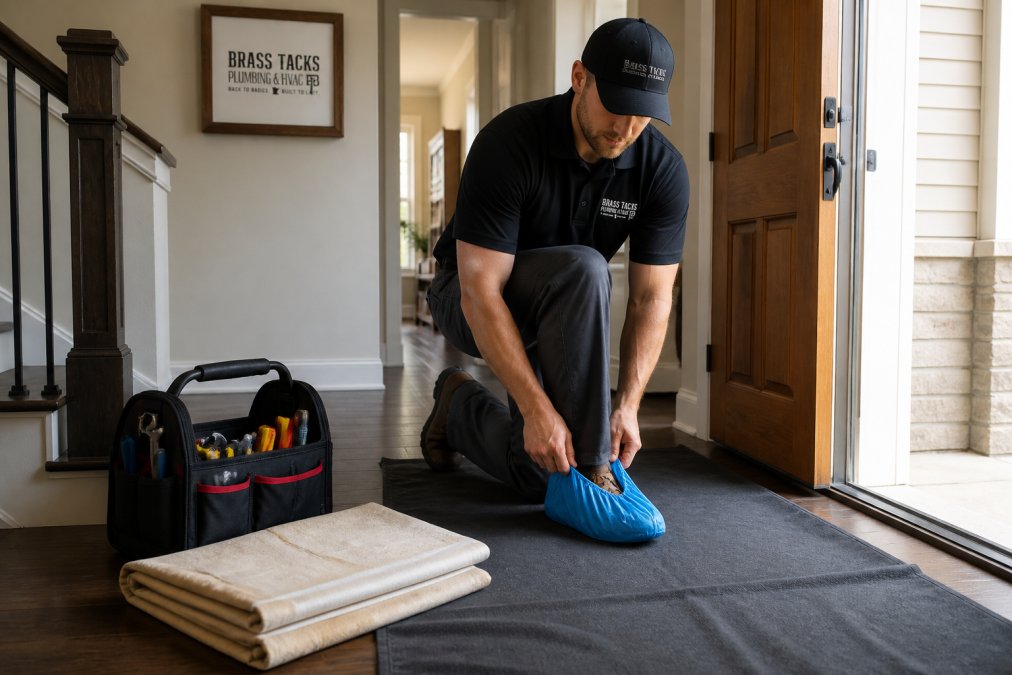
Treating your home with respect comes down to preparation and cleanup. A professional technician lays down floor protection, wears shoe covers, contains dust and debris, and hauls away old parts and packaging when the job is done. You shouldn’t have to clean up after a repair you paid for.
Eco-Friendly Plumbing Options in the Twin Cities
Eco-friendly plumbing usually means lower water use and fewer wasted resources, not a complete system overhaul. Simple upgrades like low-flow fixtures, efficient toilets, and a properly maintained water heater reduce both utility bills and environmental impact over time.
Respectful service and eco-friendly choices overlap more than people expect. A company that explains your options honestly, rather than pushing the biggest job, is usually the same one that helps you spend less over the long run.
Frequently Asked Questions
What should I look for when hiring a plumber for my home?
Start with licensing, bonding, and insurance, which you can verify through the Minnesota Department of Labor and Industry. Look for a written estimate, clear communication about the diagnosis, and a company that respects your home by using floor protection and cleaning up. Read recent reviews for patterns, not just star ratings. Ask how they handle unexpected findings and whether they offer same-day service for urgent issues like water heater failures or burst pipes.
How can I tell if a plumbing company is honest and reliable?
Honest companies explain what they find before starting work, give you options instead of pressure, and put estimates in writing. They do not upsell a full system replacement when a repair will do. Reliable companies show up when they say they will, communicate delays, and stand behind their work. Checking that a company is licensed, bonded, and insured in Minnesota is a quick first filter, and reading reviews for how they handle problems is just as telling as the ratings themselves.
Why is upfront pricing important when choosing a plumbing service?
Upfront pricing means you know the cost before work begins, which removes the surprise of a higher-than-expected bill. It also lets you compare quotes fairly and decide whether a repair or replacement makes more sense for your budget. A company that provides a written estimate and explains what is included is treating you with respect. If pricing depends on what the technician finds, ask for a range and a clear process for approving any additional work.
How do I prepare my home for a plumbing service visit?
Clear access to the water heater, main shutoff valve, and the area under sinks or around toilets. Move personal items, rugs, and fragile objects out of the work zone. If you have pets, secure them in a separate room. Note any recent symptoms, such as slow drains, noises, or water stains, so you can describe them clearly. Ask the company whether they use shoe covers and floor protection, and confirm the appointment window so you can be home to walk through the diagnosis.
Finding a respectful plumbing service in the Twin Cities comes down to asking the right questions and expecting clear answers. If you’re tired of vague estimates and pressure to replace things you don’t need, Brass Tacks Plumbing offers upfront pricing, licensed technicians, and honest recommendations with no sales pressure. We’re family-owned and focused on doing the job right the first time. Schedule your plumbing service now and see what straightforward service actually feels like.
