

Licensed HVAC Technicians in the West Metro: 2026 Guide

Table of Contents
- What Makes a Licensed HVAC Technician in the West Metro?
- HVAC Contractor Licensing Requirements in Minnesota
- How to Verify an HVAC Contractor’s License Before You Hire
- What to Look For in a Licensed HVAC Technician
- HVAC Maintenance Checklist for Minnesota Homeowners
- Local Climate Challenges: Why West Metro Homes Need Specialized HVAC Care
- Frequently Asked Questions
Last Updated: September 13, 2026
What Makes a Licensed HVAC Technician in the West Metro?
Licensed HVAC technicians in the West Metro hold the state credentials required to work on residential systems, carry insurance, and can pull permits for bigger jobs. At Brass Tacks Plumbing, Heating & Cooling, we serve Plymouth, Wayzata, Minnetonka, and Maple Grove, and the question we hear most is simple: how do I know the person at my door is qualified?
Minnesota winters do not forgive sloppy work. A furnace sized wrong or wired carelessly in October becomes an emergency in January, when temperatures drop below zero. That is why licensing matters more here than in milder climates.
Below, we break down what each credential means, how to verify a contractor, and what to watch for.
Licensed, Certified, and Insured: What Each One Means
These three words get used interchangeably in ads, but they mean different things. Licensed means the technician or company holds a state-issued credential. Certified usually means the individual passed a manufacturer or trade association exam, such as NATE certification. Insured means the company carries liability coverage and workers’ compensation, so you are not on the hook if something goes wrong on your property.
A company can be one without the others. Ask about all three.
HVAC Contractor Licensing Requirements in Minnesota
Minnesota regulates HVAC work at the state level, and the rules split by the type of work being done. A technician who handles refrigerant has different requirements than one who only does sheet metal or gas piping. The Minnesota Department of Labor and Industry licensing information is the starting point for verifying what a given contractor is allowed to do.
For homeowners, the practical takeaway is this: any contractor performing regulated work should be able to tell you which license they hold and produce the number. If they hesitate, that is your answer.
Local permits add another layer. Most West Metro cities require a permit for furnace replacement, AC installation, and major gas work, and the inspection protects you. A contractor who offers to skip the permit is putting you at risk.
How to Verify an HVAC Contractor’s License Before You Hire
Verification takes about five minutes and is the single best protection you have:
- Ask for the company’s license number and the technician’s individual credential.
- Look up the license through the state’s online database.
- Confirm the license is active, not expired or suspended.
- Ask for a certificate of insurance and check the dates.
- Confirm the company will pull the required permit for your job.
- Get the scope of work in writing before any work begins.
A legitimate contractor expects these questions and will often hand you the information before you ask.
What to Look For in a Licensed HVAC Technician
Beyond paperwork, the right technician shows up in how they work. Look for someone who explains the problem in plain language before quoting a repair, walks you through what they found, and respects your home by using floor protection and cleaning up afterward.
A licensed HVAC technician in uniform showing an identification badge to a homeowner at their front door, holding a clipboard with a service checklist, friendly and professional interaction in a suburban home entryway
Ask whether the company provides upfront pricing before work starts. Surprise bills are a top homeowner complaint, and a shop that quotes first and works second is telling you something about how it operates.
Red Flags That Signal an Unqualified Contractor
Watch for these warning signs:
- No license number available on request
- Pressure to approve a full system replacement during a repair visit
- No written estimate or scope of work
- Cash-only payment demands
- No physical business address or verifiable local presence
- Refusal to pull a permit
The pressure tactic deserves special attention. If a technician says your furnace is dangerous and must be replaced today, ask for the test results in writing and get a second opinion. A genuine safety issue will still be a safety issue tomorrow.
HVAC Maintenance Checklist for Minnesota Homeowners
An HVAC maintenance checklist for Minnesota homeowners has to account for a climate that swings from below-zero wind chills to humid summer days. The goal is to catch small problems before they become January emergencies and to know the line between a task you can safely handle and one that belongs to a licensed professional.
Run through this list twice a year: once in early fall before heating season and once in spring before you need the air conditioner.
What You Can Safely Do Yourself
These tasks are low-risk and make a technician’s job easier when they arrive for a tune-up.
- Replace furnace filters every one to three months. If you have pets or a household member with allergies, lean toward every month during heating season.
- Clear snow and ice from the outdoor condenser and from the furnace exhaust and intake vents. This is the single most overlooked task in Minnesota.
- Check that the thermostat is holding the set temperature and that the batteries are fresh.
- Listen at startup for banging, squealing, or rumbling. New noises are information.
- Visually inspect accessible ductwork for gaps, dents, or disconnected sections.
- Keep the area around the furnace and water heater clear of stored items.
- Check for moisture or rust near the furnace and around the condensate line.
What Requires a Licensed Technician
These tasks involve refrigerant, gas, electrical components, or combustion, and they are not DIY territory. Improper refrigerant handling is a safety and legal risk, and gas work done wrong can be fatal.
- Refrigerant recharge, leak detection, and any work on the sealed refrigeration circuit
- Gas line inspection, repair, or replacement
- Heat pump service and diagnostics
- Boiler maintenance and repair
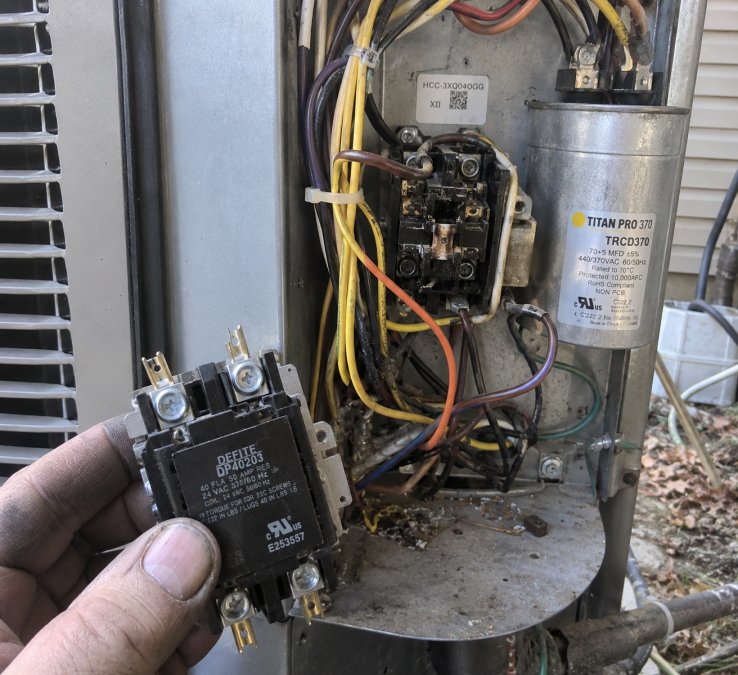
- Electrical diagnostics, control board replacement, and wiring
- Combustion analysis and heat exchanger inspection
- Any repair that requires pulling a permit
A Seasonal Timing Guide for Our Climate
Minnesota’s heating season runs roughly seven months, so your furnace cycles far more than one in a milder climate. That extra runtime wears components faster and makes annual maintenance more important, not less.
Early fall (September to October): Schedule your heating tune-up before the first hard freeze. Replace filters. Test the thermostat in heat mode. Clear the exhaust vent and check the condensate line. If you have a whole-house humidifier, replace the pad and check the water panel.
Mid-winter (January to February): After every heavy snowfall, check the furnace exhaust and intake vents for blockage. A blocked vent can shut the furnace down on safety, often on the coldest night of the year. Keep the outdoor condenser clear of snow drifts even though it is not running.
Spring (April to May): Schedule your cooling tune-up before the first warm stretch. Clear debris from around the outdoor condenser. Check that the condensate drain is flowing freely. Test the air conditioner before you actually need it.
Summer (June to August): Watch for short cycling, weak airflow, or a system that runs constantly without dropping the indoor temperature. In our humidity, an oversized air conditioner cools the house without removing moisture, leaving you clammy. That is a sizing problem, not a repair.
Why Annual Professional Service Pays Off Here
A professional tune-up is not just a filter change. Licensed HVAC technicians check what you cannot see: gas pressure, flame sensor condition, heat exchanger integrity, refrigerant charge, capacitor health, and blower motor amp draw. These components fail silently, then fail completely.
If you want a deeper look at what a tune-up includes and how to schedule one, our heating and cooling maintenance page | /heating-cooling/maintenance walks through the process. For homeowners in Plymouth, Wayzata, Minnetonka, and Maple Grove, booking in early fall is the easiest way to avoid the first-cold-snap rush.
A Note on Older West Metro Homes
Older homes in Plymouth and Minnetonka bring their own challenges. Original 1970s ductwork may be undersized for a modern system, which is a design problem, not a repair. A contractor who understands older housing stock will check duct capacity before recommending equipment. If your home has never had a duct evaluation, ask about it during your next tune-up.
Local Climate Challenges: Why West Metro Homes Need Specialized HVAC Care
West Metro homes face HVAC pressures that contractors from warmer states simply do not deal with. Understanding what happens to equipment in this climate helps you ask better questions about repair versus replacement.
The Seven-Month Heating Season
Our heating season runs roughly seven months, so your furnace cycles far more than one in a milder climate. Ignitors, flame sensors, blower motors, and capacitors have a service life measured in cycles, not years. A furnace running 2,000 hours a year in Minnesota hits the same wear milestones years sooner than one running 800 hours in a milder state.
This is why annual maintenance matters more here, not less. A technician who checks capacitor health and amp draw can catch a failing component before it strands you on a cold night.
Freeze-Thaw and Condensate Problems
High-efficiency furnaces produce condensate as a byproduct of combustion. That water has to drain somewhere, and in Minnesota it often travels through an unheated space. When the condensate line freezes and blocks, the furnace shuts down on safety. This is one of the most common no-heat calls in January, and it is almost always preventable with a properly pitched and insulated drain line.
Freeze-thaw cycles also stress outdoor equipment. Ice can build up on the condenser fan, and repeated expansion and contraction can loosen fittings and seals over time.
Humidity Control in Summer
Minnesota summers are humid enough that an oversized air conditioner cools the house without removing moisture, leaving you clammy. Proper sizing matters more here than in dry climates because the system has to manage latent heat, not just temperature. A contractor who sizes by square footage alone is guessing. A proper load calculation accounts for insulation, window orientation, duct condition, and local design temperatures.
Older Housing Stock in Plymouth and Minnetonka
Original 1970s ductwork may be undersized for a modern system, which is a design problem, not a repair. A contractor who understands older housing stock will check duct capacity before recommending equipment. Replacing a furnace without addressing undersized ducts can leave you with a system that short cycles, runs loud, and never quite keeps up.
Energy Incentives: The Angle Most Contractors Skip
If you are considering a high-efficiency upgrade, federal and state programs can reduce the cost, and most homeowners never hear about them until after signing a contract. The two main categories are federal tax credits for qualifying high-efficiency equipment and utility rebates through your electric or gas provider.
Here is what to know before you buy:
- Federal tax credits for qualifying high-efficiency heating and cooling equipment have been available in recent years, but the specific equipment requirements and credit amounts change. Check the current rules before you assume a system qualifies. Your contractor should be able to provide information on current federal tax credits for qualifying high-efficiency equipment.
- Utility rebates vary by provider and by equipment efficiency tier. Your contractor should be able to provide information on which rebates apply to the specific model being quoted.
- Rebates and tax credits are not the same thing. A rebate reduces your upfront cost. A tax credit reduces what you owe at tax time. You may be able to use both on the same project.
- Documentation matters. Keep the itemized invoice, the equipment model and serial numbers, and any rebate paperwork. You will need them at tax time.
A contractor who quotes a high-efficiency system without mentioning incentives is either unfamiliar with the programs or not looking out for your bottom line. Ask directly: which rebates and credits apply to this equipment, and what do I need to do to claim them?
What This Means for Your Repair or Replace Decision
In a milder climate, you can sometimes stretch a furnace another few years without much consequence. Here, a system limping into winter is a real risk. If your furnace is more than 15 years old, has needed two or more repairs in the past two seasons, or struggles on the coldest days, it is worth discussing replacement before the next heating season rather than during it.
For homeowners across the West Metro, our heating and cooling service page | /heating-cooling covers repair, replacement, and maintenance options, and our team can walk you through what makes sense for your home and your budget.
Frequently Asked Questions
What should I look for when hiring a licensed HVAC technician?
Start by verifying the technician holds a current Minnesota license through the state’s licensing board. Ask for proof of insurance and bonding. Look for specific experience with your type of system, whether that’s a furnace, heat pump, or boiler. A trustworthy technician will explain the problem clearly, provide a written estimate before starting work, and never pressure you into unnecessary repairs. Reading recent customer reviews also helps confirm the company’s reputation for honest work.
Why is it important to hire a licensed HVAC contractor in Minnesota?
Minnesota requires licensing for HVAC work because improper installation or repair can create safety hazards like carbon monoxide leaks, electrical problems, or gas line issues. Licensed contractors carry insurance that protects you if something goes wrong. They also pull required permits, which keeps your project compliant with local codes. If you ever sell your home, unpermitted HVAC work can cause problems during inspection.
How do I verify an HVAC contractor’s license?
Minnesota’s Department of Labor and Industry maintains a public database where you can look up contractor licenses. Ask the company for their license number, then search for it on the state website. The listing shows whether the license is active, when it expires, and whether there are any complaints or disciplinary actions on record. You can also request a copy of their insurance certificate and call the insurer to confirm coverage is current.
How often should I schedule HVAC maintenance in Minnesota?
Schedule heating maintenance in early fall before the first cold snap, and cooling maintenance in spring before summer humidity arrives. Most manufacturers recommend annual service for both systems. Homes in the West Metro deal with temperature swings from below-zero winters to humid summers, which puts extra strain on equipment. Regular tune-ups catch small issues before they become emergency repairs and help your system run more efficiently through peak demand.
