

Plumbing Repairs for Older Homes: What to Know First

Table of Contents
- What Type of Plumbing Is in Your Older Home?
- Plumbing Repairs for Older Homes: Signs You Actually Need Them
- Your Plumbing Inspection Checklist for an Older House
- Signs of Hidden Plumbing Leaks You Should Not Ignore
- Preventing Frozen Pipes in Older Homes During a Minnesota Winter
- Spot Repair vs. Whole-Home Repiping: Which Makes Sense?
- Conclusion
- Frequently Asked Questions
Last Updated: September 12, 2026
What Type of Plumbing Is in Your Older Home?
The first step in planning plumbing repairs for older homes is figuring out what’s actually behind your walls. The pipe material in your house tells you what can be repaired and what is living on borrowed time.
Homes built before the mid-1950s in the West Metro often still have galvanized steel supply lines. Houses from the 1970s through the mid-1990s may have polybutylene, a gray or blue-gray flexible plastic that was pulled from the market after widespread failures. Copper shows up in homes from the 1950s onward, and PEX is standard in anything built or repiped in the last two decades.
Brass Tacks Plumbing works on all of these materials across Plymouth, Wayzata, Minnetonka, and Maple Grove, and the material usually matters more than the age of the house.
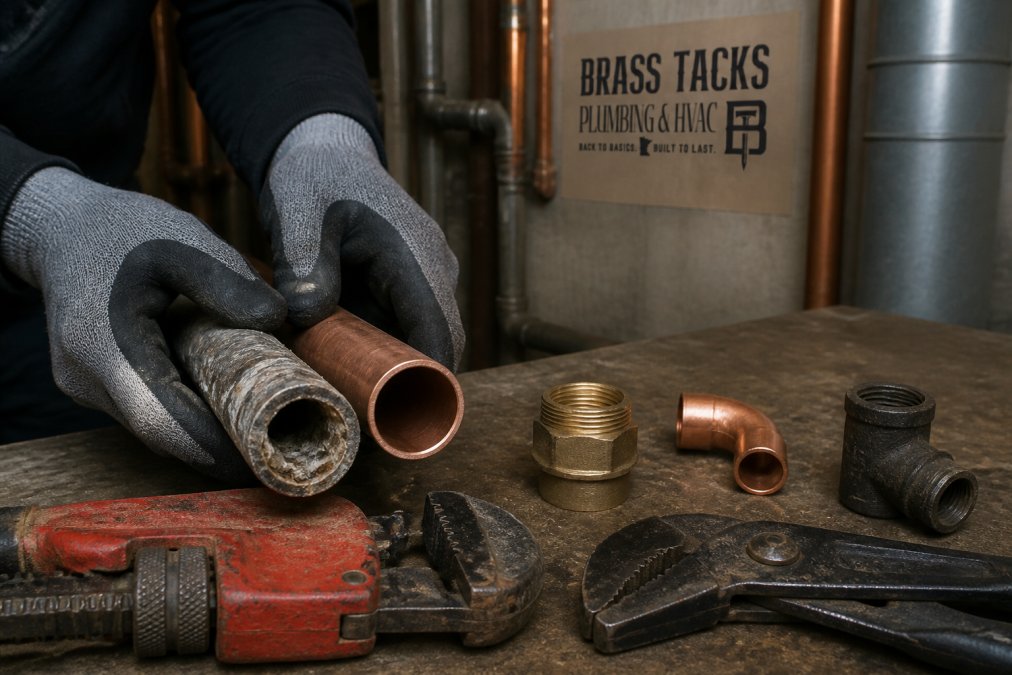
How to Identify Lead, Galvanized Steel, Polybutylene, and Copper
You do not need to be a plumber to get a good idea of what you are dealing with. Start in the basement or crawlspace where the main water line enters the house, then work your way toward the water heater and visible fixture supply lines.
Lead pipe is dull gray, soft enough to scratch with a key, and does not attract a magnet. If you scrape it, the metal underneath is shiny silver. Lead service lines were commonly installed before the 1950s and can still be found in some older neighborhoods. Never scrape or sand a suspected lead line yourself. The EPA guidance on lead service lines explains how to identify lead pipe and what to do about it.
Galvanized steel is also gray, but it is hard, attracts a magnet, and often shows rust streaks or white mineral crust at threaded joints. The zinc coating wears away over decades, and the steel underneath rusts from the inside out. You can often spot it by its dull gray color and the magnet test: galvanized steel attracts a magnet, copper does not.
Polybutylene is the one to watch for. It looks like gray or blue-gray plastic, often with a slight sheen, and was used in supply lines from the late 1970s through the mid-1990s. It fails from the inside, often without warning, and many insurers either surcharge homes with it or decline coverage outright. If you see gray plastic supply lines with metal crimp rings, that is a strong indicator.
Copper is reddish-brown, does not attract a magnet, and develops a green or white patina over time. It is durable but develops pinhole leaks as it ages, especially in homes with aggressive water chemistry. Look for green crust on fittings or blue-green stains under sinks.
PEX is the current standard for replacements. It comes in red, blue, or white flexible tubing and handles Minnesota’s freeze-thaw swings better than rigid pipe. If your home was repiped in the last two decades, this is likely what you have.
Take photos of your visible pipes and note where you found them. This saves time when you call a plumber and helps you get a more accurate assessment over the phone.
Galvanized Steel and Lead Service Lines
Galvanized steel supply lines are common in homes built before the mid-1950s. The zinc coating that protects the steel wears away over time, and once it is gone, the pipe rusts from the inside. You may notice rusty water on first draw in the morning, dropping water pressure, or visible rust streaks at joints. A magnet will stick to galvanized steel but not to copper.
Lead service lines are the pipe running from the water main to your house, not the pipes inside it. If your home was built before lead was phased out of service lines, it’s worth checking. The EPA guidance linked above explains how to identify lead pipe and what to do about it. Never scrape or sand a suspected lead line yourself.
Polybutylene, Copper, and PEX
Polybutylene is the one to watch for. It looks like gray plastic and fails from the inside, often without warning. Many insurers either surcharge homes with it or decline coverage outright. If you are buying a home with polybutylene, get a professional evaluation before you close.
Copper is durable but develops pinhole leaks as it ages, especially in homes with aggressive water chemistry. If you see green or white crust on copper fittings, that is a sign of corrosion. PEX is the current standard for replacements because it handles Minnesota’s freeze-thaw swings better than rigid pipe and costs less to install.
If you are not sure what you have, a licensed plumber can identify the material and give you a straight assessment of its condition. Brass Tacks Plumbing, Heating & Cooling works on all of these materials across the West Metro, and we can help you understand what you are working with before you decide on repairs.
Plumbing Repairs for Older Homes: Signs You Actually Need Them
The clearest signs you need plumbing repairs are brown or rusty water, dropping water pressure, visible corrosion at joints, and repeated pinhole leaks. One leak is a repair. Three in two years points to a system that’s failing.
- Rusty or yellowish water on first draw in the morning
- Water pressure that drops when two fixtures run at once
- Green or white crust on copper fittings, or rust streaks on steel
- Damp spots, bubbling paint, or a musty smell near walls and floors
- Water bills that climb without a change in use
If you’re seeing several of these at once, it’s worth a professional look before a small issue becomes an emergency.
Your Plumbing Inspection Checklist for an Older House
A plumbing inspection checklist for an older house should cover the supply side, the drain side, and everything in between. Work through it room by room and write down what you find.
- Locate the main water shut-off and confirm it actually closes
- Note the pipe material on visible supply lines in the basement or crawlspace
- Check under every sink for staining, soft cabinet floors, or corrosion
- Run each fixture and watch the drain for slow drainage or gurgling
- Flush every toilet and check the base for movement or moisture
- Look at the water heater for rust, sediment, or age
- Inspect exposed drain lines for cast iron cracks or scale buildup
- Test water pressure at an outdoor spigot
Main Water Shut-Off, Venting, and Drain Lines
Knowing where your main water shut-off is matters more than almost anything else on this list. In a burst-pipe situation, every minute of water flow adds damage. Test the valve now, not during an emergency, because older gate valves often seize open.
Venting systems and drain lines deserve the same attention. Cast iron drain pipes from the mid-century era corrode and crack, and a failing vent can cause slow drains and sewer gas smells. A sewer scope is the only reliable way to see what condition your main line is in.
Signs of Hidden Plumbing Leaks You Should Not Ignore
Hidden leaks rarely announce themselves. They show up as a water bill that doesn’t match your usage, a warm spot on the floor (a slab leak), or a faint sound of running water when everything is off.
Shut off every fixture in the house and watch your water meter. If the dial still moves, water is escaping somewhere. For older homes, the most common hidden leak locations are under slab foundations, inside wall cavities behind tile, and at the base of toilets where the wax ring has failed.
Leak detection with acoustic or thermal tools finds these without tearing your house apart. Catching a hidden leak early is the difference between a repair and a mold remediation project.
Preventing Frozen Pipes in Older Homes During a Minnesota Winter
Preventing frozen pipes in older homes comes down to three things: insulation, heat, and airflow. Older homes leak heat through uninsulated rim joists, and pipes in exterior walls or unheated crawlspaces freeze first.
- Insulate pipes in the basement, attic, and crawlspace, especially near exterior walls
- Disconnect garden hoses and shut off outdoor spigots before the first hard freeze
- Keep cabinet doors open under sinks on exterior walls during cold snaps
- Let a pencil-thin stream run from the faucet farthest from the main during extreme cold
- Keep the thermostat at a consistent temperature, day and night
If a pipe does freeze, shut off the main and call a plumber before it thaws. Thawing a burst pipe with everything still pressurized is how a small freeze turns into flooded drywall.
Spot Repair vs. Whole-Home Repiping: Which Makes Sense?
Spot repair makes sense when you have one isolated failure in otherwise sound pipe. Whole-home repiping makes sense when failures are recurring, the material is known to fail (polybutylene), or you’re already opening walls for a remodel.
The decision usually comes down to three questions: What is the pipe made of? How often are you calling a plumber? And how long do you plan to stay in the home?
| Situation | Best Option | Why |
|---|---|---|
| One pinhole leak in copper | Spot repair | Isolated failure, material still sound |
| Polybutylene throughout | Whole-home repiping | Known to fail; often uninsurable |
| Galvanized steel with rusty water | Whole-home repiping | Corrosion is system-wide |
| Cast iron drain with one crack | Sectional repair | Rest of the line may still be serviceable |
| Buying a home with original 1970s plumbing | Full evaluation first | Repiping may be a negotiation point |
Repiping a whole house is a bigger project, but it solves the problem for good. Spot repairs on failing systems are a series of small bills that never end.
How to Decide: A Framework for Homeowners
Start with the material. If you have polybutylene, whole-home repiping is usually the right call because the pipe fails from the inside and there is no reliable way to predict which section goes next. If you have galvanized steel with rusty water and dropping pressure, the corrosion is system-wide and spot repairs are a temporary fix. If you have copper with one pinhole leak and otherwise good pressure, a spot repair is reasonable.
Next, look at frequency. One leak in five years is a repair. Three leaks in two years points to a system that is failing. Keep a simple log of when and where leaks happen. That record helps you and your plumber make a more informed decision.
Finally, consider your timeline. If you plan to stay in the home for years, repiping solves the problem and can add value. If you are selling soon, a full evaluation and documentation of repairs may be enough. If you are buying, factor the cost of a future repipe into your offer.
There is no one-size-fits-all answer. The right choice depends on the material, the failure pattern, and your plans for the home. A licensed plumber can help you weigh the options without pressure.
Insurance, Home Warranty, and Resale Considerations
Insurance and home warranty coverage is where older plumbing gets complicated. Most home warranties exclude pre-existing conditions, so a slow leak that’s been developing for years is often denied. Standard homeowners policies typically cover sudden, accidental water damage but not the failed pipe itself.
Some insurers may surcharge homes with polybutylene or galvanized steel, or decline coverage outright. If you are buying a home with these materials, get a quote from your insurer before you close. If you already own the home, ask your agent whether your coverage is affected.
If you’re selling, a buyer’s home inspection with a sewer scope can surface plumbing issues that stall a closing. Documentation of repairs and updates helps. If you’re buying a home in the West Metro with original plumbing, factor the cost of a future repipe into your offer.
For a closer look at how we handle repiping and older home plumbing, visit our plumbing services page | /plumbing or repiping page | /repiping. If you are in Plymouth, Wayzata, Minnetonka, or Maple Grove, we can help you evaluate your options and make a plan that fits your home and your budget.
Conclusion
Older homes have character, but their plumbing needs honest attention rather than guesswork. Whether you’re facing a single leak or deciding between a spot repair and a full repipe, the right answer starts with knowing what you’re working with.
Brass Tacks Plumbing, Heating & Cooling handles plumbing repairs for older homes across the Twin Cities West Metro with upfront pricing and no sales pressure. Our licensed technicians explain what’s actually wrong before any work begins, respect your home while they’re in it, and give you a straight recommendation instead of an upsell.
Schedule your plumbing service with Brass Tacks Plumbing and get a clear plan for your older home’s plumbing.
Frequently Asked Questions
How much does it cost to redo plumbing in an old house?
Cost depends on the size of the home, how much pipe has to be replaced, whether walls need to be opened, and whether the work is a spot repair or a whole-home repiping. Because every older house is different, a phone quote is rarely accurate. A licensed plumber should inspect the system first, then give you an upfront written price before any work starts. Brass Tacks Plumbing posts current pricing details on its website.
What type of plumbing is used in older homes?
Homes built before the 1960s often have galvanized steel supply pipes, which corrode from the inside and restrict water pressure over time. Some properties still have lead service lines. From the late 1970s through the mid-1990s, polybutylene was common and has a history of failing at fittings. Copper became standard in the mid-20th century and is still widely used, while PEX piping is the most common choice for new plumbing repairs today.
How can I tell if my home’s plumbing needs to be replaced?
Watch for brown or rusty water at the tap, falling water pressure, pinhole leaks, frequent drain clogs, and visible corrosion or green staining on copper. A plumbing inspection checklist helps: check the main water shut-off, look under sinks for moisture, and watch for warm spots on the floor that suggest a slab leak. If repairs keep stacking up, whole-home repiping is often the better long-term call.
How does Minnesota’s cold climate affect aging plumbing systems?
Freezing temperatures are hard on older pipe. Galvanized steel and cast iron get brittle with age, and a hard freeze can split them. Preventing frozen pipes in older homes means insulating pipes in unheated spaces like crawl spaces and garages, sealing drafts near rim joists, and keeping cabinet doors open under sinks on exterior walls during cold snaps. If a pipe does freeze, shut off the main water valve and call a licensed plumber.
