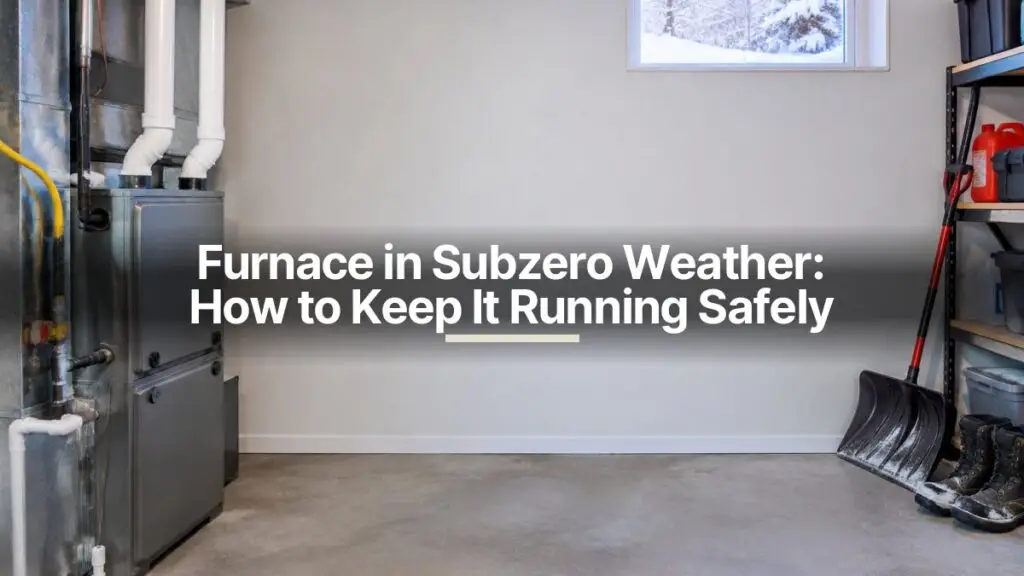
Furnace in Subzero Weather: How to Keep It Running Safely
Last Updated: November 18, 2026
Quick Summary
A furnace running nonstop in furnace subzero weather is usually normal, because the big gap between indoor and outdoor temperatures makes the system work harder to hold your setting. Keep the filter clean, keep vents open, and clear snow and ice from intake and exhaust pipes. Call a technician if the furnace short cycles, makes unusual noises, or can’t reach the set temperature.
- Continuous running during the coldest days is normal, but failing to reach the set temperature is not.
- Replace the filter when you can’t see light through it.
- Clear snow from intake and exhaust pipes after every heavy snowfall.
- Never chip ice from vent pipes with a sharp tool, since cracked venting can leak gases.
- Test every carbon monoxide alarm before heating season and again at midwinter.
Table of Contents
- Why a Furnace Runs Nonstop in Extreme Cold
- Is It Normal for a Furnace to Run Constantly in Subzero Weather?
- Step-by-Step: Preparing Your Furnace for a Cold Snap
- Furnace Tips for Extreme Cold: Thermostat Settings and Heat Loss
- Troubleshooting a Furnace That Can’t Keep Up With the Cold
- Carbon Monoxide Safety and When to Call an HVAC Technician
- Scheduling Your Furnace Check Before the Next Cold Snap
- Frequently Asked Questions
If your furnace runs nonstop during furnace subzero weather, you’re not alone. If your system is struggling and you need emergency furnace repair help quickly, our team can get to you fast. Homeowners across the West Metro hear that steady hum for days and wonder whether something is wrong. Usually, a furnace working hard in subzero weather is doing exactly what it was designed to do.
Why a Furnace Runs Nonstop in Extreme Cold
A furnace runs longer in furnace subzero weather because the gap between indoor and outdoor temperature is large. At -10°F, your home loses heat much faster through walls, windows, doors, and the attic, so the furnace has to keep up just to hold your thermostat setting.
Several things make this worse:
- Heat loss through the building envelope: Drafty windows, gaps around doors, and thin attic insulation let warm air escape.
- Wind: Strong wind pushes cold air against your home and pulls heat out faster.
- Exposed or unused spaces: Poorly insulated rooms and closed-off vents stay colder, so the system keeps running to reach them.
In short, the furnace isn’t broken for running a lot. It’s responding to a big gap between inside and outside temperatures.
Is It Normal for a Furnace to Run Constantly in Subzero Weather?
Yes, in many cases it is. During a cold snap, a furnace may run for long stretches with only short breaks. Continuous operation alone is not a sign of failure.
Here’s a quick way to tell normal from concerning:
Normal behavior:
- Runs for long periods during the coldest days and nights
- Warms the house to your set temperature, even if it takes a while
- Heats evenly across rooms
Warning signs:
- Runs constantly and still can’t reach the set temperature
- Short cycling (turning on and off every few minutes)
- Unusual noises like banging, squealing, or rumbling
If you see any of the warning signs, don’t just wait it out. Move on to the troubleshooting section below.
Step-by-Step: Preparing Your Furnace for a Cold Snap
A few simple steps before the temperature drops can reduce strain on your system and head off the most common cold-weather failures. Work through these before the next cold snap, and revisit the venting check after every heavy snowfall.
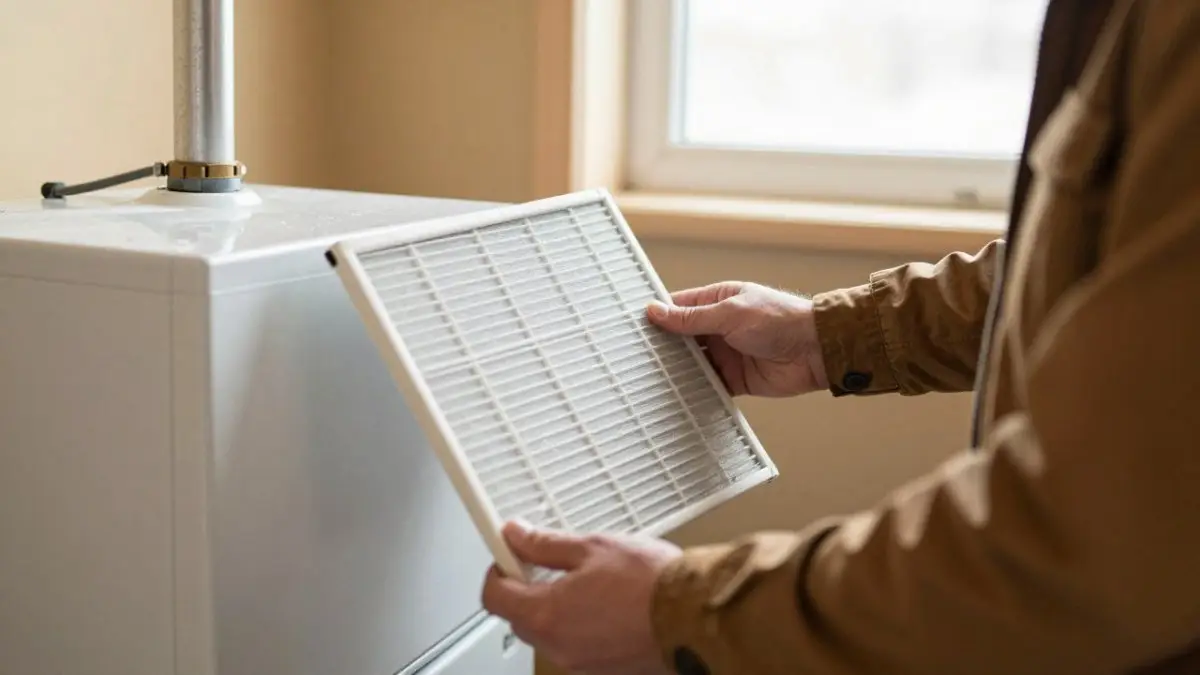
Replace or Check the Furnace Filter
A clogged filter forces the blower to work harder and restricts airflow across the heat exchanger. Restricted airflow is one of the most common reasons a furnace struggles in the cold, and it can shorten blower motor life.
- Locate the filter slot, usually near the blower compartment or in the return air duct.
- Pull out the filter and hold it up to a light. If you can’t see light through it, replace it.
- Note the size printed on the frame and buy a matching replacement. A filter that doesn’t seal at the edges lets dust bypass it.
- Check the filter monthly during heavy heating season. Homes with pets or heavy dust may need changes more often.
Watch out: Installing a filter with a higher MERV rating than your furnace is designed for can restrict airflow and cause the same problems you are trying to prevent. Follow the manufacturer’s recommendation.
Keep Supply and Return Vents Open
Your furnace needs unrestricted airflow in both directions. Blocked or closed vents can cause pressure problems, uneven heating, and extra strain on the blower.
- Keep furniture, rugs, and curtains away from floor and wall vents.
- Don’t close too many vents at once. Closing a few in unused rooms is usually fine, but closing most of them can raise static pressure in the ductwork.
- Check return air grilles and make sure nothing blocks them. A blocked return starves the system just as badly as a blocked supply.
Clear Snow and Ice From Intake and Exhaust Pipes
High-efficiency furnaces vent through sidewall or roof pipes that draw in combustion air and push out exhaust.
How to identify a blocked or iced-over vent:
- The furnace shuts down or short cycles during or after a snowfall.
- You see frost or ice built up on the pipe termination or around the exterior wall.
- The pipe is buried in a snowdrift or covered by a roof avalanche.
What you can safely clear:
- Snow that has drifted against the exterior termination. Use a soft brush, a broom, or your gloved hand.
- Loose snow around the pipe on the roof or sidewall, if you can reach it safely from the ground with a long-handled tool.
- Debris such as leaves or bird nests at the exterior opening, if reachable without climbing on a snowy roof.
When to stop and call a technician:
- Ice is bonded to the pipe or has formed inside the termination.
- The pipe is cracked, separated, or sagging.
- The blockage is on the roof and reaching it would require climbing on a snowy or icy surface.
Watch out: Never use a sharp tool, ice pick, or screwdriver to chip ice from a vent pipe.
Consult your furnace manual for model-specific intake and exhaust clearance. Requirements vary by manufacturer, and the manual lists the minimum clearance above grade and expected snow level for your unit.
Check the Condensate Line and Drain
High-efficiency furnaces produce condensate as they run, and that water has to drain away. In subzero weather, a condensate line running through an unheated space or exiting outside can freeze and back up, tripping a safety switch and shutting the furnace down.
- Trace the condensate line from the furnace to its drain or exterior exit.
- Look for ice at the exterior termination or in any unheated run.
- If the line runs outside, check it after every cold snap.
If the line is frozen, do not pour hot water on exterior PVC in freezing temperatures. Call for service so the line can be thawed and, if needed, rerouted.
Test Your Carbon Monoxide Alarms
Before the heating season and again at midwinter, press the test button on every CO alarm. Replace batteries per the manufacturer’s schedule, and replace the alarm itself by the expiration date printed on the unit. A working CO alarm is your only reliable warning against a venting or combustion problem you cannot see or smell.
Before the temperature drops, these steps can reduce strain on your system and head off the most common cold-weather failures.
| Step | What to do | Timing |
|---|---|---|
| Replace or check the filter | Hold it to a light; replace if no light passes | Monthly in heavy heating season |
| Keep vents open | Clear furniture from supply and return vents | Before each cold snap |
| Clear intake and exhaust pipes | Brush away snow with a soft brush or broom | After every heavy snowfall |
| Check the condensate line | Look for ice at the exterior exit or unheated runs | After every cold snap |
| Test CO alarms | Press the test button on every alarm | Before heating season and at midwinter |
Furnace Tips for Extreme Cold: Thermostat Settings and Heat Loss
Thermostat habits and small fixes around the house can make a real difference during a cold snap. The goal is not to baby the furnace. It is to avoid asking it to recover from a deep temperature drop while it is already running near its limit.
Why Big Setbacks Backfire in Subzero Weather
A setback thermostat saves energy in mild weather because the furnace has reserve capacity to recover quickly. In subzero cold, that reserve is gone.
A moderate setback of 2 to 4 degrees is often a better trade-off in severe cold. If you use a programmable thermostat, consider switching to a hold or manual setting during a cold snap so the schedule does not trigger a large recovery cycle overnight.
Set a Steady Temperature
Choose a comfortable setting and keep it consistent during extreme cold. Frequent adjustments, whether up or down, tend to increase runtime and make it harder to tell whether the furnace is keeping up. Pick a number, leave it, and pay attention to whether the house holds that number.
Heat Pump and Dual-Fuel Systems Behave Differently
If your home has a heat pump or dual-fuel system, the advice above needs one adjustment. Heat pumps lose capacity as outdoor temperatures drop, and most systems switch to auxiliary or emergency heat below a set balance point. That auxiliary heat is typically electric resistance, which costs more to run than the heat pump, so long auxiliary heat cycles in subzero weather are normal but worth watching.
- A heat pump running continuously in subzero cold is expected. It is designed to run long cycles.
- Auxiliary heat engaging during recovery from a setback is normal, but frequent auxiliary heat in mild weather can signal a problem.
- Emergency heat should only run when you switch to it manually or when the system detects a fault. If it runs on its own, call for service.
Reduce Heat Loss Around the House
- Seal drafts: Use weatherstripping on doors and caulk around windows. Check the attic hatch and penetrations for gaps.
- Cover windows: Heavy curtains or insulating shades reduce heat loss at night. Keep them open during the day for solar gain on south-facing windows.
- Protect exposed pipes: Foam pipe insulation and heat tape help prevent frozen pipes in crawl spaces, garages, and rim joists. Pay special attention to pipes on exterior walls, common in older West Metro homes.
Every home is different. Pick the approach that keeps you comfortable without asking the furnace to work beyond what it can handle. If the house can’t hold its set temperature after these steps, move on to troubleshooting below.
Troubleshooting a Furnace That Can’t Keep Up With the Cold
If your furnace runs nonstop and still can’t hold your set temperature, work through these steps in order.
- Check the thermostat. Make sure it’s set to heat and the temperature is where you want it. Replace batteries if the display is blank or erratic.
- Check the filter. Replace it if it’s dirty.
- Check the vents. Open any closed supply vents and clear blockages.
- Check the outdoor pipes. Remove snow or ice from intake and exhaust.
- Listen and look. Note any unusual noises, smells, or flame color changes, and write them down.
- Reset the system once. If your furnace has a reset switch, use it one time. If it shuts down again, stop and call for service.
If these steps don’t solve the problem, the system may need a professional inspection. A technician can check the blower, burners, heat exchanger, and controls.
Don’t forget that this guide is educational. Diagnosing a furnace problem often requires an onsite inspection, especially if the issue involves gas, combustion, or electrical components.
Carbon Monoxide Safety and When to Call an HVAC Technician
Carbon monoxide (CO) is a colorless, odorless gas produced when fuel burns incompletely.
Install and test CO alarms. Place alarms on every level of your home and near sleeping areas. Test them monthly and replace batteries as needed.
Leave the home and call for help right away if:
- Your CO alarm sounds
- Anyone feels dizzy, nauseated, short of breath, or has a headache that won’t go away
- Pets seem unusually lethargic
Once you’re outside, call 911 if anyone is sick or the alarm won’t stop. Then contact a licensed HVAC technician for service.
Call a professional for:
- Any gas smell or CO alarm activation
- A furnace that won’t turn on or keeps shutting down
- Loud banging, grinding, or squealing
Do not attempt gas, electrical, or combustion repairs yourself.
Scheduling Your Furnace Check Before the Next Cold Snap
The best time to catch a problem is before the temperature drops. A routine tune-up in early fall gives a technician time to clean components, test safety controls, and find small issues before they become emergencies.
Here’s a simple way to schedule it:
- Book in early fall. Appointments fill up fast once the first cold weather arrives.
- Ask for a full safety check. A thorough inspection typically covers combustion, CO levels, and venting.
- Replace the filter before the appointment so the technician starts with a clean system.
- Keep records. Note the service date and any recommendations.
- Plan for cold-weather emergencies. Save the number for a licensed technician so you can call quickly if the furnace fails during a storm.
If you’re not sure whether your furnace is ready for winter, reach out to Brass Tacks Plumbing, Heating & Cooling. You can learn more about our furnace repair in Plymouth, MN and furnace replacement in Plymouth, MN services.
Keeping your furnace running well through subzero weather comes down to simple habits, clear airflow, and knowing when to call for help.
Frequently Asked Questions
Is it okay for my furnace to run constantly in cold weather?
Long run times are normal when outdoor temperatures drop well below zero, because the furnace has to work harder to hold the set temperature. A furnace that runs nonstop even during mild weather, or one that cannot reach the thermostat setting at all, is a different story and usually points to a dirty filter, blocked vents, or a component that needs service. If the house stays cold despite continuous operation, turn the thermostat down slightly, check the filter, and call a technician if the problem continues.
Should I leave the heat on all night in freezing weather?
Yes, in most Minnesota homes you should keep the heat on overnight during freezing weather. Lowering the thermostat a few degrees can save some energy, but setting it too low risks frozen pipes, especially in exterior walls, basements, and crawl spaces. Keep the thermostat at a steady temperature, avoid large setbacks, and make sure cabinet doors under sinks on exterior walls stay open so warm air reaches the plumbing.
How often should a furnace run in 20-degree weather?
At 20 degrees Fahrenheit, a properly sized furnace may run for long cycles and often for most of the hour, depending on the home’s insulation, air leaks, and thermostat setting. Frequent short cycles, rather than long steady runs, can signal a problem such as a dirty filter or overheating. If the furnace shuts off quickly and turns back on again within minutes, have a technician inspect it.
When should I call an HVAC technician about a furnace that cannot keep up?
Call for service if the furnace runs continuously and the house still does not reach the thermostat setting after you have replaced the filter, cleared the vents, and checked for snow around the intake and exhaust pipes. Also call right away if you smell gas or burning, see soot, hear unusual noises, or if your carbon monoxide alarm sounds. These symptoms require an onsite diagnosis rather than a home fix.

