

Why Your Furnace Makes a Loud Banging Noise

Table of Contents
- Why Is My Furnace Making a Loud Banging Noise?
- Furnace Ignition Delay: The Most Common Cause of a Banging Furnace
- Oil Canning and Ductwork Expansion: When Banging Is Harmless
- Other Causes: Fuel Supply Issues, Mechanical Wear, and Airflow Problems
- How to Troubleshoot Furnace Noises: A Step-by-Step Guide
- Your Furnace Maintenance Checklist to Prevent Future Noises
- DIY vs. Professional Repair: When to Call an HVAC Technician
- Frequently Asked Questions
Last Updated: September 15, 2026
Why Is My Furnace Making a Loud Banging Noise?
A furnace banging noise is not normal. It usually points to delayed ignition, expanding ductwork, or a mechanical problem. The sound tells you a lot: a single boom at startup is different from repeated banging while the blower runs.
This guide from Brass Tacks Plumbing, Heating & Cooling covers the most common causes of a furnace banging noise, how to tell a harmless pop from a real safety concern, and when to call a licensed technician. Minnesota winters push furnaces hard from October through April, so a noise that seems minor in November can become a no-heat call in January.
Furnace Ignition Delay: The Most Common Cause of a Banging Furnace
Furnace ignition delay happens when gas builds up in the combustion chamber before the burner lights, producing a small boom or bang. It is the most common reason homeowners hear a loud bang when the heat kicks on.
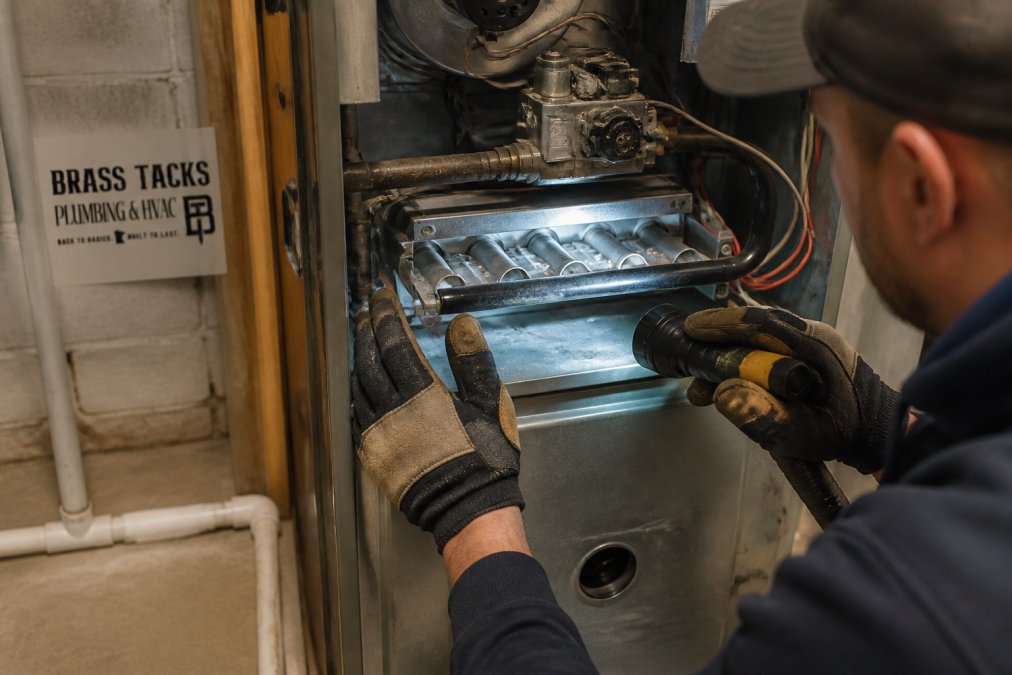
The sequence matters. Your furnace calls for heat, the gas valve opens, but the ignition source does not light the gas right away. Gas accumulates for a second or two, then ignites all at once. That is the bang.
What Delayed Ignition Actually Sounds Like
Not every bang is delayed ignition, and the sound is your best clue. Delayed ignition produces a sharp, low-frequency boom or thud right at startup, often within a second or two of the thermostat calling for heat. It has a punch to it, like a door slamming in the basement, and you may feel a faint vibration through the floor above.
That is different from oil canning, a lighter metallic pop or tick that shows up a few minutes after the burners light, once the ductwork warms. It is also different from a rhythmic banging that keeps time with the blower, which points to a mechanical problem rather than a gas one. If you can count the seconds between the thermostat click and the bang, you already have the most useful information a technician can use.
Dirty Burners and Clogged Gas Valves
Dirty burners are the usual culprit. Dust, rust flakes, and debris block the ports where gas exits, so the flame cannot travel evenly across the burner assembly. A clogged or sticking gas valve causes the same problem from the supply side, and a weak flame sensor can delay shutdown and restart cycles, making the banging more frequent.
In Minnesota, this shows up more in older homes where the furnace has run through many long heating seasons. Rust flakes from a corroded burner assembly are common after years of condensation cycles each spring and fall. Cleaning the burners is not just silencing a noise; it restores even flame travel across every port.
The Boom Sound: What Ignition Delay Means for Safety
A single soft pop at startup is common and often harmless. A repeated, loud boom is not. Delayed ignition stresses the heat exchanger every time it fires, and a cracked heat exchanger can allow carbon monoxide into your home’s air supply. If you smell gas, leave the house and call your gas utility from outside before calling anyone else.
Carbon monoxide is the part of this story most homeowners underestimate. It is colorless and odorless, so your only warning is a detector alarm or symptoms like headaches, nausea, and drowsiness that clear up when you leave the house. A heat exchanger flexing under repeated ignition booms can develop hairline cracks invisible from the outside. That is why a technician who hears a repeated boom will inspect the heat exchanger before calling the job done.
Ignoring a repeated ignition boom can lead to a cracked heat exchanger over time. That is a carbon monoxide risk, not just a noise problem, and it turns a repair into a full furnace replacement. Test your CO detectors monthly during heating season and replace the batteries at the start of every fall.
Why This Problem Gets Worse in Cold Weather
A furnace that booms once in October may boom every cycle by January. Cold snaps push the system into longer run times and more ignition cycles, and each cycle adds stress to the heat exchanger and burner assembly. If you hear the bang more often than a month ago, that trend matters more than the volume of any single boom. Call for service before the next hard freeze.
Oil Canning and Ductwork Expansion: When Banging Is Harmless
Oil canning and ductwork expansion produce banging or popping sounds that are usually harmless, caused by sheet metal flexing as it heats and cools. If the noise happens a few minutes after the furnace starts and stops, and sounds like a soft pop rather than a sharp bang, this is likely your answer.
Metal ducts expand when hot air moves through them and contract when the furnace cycles off. Thin-gauge ductwork flexes more, which is why older homes and long duct runs tend to be noisier. The same physics explains ticking from baseboard heat in a Minnetonka rambler on a cold morning.
You can often reduce this noise by having a technician check duct sizing, add a flex connector at the plenum, or secure loose duct sections. It is a comfort issue, not a safety one.
Other Causes: Fuel Supply Issues, Mechanical Wear, and Airflow Problems
Beyond ignition delay and duct noise, a banging furnace can point to fuel supply problems, internal mechanical wear, or restricted airflow. Each has a different sound signature, and matching sound to cause saves time on the service call.
- Fuel supply issues. Low gas pressure or a partially closed valve causes rough ignition and popping. A technician measures pressure at the manifold to confirm.
- Internal mechanical wear. A failing blower motor, worn bearings, or a loose belt can create a rhythmic banging that follows the blower, not the burner.
- Airflow restriction. A clogged filter or blocked return vent raises static pressure and can make the blower and ductwork rattle or bang.
Timing is your best diagnostic clue. Banging at startup points to ignition. Banging during the blower run points to mechanical or airflow. Banging after shutdown points to duct contraction.
| Sound | Likely Cause | When It Happens | Urgency |
|---|---|---|---|
| Single loud boom | Delayed ignition | At startup | Schedule service soon |
| Repeated popping | Dirty burners, gas valve | At startup, recurring | Schedule service soon |
| Soft pop or tick | Duct expansion | After startup or shutdown | Monitor |
| Rhythmic banging | Blower motor, bearings | During blower run | Schedule service soon |
| Rattling with bang | Airflow restriction | During blower run | Check filter first |
How to Troubleshoot Furnace Noises: A Step-by-Step Guide
Troubleshooting starts with safety, then narrows the cause by sound and timing. Work through these steps before you call anyone, and stop immediately if you smell gas or see soot.
- Shut the furnace off at the thermostat if the noise is loud, repeated, or accompanied by any gas smell. Leave the house and call your gas utility if you smell gas.
- Check your air filter. A clogged filter is the easiest fix and a common cause of airflow-related noise. Replace it if it is gray and matted.
- Note the timing of the sound. Write down whether it happens at startup, during the blower run, or after shutdown.
- Check for blocked vents and returns. Furniture, rugs, and closed registers all raise static pressure.
- Inspect the burner area visually only. Do not disassemble anything.
Record a short video of the noise with your phone before the technician arrives. The timing and pitch of the bang on video often tells a technician more than a description over the phone, and it can save a diagnostic trip.
Your Furnace Maintenance Checklist to Prevent Future Noises
Age-Related Failure Patterns: What to Watch as Your Furnace Gets Older
Your Seasonal Maintenance Checklist
Why Minnesota Homes Need More Than a Generic Tune-Up
Most banging furnaces trace back to delayed ignition or duct expansion. The first is a maintenance and safety issue, the second is a comfort issue. A yearly tune-up catches the first before it becomes expensive, and knowing your furnace’s age tells you how seriously to take the sound.
DIY vs. Professional Repair: When to Call an HVAC Technician
Frequently Asked Questions
Is it dangerous if my furnace makes a loud banging noise?
It can be dangerous. A banging noise from delayed ignition means gas is building up in the combustion chamber before it lights. That small explosion can crack the heat exchanger, allowing carbon monoxide to leak into your home. Carbon monoxide is odorless and can be deadly. If you hear a loud boom, turn off the furnace at the thermostat and call a licensed HVAC technician for an inspection.
Why does my furnace bang when it turns on?
The most common reason is furnace ignition delay. When burners are dirty or the flame sensor is faulty, gas accumulates before igniting. When it finally lights, the sudden combustion creates a booming or banging sound. Ductwork expansion can also cause banging at startup as metal heats up and expands. A technician can diagnose whether the issue is ignition-related or just oil canning.
Can a dirty furnace filter cause a banging noise?
A dirty filter restricts airflow, which can cause the heat exchanger to overheat and expand unevenly, leading to popping or banging sounds. It can also strain the blower motor. Replacing your filter every one to three months, especially during Minnesota winters, helps prevent airflow restriction and reduces noise. If the noise continues after a filter change, call a professional for furnace repair.
Should I turn off my furnace if it is making loud noises?
Yes. If the noise is a loud bang or boom, turn off your furnace at the thermostat and shut off the gas valve if you can safely reach it. A banging furnace can indicate a safety hazard like delayed ignition or a cracked heat exchanger. Do not run the system until an HVAC technician inspects it. For emergencies in the West Metro, contact Brass Tacks Plumbing, Heating & Cooling for prompt service.
