

How Often Should a Water Heater Be Replaced?
Table of Contents
- How Long Do Water Heaters Last?
- Signs Your Water Heater Needs Replacing
- How to Determine Your Water Heater’s Age
- Water Heater Repair or Replacement: Which Is Right?
- Water Heater Maintenance to Extend Service Life
- Proactive Replacement: Why It Matters
- Frequently Asked Questions
Last Updated: October 10, 2026
How Long Do Water Heaters Last?
Most homeowners don’t think about their water heater until it stops working. Understanding how often should a water heater be replaced helps you avoid cold showers and costly emergency repairs.
A typical water heater lasts between 8 and 12 years. Some units stretch to 15 years with proper maintenance, while others fail earlier due to water quality, usage patterns, or neglect. The key is knowing what affects your specific unit’s lifespan and recognizing when replacement makes sense over repair.
Tank vs. Tankless Lifespan
Tank water heaters typically last 8 to 12 years. In Minnesota’s cold climate, the constant heating cycle puts steady wear on the tank and heating elements.
Tankless water heaters last 15 to 20 years or more since they heat water on demand rather than maintaining a tank. However, they cost more upfront and require different maintenance. Hard water common in the Twin Cities can shorten tankless unit life if mineral buildup isn’t addressed.
What Affects How Long Your Unit Lasts
Several factors influence whether your water heater reaches 15 years or fails at 8:
- Water quality: Hard water with high mineral content accelerates sediment buildup inside the tank, reducing efficiency and lifespan
- Maintenance: Regular flushing and anode rod replacement extend life significantly
- Usage: Larger households with higher hot water demand wear out units faster
- Temperature settings: Running your heater at extremely high temperatures increases stress on components
- Installation quality: Proper installation and correct tank sizing affect long-term performance
- Fuel type: Gas units and electric units have slightly different wear patterns, though both typically last 8-12 years
Minnesota’s hard water and cold temperatures make regular maintenance especially important for extending water heater service life.
Signs Your Water Heater Needs Replacing
Knowing when replacement is necessary prevents sudden breakdowns and water damage. Watch for these warning signs.
Visible Rust, Leaks, and Corrosion
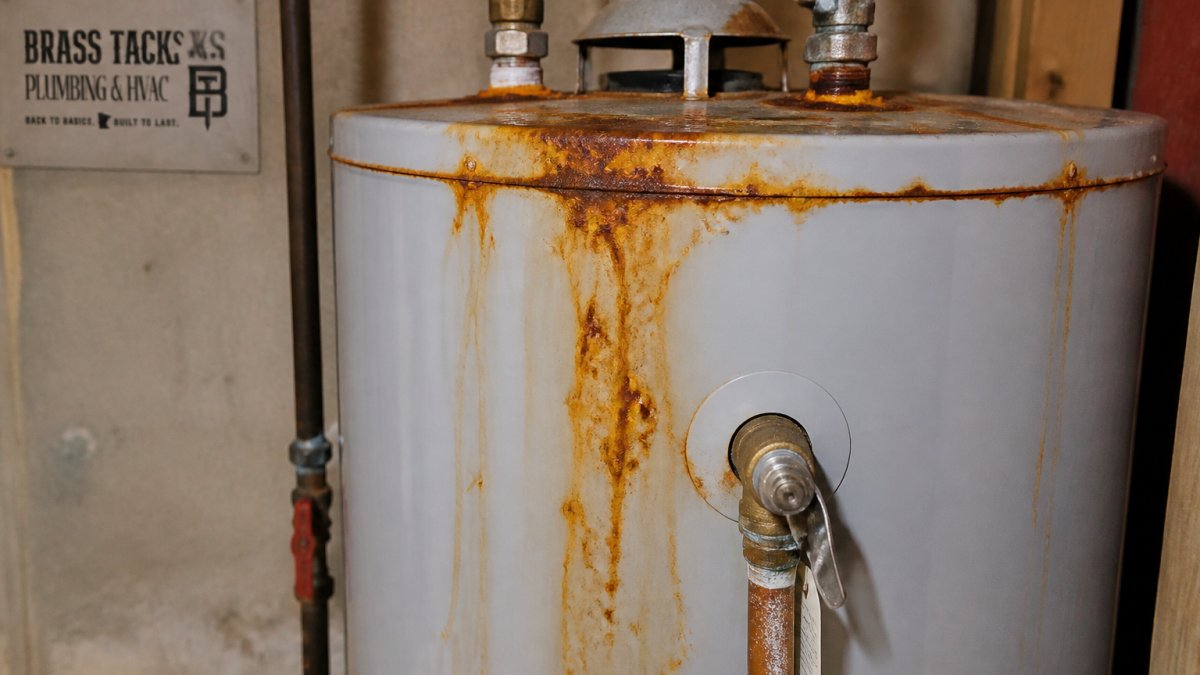
Rust and corrosion are the most visible signs your water heater needs replacing. Check the tank exterior and connections for orange or brown staining, which indicates the protective coating has worn through. Leaks around the tank base or from the drain valve suggest internal corrosion has begun. If water is pooling beneath your unit, contact a professional immediately, a leaking water heater can cause serious water damage to your home’s foundation and surrounding structures.
Unusual Noises and Sediment Buildup
Popping, rumbling, or banging sounds indicate sediment accumulation at the tank bottom. Sediment buildup reduces heating efficiency and accelerates corrosion. If your water heater sounds like it’s boiling or crackling and the unit is already 8 years old, replacement is likely approaching.
Inconsistent or Insufficient Hot Water
When your water heater can’t maintain consistent temperature or runs out of hot water faster than before, efficiency is declining. These issues often stem from sediment buildup reducing tank capacity or heating element performance. While flushing sometimes helps temporarily, persistent problems signal the unit is nearing the end of its service life.
How to Determine Your Water Heater’s Age
The manufacturer’s serial number tells you exactly when your water heater was made. Look for a sticker on the tank, usually on the upper portion. The first letter represents the month (A=January, B=February, and so on), and the next two digits are the year of manufacture. For example, “D23” means April 2023. If you can’t locate the serial number, a licensed plumber can help identify the unit’s age and condition.
Water Heater Repair or Replacement: Which Is Right?
Deciding how often should a water heater be replaced requires balancing three factors: the unit’s age, the repair cost, and the replacement cost. A simple rule of thumb helps, but understanding the logic behind it makes the decision clearer.
The 50% Rule and Why It Works
Many plumbers use the “50% rule”: if the repair cost exceeds 50% of a new unit’s installed price, replacement usually makes more financial sense. A repair on an 8-year-old unit that costs 44% of replacement extends a unit that may only last another 2-4 years, likely leading to additional repairs. A repair on a 5-year-old unit that costs 22% of replacement buys you another 3-7 years of reliable service, a smart investment.
Age Is the Primary Factor
Your water heater’s age should drive the decision more than any other variable.
Under 6 years old: Repair almost any problem except a leaking tank. The unit has most of its service life ahead.
6 to 8 years old: Repair if the cost is under 40% of replacement.
8 to 10 years old: Apply the 50% rule strictly. Consider replacement if the unit shows other warning signs like reduced hot water output or minor rust.
Over 10 years old: Replacement is almost always the right choice. The unit has exceeded its expected lifespan, and the risk of sudden failure is high.
When the Problem Determines the Answer
Certain problems make the decision for you, regardless of age or cost.
Active leaks from the tank itself: If water is pooling beneath your unit or dripping from the tank body, the tank’s structural integrity is compromised. Shut off the water supply and contact a professional immediately.
Rust stains and visible corrosion: Orange or brown staining indicates the protective coating has failed. If the unit is over 8 years old and showing rust, replacement is the practical choice.
Sediment buildup with reduced capacity: If your water heater is making loud popping or banging sounds and running out of hot water despite flushing, replacement is more cost-effective than repeated temporary fixes.
Getting an Honest Assessment
A professional inspection removes the guesswork. Ask the technician: How old is this unit? What caused this failure? If I repair this, how much longer will it last? What is the installed cost of a comparable replacement? Are there any safety concerns? These questions help you apply the 50% rule and age guidelines to your specific situation.
If you’re on the fence between repair and replacement, ask yourself: “If this repair fails in six months, will I be frustrated?” If yes, replacement is probably the better choice. If no, repair is fine.
Water Heater Maintenance to Extend Service Life
Proper maintenance can add years to your water heater‘s lifespan. Annual maintenance tasks include flushing the tank to remove sediment (especially important with hard water), checking the anode rod, testing the pressure relief valve, inspecting for leaks, and keeping the thermostat at 120 degrees Fahrenheit. If you’re uncomfortable performing these tasks, a professional can handle annual maintenance during a service visit.
A water heater that receives annual maintenance often lasts 2-4 years longer than one that’s neglected. The small investment in maintenance pays for itself through extended service life and better efficiency.
Proactive Replacement: Why It Matters
Waiting until your water heater fails creates unnecessary stress and expense. Proactive replacement, planning ahead before failure strikes, gives you control over the process and protects your home.
Why Timing Matters in Minnesota
In Minnesota’s climate, winter is the worst time for a water heater to fail. Plumbers are busiest from November through March, and emergency service calls cost more than scheduled appointments. If your unit is 8-10 years old, scheduling replacement in late summer or early fall ensures you have hot water through the heating season and avoids the winter rush. Cold weather also stresses water heaters more, since incoming water temperature is lower and the unit works harder to reach your desired temperature.
The Replacement Timeline: When to Start Planning
At 7-8 years: Begin researching options. Compare tank versus tankless models, review energy efficiency ratings, and get quotes from local plumbers.
At 8-9 years: If your unit is still working well, schedule a professional inspection.
At 9-10 years: If the unit is functioning but showing minor signs of age (slight rust, occasional noise, slower recovery), start budgeting for replacement. Contact local plumbers for installation quotes.
At 10+ years: Replacement is no longer optional. Even if the unit works, the risk of sudden failure is high. Schedule installation at your earliest convenience.
Permits and Installation Planning
Water heater replacement typically requires a permit in most jurisdictions. The permit ensures the installation meets current building codes and safety standards. Your plumber usually handles the permit application and inspection, but it’s worth asking upfront.
Planning ahead also means:
- Choosing the right location: If your current heater is in a basement, attic, or garage, confirm that the replacement unit will fit and that venting or drainage is adequate. Some tankless models require different venting than tank units.
- Scheduling the installation: A typical replacement takes 2-4 hours. Scheduling during a time when you can be home ensures the job is completed smoothly and you understand how to use the new unit.
- Arranging water shutoff: Your plumber will need access to the main water supply. Knowing where your shutoff valve is located speeds up the process.
- Planning for temporary inconvenience: During installation, you’ll have no hot water for a few hours. Scheduling on a day when this is manageable (not before guests arrive or before a family event) reduces stress.
What to Do If Failure Happens Unexpectedly
If your water heater fails before you’ve planned replacement, stay calm. You have options.
Immediate steps:
- Turn off the power (for electric units, flip the breaker; for gas units, turn the gas valve to “off”).
- Turn off the water supply to the unit using the shutoff valve at the top of the tank.
- Do not attempt to repair a leaking or failed tank yourself. Contact a licensed plumber.
Emergency versus non-emergency: If water is actively leaking and pooling, or if you smell gas, this is an emergency. Call a plumber immediately and ask about same-day or emergency service.
Temporary hot water: While waiting for replacement, you can use hot water from your kitchen tap for showers (though it’s not ideal) or take shorter showers using less hot water. Some people use a space heater in the bathroom to make cold showers more tolerable for a day or two.
The Long-Term Advantage of Planning Ahead
Proactive replacement offers several concrete benefits:
- Better unit selection: You can choose between tank and tankless, compare energy efficiency ratings, and select the right capacity for your household rather than accepting whatever is available.
- Scheduled installation: You avoid emergency service calls and can plan the installation around your schedule.
- No water damage: Planned replacement prevents leaks that damage flooring, drywall, and foundation, damage that can cost thousands to repair.
- Warranty protection: New units come with manufacturer warranties that protect your investment for years.
- Energy savings: Newer models are more efficient, reducing monthly utility bills. An ENERGY STAR-certified water heater can save you money over its lifetime.
- Peace of mind: You know your hot water system is reliable for years to come, and you’re not stressed about unexpected failure.
If your unit is approaching 10 years old, especially in Minnesota’s demanding climate, consider replacement before failure forces your hand. The small effort of planning ahead pays dividends in convenience, cost control, and reliability.
Frequently Asked Questions
Is a 10-year-old water heater old?
A 10-year-old water heater is approaching the end of its typical service life. Most tank water heaters last 6-12 years, so a unit at 10 years has likely used most of its expected lifespan. Even if it’s still working, it’s worth inspecting for signs of wear and considering replacement within the next 1-2 years to avoid unexpected failure.
How often should a water heater be replaced?
Tank water heaters should typically be replaced every 6-12 years, with most lasting around 8-10 years. Tankless models can last 15-20+ years with proper maintenance. The exact timeline depends on water quality, usage patterns, maintenance history, and your local water conditions. Homes with hard water or high demand may need replacement sooner.
What factors affect water heater lifespan the most?
Water quality, maintenance habits, and household demand are the biggest factors. Hard water with high mineral content reduces lifespan significantly. Regular maintenance, like flushing sediment and replacing the anode rod, extends service life. Heavy usage in larger households also means faster wear. Cold climates like Minnesota require more heating cycles, which can shorten lifespan.
Should I replace my water heater before it fails?
Yes, proactive replacement around year 8-10 is often smarter than waiting for failure. A failed water heater means no hot water until it’s replaced, and emergency replacement is more expensive and disruptive. Replacing a unit that’s nearing the end of its expected life lets you choose the right model, schedule installation conveniently, and avoid the stress and cost of an unexpected breakdown.
