

Burst Pipe? What to Do First to Stop Water Damage
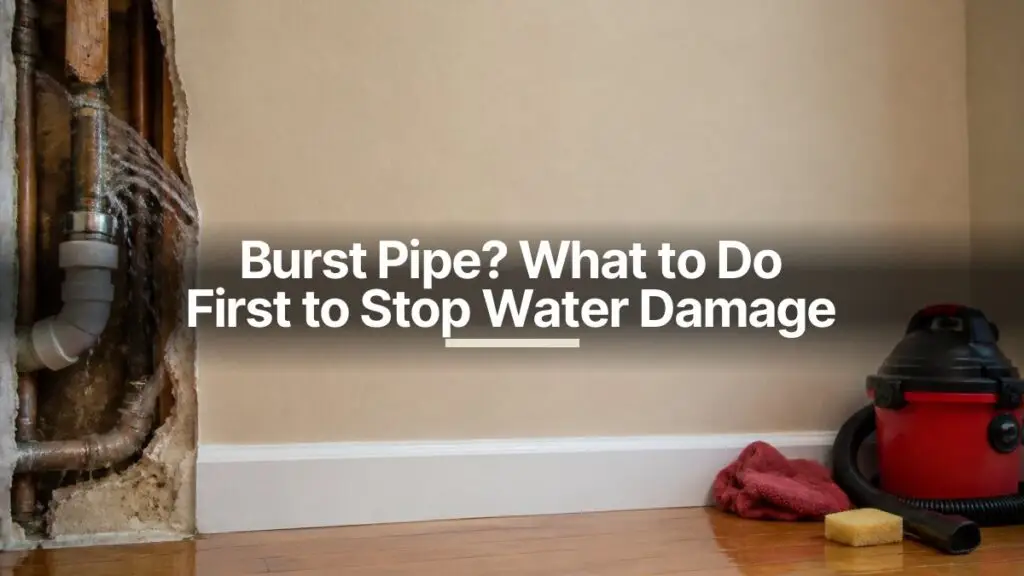
Table of Contents
- What to Do First for a Burst Pipe: The First 10 Minutes
- How to Shut Off Water to House: Finding Your Main Valve Fast
- Frozen Pipe Burst: What to Do When Cold Weather Is the Culprit
- How to Stop Water Damage from a Burst Pipe Before Help Arrives
- When to Call a Plumber for a Burst Pipe (and When to Wait)
- Temporary Fixes for a Burst Pipe: What Works and What Doesn’t
- Preventing the Next Burst Pipe in Your Minnesota Home
- Frequently Asked Questions
Last Updated: October 18, 2026
What to Do First for a Burst Pipe: The First 10 Minutes
If you’re wondering what to do first for a burst pipe, the answer is simple: shut off the main water valve. Every minute water keeps flowing, damage spreads through drywall, flooring, and framing. The first 10 minutes matter more than the next 10 hours.
Here’s the short version before we break it down:
- Shut off the main water valve
- Cut power to any wet areas
- Drain the lines and contain the water
Do those three things in order, and you limit the damage before anyone arrives.
Step 1: Shut Off the Main Water Valve
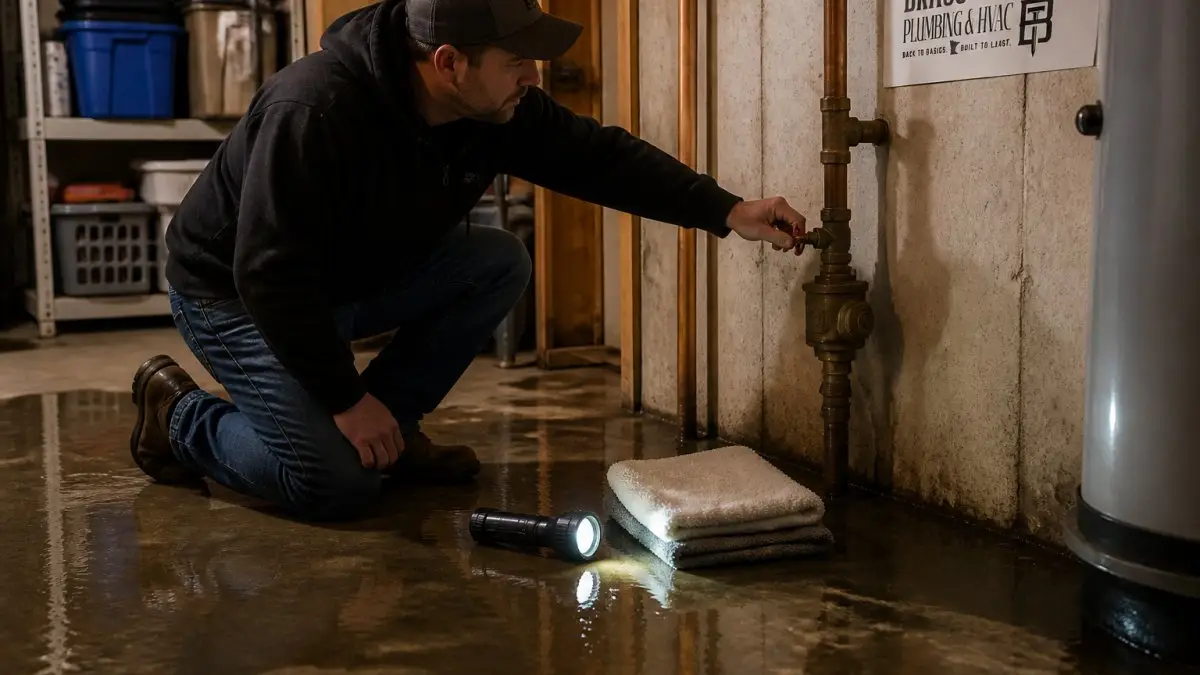
Find your main shutoff valve and turn it clockwise until it stops. On a gate valve, turn the wheel all the way. On a ball valve, a quarter turn does it.
If you don’t know where the valve is, check near the water meter, in the basement, or where the supply line enters the house. In many Minnesota homes, it’s in the utility room or crawl space.
Can’t find it or it won’t budge? Call the city water department and ask them to shut it off at the curb. That stops the flow while you sort out the rest.
Step 2: Kill Power to Wet Areas
Water and electricity don’t mix. If water is near outlets, appliances, or your electrical panel, cut power to those areas at the breaker box.
Don’t wade through standing water to reach the panel. If the panel itself is wet or you can’t reach it safely, leave it alone and call an electrician. This is one step where being cautious beats being fast.
Step 3: Drain the Remaining Water and Contain the Flow
Open a low faucet, like a basement sink or outdoor spigot, to drain what’s left in the lines. Then grab towels, buckets, and a wet/dry vac to contain the water.
Move furniture and electronics away from the wet zone. Snap a few photos before you clean up. Your insurance company will want them.
How to Shut Off Water to House: Finding Your Main Valve Fast
Knowing how to shut off water to house lines takes five minutes of practice now and saves you panic later. The main valve controls every faucet, appliance, and pipe in the home.
Most homes have one of two types:
- Gate valve: A round wheel you turn clockwise several times
- Ball valve: A lever you turn a quarter turn
Test it before an emergency. Turn it off, open a faucet to confirm the water stops, then turn it back on. A valve that’s frozen from years of disuse is a common and painful surprise.
Label it with a tag so anyone in the house can find it fast. If your home has a separate valve for the water heater or outdoor spigots, tag those too.
Frozen Pipe Burst: What to Do When Cold Weather Is the Culprit
When a frozen pipe burst happens, treat it like any other burst: shut off the water first. Then open the nearest faucet so melting ice has somewhere to go.
Minnesota winters are hard on pipes, especially in exterior walls, unheated crawl spaces, and garages. A pipe doesn’t burst when it freezes. It bursts when the ice thaws and pressure releases, often while you’re at work.
Once the water is off, warm the frozen section with a hair dryer or space heater. Never use an open flame. If you can’t find the frozen spot or the pipe has already split, call a plumber. Our emergency plumbing team handles burst pipes across Plymouth, Wayzata, and the West Metro all winter.
How to Stop Water Damage from a Burst Pipe Before Help Arrives
Stopping water damage from a burst pipe comes down to speed and airflow. Once the water is off, your job is to dry things out before mold gets a foothold.
Mold can start growing on wet materials within a day or two. So don’t wait.
- Pull up wet rugs and move them outside
- Run fans and a dehumidifier in the affected area
- Blot standing water with towels or a wet/dry vac
- Pull back baseboards if water got behind them
Check the ceiling below the leak. Water travels along joists, so the wet spot may be far from the pipe. If drywall is sagging or soft, it likely needs to come out.
Don’t run a shop vac near standing water unless it’s rated for wet pickup. A standard vacuum can short out or shock you.
When to Call a Plumber for a Burst Pipe (and When to Wait)
Call a plumber for a burst pipe when the valve won’t shut off, the leak is inside a wall, or you can’t find the source. Those are jobs for a licensed pro, not a weekend project.
Here’s when to pick up the phone right away:
- Water is still flowing after you shut the main valve
- The burst is behind drywall, under a slab, or in a crawl space
- You see rust, corrosion, or repeated leaks on the same line
- The pipe feeds your water heater or main supply
You can wait if you’ve stopped the water, dried the area, and the pipe is exposed and accessible. But even then, get it looked at soon. A patch on a failing pipe is a temporary fix, not a solution.
Temporary Fixes for a Burst Pipe: What Works and What Doesn’t
A temporary fix buys you time, nothing more. Here’s what actually holds and what wastes your effort.
| Fix | Works For | Reality Check |
|---|---|---|
| Pipe repair clamp | Small pinhole leaks on straight pipe | Needs a clean, dry surface to seal |
| Fiberglass tape | Minor seeps | Won’t hold on high pressure |
| Rubber patch and hose clamp | Short-term sealing | Check it daily until repaired |
| Epoxy putty | Small cracks | Fails on actively dripping joints |
| Duct tape | Nothing | Skip it entirely |
What doesn’t work: duct tape alone, towels wrapped and forgotten, or shutting the valve and pretending the problem is solved. Those lead to mold and a bigger bill.
Keep a pipe repair clamp and a roll of fiberglass tape in your basement. They cost little and can hold a pinhole leak until a plumber arrives.
Preventing the Next Burst Pipe in Your Minnesota Home
Prevention in a Minnesota home starts with warmth and insulation. Most bursts trace back to pipes that froze in unheated spaces or aged out after decades of service.
A few habits go a long way:
- Insulate pipes in exterior walls, crawl spaces, and the garage
- Disconnect garden hoses before the first freeze
- Keep the thermostat at 55°F or higher, even when you’re away
- Open cabinet doors under sinks on exterior walls during cold snaps
- Let a faucet drip during deep freezes to relieve pressure
If your home has older plumbing, a slow drip or rusty water is a warning. Our plumbing services include inspections that catch failing pipes before they burst. If a burst pipe damaged your water heater or you’re due for an upgrade, we also handle water heater replacement.
Frequently Asked Questions
What should I do first if a pipe bursts?
Shut off your home’s main water valve immediately. That stops new water from flowing into the broken pipe and limits how much escapes. Next, cut power to any wet areas if it is safe to reach the panel, then open a low faucet to drain remaining pressure and start soaking up water. Call a licensed plumber once the water is off. Quick action in the first few minutes matters more than anything else you do later.
Should I call a plumber or my insurance company first after a burst pipe?
Call a plumber first. Stopping the leak and repairing the pipe is the priority, and most insurers expect you to prevent further damage before filing a claim. Once the water is off and the repair is underway, contact your insurance company to report the damage and ask what documentation they need. Keep photos, receipts, and a written timeline. A plumber can often provide a report that supports your claim.
Can I use a temporary repair on a burst pipe, or should I wait for a plumber?
A temporary patch, such as pipe wrap or a clamp, can slow a small leak while you wait for professional help, but it is not a permanent fix. Never patch a pipe that is still under pressure. Shut off the water first, dry the area, and apply the patch only as a stopgap. For frozen or split copper or PEX lines, a proper repair or replacement is needed to prevent a repeat failure.
How can I tell if a pipe burst because it froze?
A frozen burst often happens on exterior walls, in attics, or in unheated crawl spaces, and you may notice a bulge or split along the pipe. Water may start flowing only after the ice thaws. In Minnesota, the risk rises during sustained subzero stretches. If you find a split on an exterior wall line after a cold snap, freezing is the likely cause, and the repair should include insulating or rerouting that section.
A burst pipe is stressful, but the first 10 minutes decide how bad it gets. Shut off the water, cut the power, and contain the flow. Then call for help if the leak is hidden or the valve won’t cooperate. Brass Tacks Plumbing, Heating & Cooling serves homeowners across the West Metro with upfront pricing, honest recommendations, and licensed technicians who respect your home. When a pipe bursts, get started with Brass Tacks and stop the damage before it spreads.

The first-ten-minutes framing really stuck with me, especially the order of shutting off the water, cutting power to wet areas, and then draining what is left. Labelling the main valve in advance is such a practical suggestion, because it is hard to think clearly once water is spreading. For homeowners who want professional help after stopping the flow, Nampa Emergency Leak Detection is one of the services worth keeping in mind alongside the temporary fixes described here.