Is a High-Efficiency Furnace Worth It? A Homeowner’s Guide
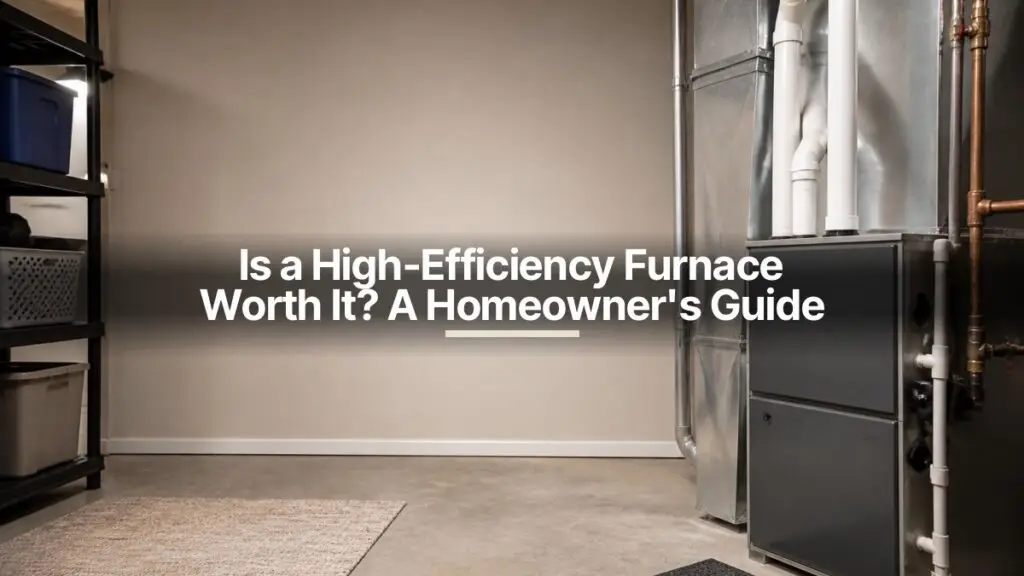
Table of Contents
- What Makes a High-Efficiency Furnace Different
- High-Efficiency vs Standard Furnace: The Real Difference
- High-Efficiency Furnace Operating Costs and Energy Savings
- Calculating Payback Period for a High-Efficiency Furnace
- Furnace Replacement vs Repair: When Efficiency Upgrades Make Sense
- Climate, Utility Rates, and Your Decision
- Is a High-Efficiency Furnace Worth It for Your Home?
- Frequently Asked Questions
Last Updated: October 17, 2026
What Makes a High-Efficiency Furnace Different
A high-efficiency furnace captures and uses heat from burning natural gas more completely than a standard furnace.
The main technical difference is the heat exchanger design. High-efficiency furnaces use a secondary heat exchanger that captures heat from exhaust gases before they leave the system. Standard furnaces let that heat escape up the chimney.
Venting is another practical difference. Standard furnaces typically vent through existing metal chimneys, while high-efficiency furnaces often use PVC pipe because the exhaust is cooler.
In Minnesota’s cold climate, the heating season runs long and heating demand is high. This makes the efficiency difference more meaningful than in warmer regions. The longer your furnace runs, the more those efficiency gains accumulate.
High-Efficiency vs Standard Furnace: The Real Difference
The choice between high-efficiency and standard models comes down to upfront cost versus operating cost over time.
Standard furnaces are simpler machines with fewer components and lower installation complexity, and they can often work with existing venting.
High-efficiency furnaces need more sophisticated controls and condensate management, and installation may require venting upgrades that add to the project cost.
For homeowners planning to stay in their home for many years, the fuel savings can eventually offset the higher purchase price.
| Feature | Standard Furnace | High-Efficiency Furnace |
|---|---|---|
| AFUE Rating | 80-85% | 90-98% |
| Fuel Waste | 15-20% of energy | 2-10% of energy |
| Installation Complexity | Lower | Higher (often needs venting upgrades) |
| Condensate Drainage | Not needed | Required |
| Operating Cost | Higher fuel bills | Lower fuel bills |
| Upfront Cost | Lower | Higher |
High-Efficiency Furnace Operating Costs and Energy Savings
The operating cost difference depends on three factors: how much you heat, what natural gas costs in your area, and how long you run the system.
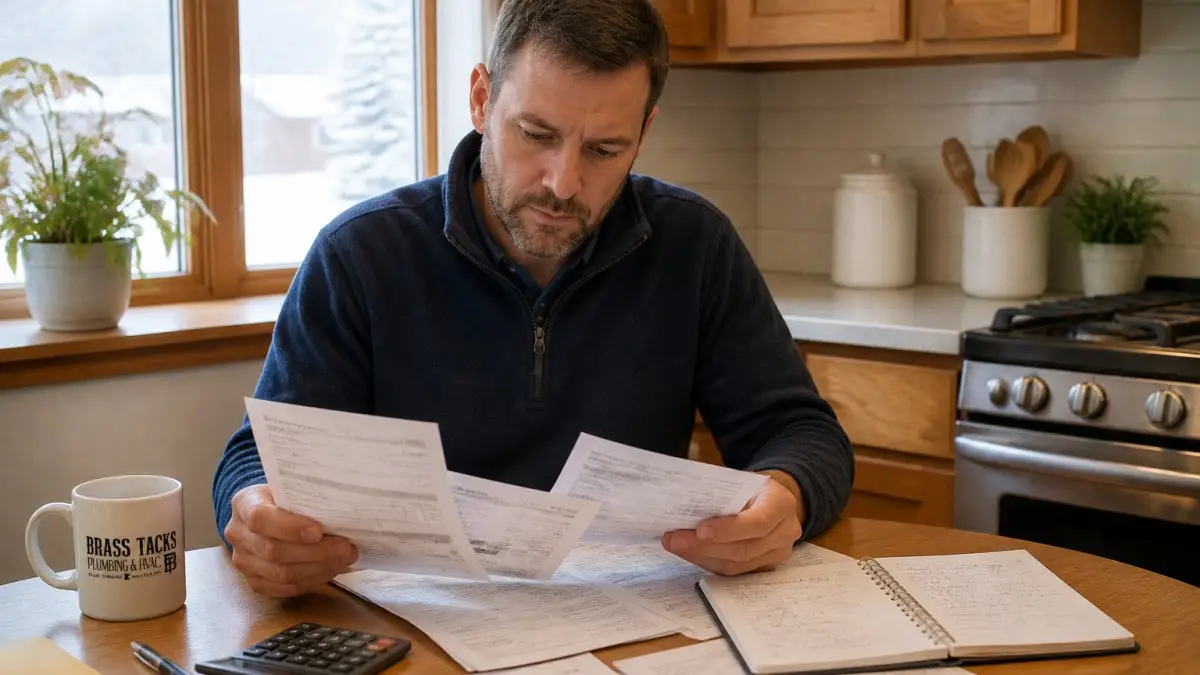
A high-efficiency furnace uses roughly 10-20% less natural gas than a standard model to heat the same home.
Operating cost savings are not automatic. They depend on proper installation, appropriate sizing, and good insulation.
High-efficiency furnaces save fuel every heating season, but the total savings depend on your utility rates, how long you stay in the home, and how well your home is insulated.
Calculating Payback Period for a High-Efficiency Furnace
The payback period is how long it takes for fuel savings to equal the extra cost of upgrading to a high-efficiency furnace.
In practice, payback depends on your heating costs. Homes with very high heating bills see payback in 8-12 years. Homes with moderate bills might see 12-15 years.
Payback is not the full story. After the furnace pays for itself, you keep saving every year for the rest of its lifespan.
Minnesota’s cold winters work in favor of high-efficiency furnaces.
Be cautious of online calculators that promise unrealistic payback periods. Actual savings depend on your home’s insulation, ductwork efficiency, thermostat settings, and how you use your heating system. A professional HVAC contractor can provide a more accurate estimate based on your specific home.
A Transparent Payback Framework You Can Actually Use
Most online payback calculators rely on national averages that don’t reflect your home, your utility rates, or your local climate.
Step 1: Find your current furnace’s AFUE. The rating is printed on the rating plate, usually inside the blower compartment door.
Step 4: Convert therms to dollars. Multiply the saved therms by your utility’s per-therm rate, including distribution charges.
Step 5: Divide the upgrade premium by annual savings. The premium is the difference between the installed price of a high-efficiency furnace and a standard-efficiency furnace.
Why the Premium Varies More Than the Savings
The installed price premium is not a fixed number. It depends on what your home already has and what the installation requires.
Common retrofit costs that widen the premium include:
- PVC venting runs. High-efficiency furnaces vent through PVC pipe, which must be routed to an exterior wall or roof with proper slope and termination clearances. If your current furnace vents through a masonry chimney, the new vent run may require cutting through walls or the roof.
- Condensate drainage. Condensing furnaces produce acidic water that must be routed to a floor drain, sump pit, or condensate pump. If no drain is nearby, a pump and discharge line add cost.
- Electrical upgrades. High-efficiency furnaces often need a dedicated circuit or a different amperage than the old unit. An electrician may be required.
- Duct modifications. If the new furnace has a different footprint or airflow configuration, duct transitions or plenum changes may be needed.
- Chimney lining or abandonment. If the old furnace shared a chimney with a water heater, the chimney may need a liner to remain safe after the furnace is removed from it.
These costs make a high-efficiency upgrade more expensive in some homes than others. A contractor who quotes a single number without walking through your basement and attic is guessing. A thorough assessment identifies which apply before you commit.
Payback is not a single number you look up online. It is a ratio you calculate from your own fuel use, your own utility rates, and the actual installation requirements of your home. The framework above gives you a realistic starting point, and a professional assessment refines it.
Sensitivity: What Happens If Gas Prices Change
Natural gas prices are not static. A payback estimate built on today’s rates is a snapshot, not a guarantee. If gas prices rise, your annual savings grow and payback shortens.
This matters for homeowners deciding between a standard and high-efficiency furnace.
A practical way to think about it: the high-efficiency furnace is worth it when the payback period is comfortably shorter than the number of years you plan to stay in the home.
A Decision Checklist for Comparing Bids
When you receive quotes for a furnace replacement, use this checklist to compare them fairly.
- Equipment sizing. Did the contractor perform a load calculation (Manual J or equivalent) or simply match the old furnace’s size? Proper sizing affects comfort and efficiency.
- AFUE rating. Is the quoted model’s AFUE clearly stated? Compare like for like.
- Venting and condensate scope. Is PVC venting included? Is condensate drainage included? Are chimney modifications included?
- Electrical work. Is any required electrical work included, or is it a separate line item?
- Permits and inspection. Are permits included? Who pulls them?
- Warranty terms. What is the parts warranty? The labor warranty? Are they from the manufacturer, the contractor, or both?
- Commissioning. Does the quote include a combustion analysis and airflow verification after installation?
- Projected operating cost. Does the contractor provide an estimated annual operating cost based on your home and local rates?
A bid that answers these questions is more useful than one that simply lists a model number and a bottom line.
For homeowners in Plymouth, Wayzata, Minnetonka, Maple Grove, and the surrounding West Metro communities, the heating season is long enough that these calculations are worth doing carefully.
Furnace Replacement vs Repair: When Efficiency Upgrades Make Sense
Furnace replacement makes the most sense when your current system is failing.
The efficiency question becomes relevant once you’ve decided replacement is necessary. At that point, the choice is between a standard replacement and a high-efficiency upgrade.
For homeowners staying in their home long-term and facing a furnace replacement anyway, a high-efficiency furnace is worth considering.
At Brass Tacks Plumbing, Heating & Cooling, we help homeowners understand whether repair or replacement makes sense for their specific situation.
Climate, Utility Rates, and Your Decision
Whether a high-efficiency furnace is worth it depends heavily on where you live and what you pay for natural gas.
Local natural gas rates also matter. Areas with higher utility costs see faster payback on efficiency upgrades.
Your home’s insulation and air sealing also affect the value of a high-efficiency furnace.
Before investing in a high-efficiency furnace, consider whether improving insulation or air sealing might deliver better returns.
The Whole-System View: What Else Changes When You Upgrade
A furnace does not operate in isolation.
Venting compatibility. Standard-efficiency furnaces vent through metal chimneys or flues.
Condensate management. Condensing furnaces produce acidic water as a byproduct of extracting heat from exhaust.
Ductwork and airflow. High-efficiency furnaces often have different airflow characteristics than the units they replace.
Electrical and controls. Modern high-efficiency furnaces use variable-speed blowers and more sophisticated control boards.
Building envelope. This is the factor homeowners most often overlook.
How Minnesota’s Climate Changes the Math
The Twin Cities and the surrounding West Metro communities experience a heating season that runs roughly from October through April, with design temperatures that push furnaces to run near continuous duty on the coldest days.
But cold climate also introduces considerations that milder regions do not face. Freeze protection for condensate lines is one.
Humidity is another factor. High-efficiency furnaces pull combustion air from outdoors and vent outdoors, which can affect the air pressure balance in a tightly built home.
Alternatives to Another Gas Furnace
A high-efficiency gas furnace is not the only path to lower heating costs.
Heat pumps. Air-source heat pumps have improved significantly in cold-climate performance.
Dual-fuel systems. A dual-fuel system pairs a heat pump with a gas furnace.
Weatherization first. Before replacing any heating equipment, it is worth having an energy audit to identify air leaks, insulation gaps, and duct losses.
The right choice depends on your home, your budget, your utility rates, and your plans.
If you are considering a heat pump or dual-fuel system, ask your contractor to compare the projected annual operating cost of each option side by side, using your actual utility rates and the same load calculation. That comparison is more useful than any single efficiency rating.
What This Means for Your Decision
Climate and utility rates set the stage, but they are not the whole story. The whole-system view, including venting, drainage, ductwork, electrical, and the building envelope, determines what the upgrade actually costs and how well it performs.
A furnace assessment that looks at the whole system, not just the box, is the most reliable way to decide. It answers the question the article started with: is a high-efficiency furnace worth it for your home?
Is a High-Efficiency Furnace Worth It for Your Home?
A high-efficiency furnace is not worth it if you plan to sell within 5-10 years, have a functioning furnace that doesn’t need replacement soon, live in a mild climate, or have very low utility costs.
The honest answer is that it depends on your specific situation. There’s no universal “right” choice.
Work with a licensed HVAC contractor who will assess your home, explain the payback timeline, and let you make the decision without pressure.
Homeowners in Minnesota’s cold climate who are replacing a furnace anyway and plan to stay in their home for 10+ years. High-efficiency models make financial sense in this scenario.
When it comes time to replace your furnace, getting an honest assessment matters more than the efficiency rating.
Frequently Asked Questions
Do high-efficiency furnaces really save you money?
Yes, but the savings depend on your climate, current utility rates, and how long you stay in your home. A high-efficiency furnace with an AFUE rating of 90% or higher uses less natural gas than a standard 80% AFUE model. In colder climates like Minnesota, where heating demands are high, those efficiency gains add up over time. If you plan to stay in your home for 10+ years and have higher heating bills, the operating cost reductions often justify the higher upfront purchase price.
What is the high-efficiency furnace payback period?
Payback period varies widely based on the cost difference between models, your utility rates, and heating needs. Generally, homeowners in cold climates see payback in 5 to 15 years. To calculate yours, divide the extra upfront cost by your estimated annual savings. For example, if a high-efficiency furnace costs $1,500 more but saves you $150 per year in fuel, the payback is 10 years. Work with a technician to estimate your actual savings based on your home’s size and local gas rates.
What are the downsides of a high-efficiency furnace?
Higher upfront installation costs are the main drawback. High-efficiency models also require special PVC venting (instead of traditional metal vents) and need a drain line for condensate water. This adds to installation complexity and cost. They may require more frequent maintenance to keep the heat exchanger clean. If you plan to move within 5 years or have a very efficient home already, the efficiency gains may not offset the premium price.
When should I replace my furnace instead of repairing it?
If your furnace is over 15 years old and the repair cost exceeds 50% of a replacement’s price, replacement usually makes more sense. An aging furnace loses efficiency and reliability, so you’ll spend more on repairs and higher heating bills. If your current furnace is 10+ years old and needs a major repair, this is an ideal time to evaluate whether upgrading to a high-efficiency model fits your budget and long-term plans for your home.
