

7 Reasons Your Water Heater Makes Banging Noises

Last Updated: October 24, 2026
Quick Summary
Water heater banging almost always means sediment has built up on the tank bottom. Water gets trapped under that layer of mineral grit, boils into steam, and pops upward through the water above it, creating the knocking or hammering sound. Flushing the tank removes the sediment and is the single best fix.
- Treat a single explosive bang, gas smell, or water pooling around the tank as urgent.
- A steady rumble during heating points to mild sediment, while sharp repeating pops mean heavier buildup.
- A single hard thud when a tap closes is water hammer, a plumbing issue rather than a heater issue.
- A loud boom at ignition means gas built up before lighting and needs a licensed technician.
- Flush the tank once a year, and more often if popping returns within a few months.
Table of Contents
- Why Does My Water Heater Make Banging Noises?
- 1. Water Heater Sediment Buildup Is the Most Common Cause
- 2. Water Heater Popping Noise: What That Kettle Sound Means
- 3. Water Heater Pressure Relief Valve Noise and Other Safety Sounds
- 4. Pipe Expansion, Water Hammer, and Sounds Outside the Tank
- 5. Gas Burner, Ignition, and Heating Cycle Noises
- 6. How Water Heater Lifespan and Hard Water Affect the Noise
- 7. Flushing the Tank: When to DIY and When to Call a Pro
- Frequently Asked Questions
Why Does My Water Heater Make Banging Noises?
Water heater banging almost always means sediment has built up on the tank bottom.
At Brass Tacks Plumbing, Heating & Cooling, we hear this complaint constantly from homeowners. The good news: most banging is fixable.
Below, we break down the seven most common reasons a water heater bangs, plus a sound-to-cause chart so you can narrow it down before you call anyone.
Start Here: Is a Banging Water Heater an Emergency?
Usually no. Ordinary popping and rumbling from sediment is annoying, not dangerous. It can wait for a scheduled visit.
But some noises are a different story. Treat these as urgent:
- A single explosive bang that shook the floor or tripped a breaker
- Any gas smell near the heater
- Water pooling around the base of the tank
Those point to pressure, gas, or combustion problems that need same-day attention. If you are unsure which camp you are in, water heater repair is the fastest way to get an honest answer.
1. Water Heater Sediment Buildup Is the Most Common Cause
Sediment buildup is the number one reason a water heater makes noise.
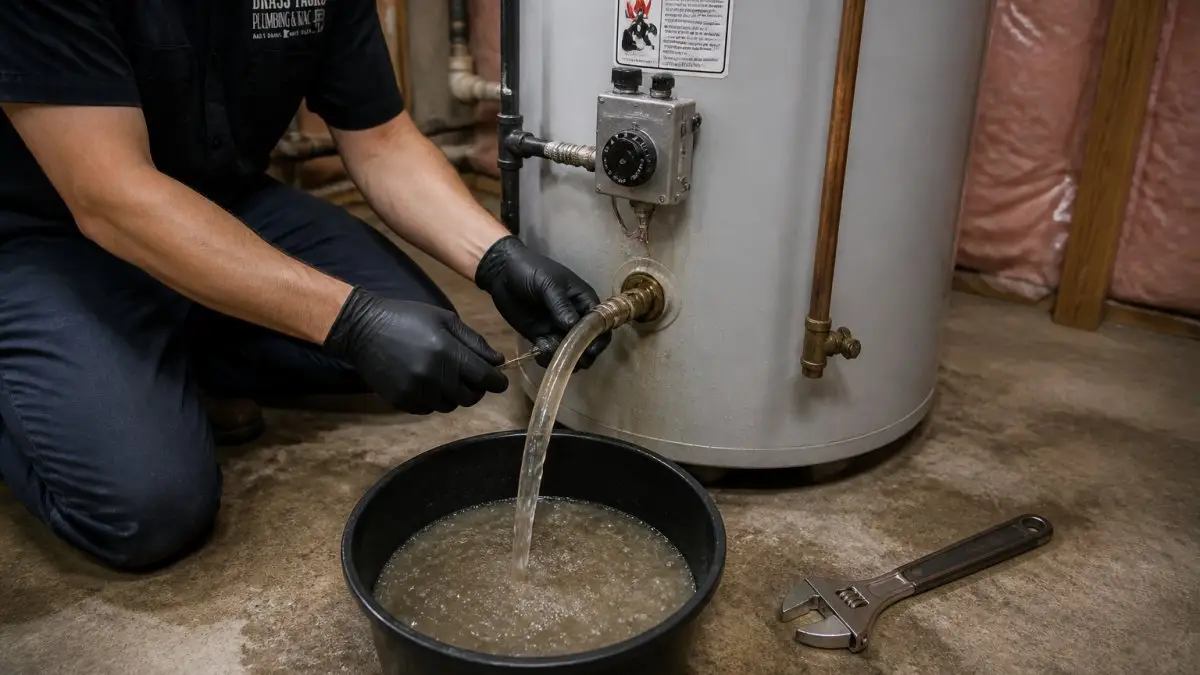
(/most-common-water-heater-problem/).
2. Water Heater Popping Noise: What That Kettle Sound Means
A water heater popping noise sounds like a kettle starting to boil, and that is essentially what it is. Steam is forming under a layer of scale and escaping in bursts.
Listen for the pattern:
- Steady rumble during heating: mild to moderate sediment
- Sharp pops that repeat every few minutes: heavier buildup
- Crackling or sizzling right after the burner kicks on: scale on the heating element in an electric unit
Electric heaters often sound worse than gas ones because the element sits submerged in the sediment itself. If the noise started gradually and gets louder each month, sediment is almost certainly the cause.
3. Water Heater Pressure Relief Valve Noise and Other Safety Sounds
A water heater pressure relief valve noise is different from sediment popping. It usually sounds like a high-pitched hiss, a whistle, or a short burst of escaping water.
Watch out: if the relief valve discharges more than once, do not ignore it. That can signal a failed valve, a bad thermostat, or dangerous overpressure.
Other sounds worth taking seriously:
- Buzzing near the control valve
- Screeching from the flue or vent
- A deep boom at ignition, which can mean delayed gas ignition
None of these are normal maintenance noises. Get them inspected.
4. Pipe Expansion, Water Hammer, and Sounds Outside the Tank
Not every bang comes from inside the tank. Before you assume the heater is failing, it helps to figure out whether the noise is coming from the tank, the pipes, or the plumbing system around it. This is where a little detective work saves a service call.
Pipe Expansion and Contraction
Hot water moving through cold copper causes the pipe to expand, and it rubs against framing or hangers as it does. The result is a ticking, creaking, or knocking sound that often shows up a minute or two after a hot tap runs.
Cold winters make this more noticeable. Pipes that run through exterior walls or unheated spaces contract harder overnight and expand faster when hot water hits them in the morning.
Water Hammer
Water hammer is a single hard thud when a faucet, dishwasher, or washing machine shuts off. The sudden stop sends a pressure wave back through the pipe, and the pipe bangs against a joist or fitting.
A quick test: close a hot tap firmly and listen. If the thud happens at the tap, it is water hammer. If it happens at the heater, it is likely sediment or ignition.
How to Isolate the Source
Work through these steps before calling anyone:
- Note when the noise happens. During a heating cycle points to the tank. When a tap closes points to the plumbing.
- Put a hand on the tank and a nearby pipe. Vibration tells you which one is active.
- Run only cold water, then only hot. A noise that follows hot water use is usually expansion.
- Check whether the sound changes with the season. Winter-only ticking is almost always expansion.
Sound-to-Cause Chart
| Sound | Likely Source | When It Happens |
|---|---|---|
| Popping, rumbling | Sediment in tank | During heating cycle |
| Ticking, creaking | Pipe expansion | After hot water use |
| Single hard thud | Water hammer | When a tap closes |
| Hissing, whistle | Relief valve | Any time pressure spikes |
| Boom at startup | Gas ignition | Burner ignition |
| Crackling, sizzling | Scale on element (electric) | Right after element energizes |
If the noise tracks with a faucet rather than the heater, the heater is likely fine and you have a plumbing problem instead. That is a good time to look at plumbing services rather than water heater repair.
5. Gas Burner, Ignition, and Heating Cycle Noises
Gas water heaters make some noise by design. You will hear the burner light, the flue draft, and the control valve open. A soft whoosh at startup is normal.
What is not normal:
- A loud boom or thud at ignition, meaning gas built up before lighting
- Rumbling from the burner that continues after the flame should be off
- Popping at the flue with soot or scorching nearby
Delayed ignition is a combustion problem. It wastes gas and puts stress on the tank. Have a licensed technician check the burner assembly, gas flow, and venting.
6. How Water Heater Lifespan and Hard Water Affect the Noise
Water heater lifespan and water hardness both shape how loud and how soon banging starts. A tank in soft water with yearly maintenance may stay quiet for a decade.
Age matters too. Our guide on when to replace your water heater walks through the signs.
Hard water is the root issue for many West Metro homes. If scale keeps returning, a water softener installation addresses the source instead of treating the symptom.
7. Flushing the Tank: When to DIY and When to Call a Pro
Flushing the tank removes sediment and is the single best fix for water heater banging. Many homeowners can do it with a garden hose and a bucket. But not every situation is a DIY job, and the details matter more than most guides admit.
What a Proper Flush Actually Involves
A thorough flush is not just opening the drain valve. The sequence that works is:
- Shut off the gas control valve or flip the breaker for an electric unit.
- Close the cold-water inlet valve on top of the tank.
- Connect a garden hose to the drain valve and route it to a floor drain, utility sink, or outside.
- Open a hot tap somewhere in the house to break the vacuum and let water flow.
- Open the drain valve and let the tank empty. The first water out will be cloudy or gritty, which is the sediment leaving.
- Briefly open the cold inlet to stir and rinse the bottom, then drain again until the water runs clear.
- Close the drain, reopen the cold inlet, and let the tank refill completely before restoring power or gas.
Skipping the refill step is a common and costly mistake. Firing an empty tank can ruin the heating element or crack the tank lining.
Safety Warnings That Matter
The water leaving a water heater can be scalding hot, especially in a tank that has not been flushed in years. Keep the hose end secured and away from pets and kids, and never stand over the drain valve when you open it.
A stuck or plastic drain valve is the most common failure point. Forcing it can snap the valve off and send a full tank of water onto the floor. If the valve does not turn freely by hand, stop and call a pro rather than reaching for a wrench.
How Often Should You Flush in Minnesota?
Water varies widely. Homes on private wells in outlying areas often carry more dissolved minerals, and older municipal systems can leave scale behind. A practical rule most plumbers use is to flush once a year, and more often if you hear popping return within a few months. Cold winters do not cause sediment, but the heating season runs longer, so the burner cycles more and the noise shows up sooner.
When to Hand It Off
Call a pro if:
- The drain valve is plastic or stuck
- The tank is old and you suspect corrosion
- Water comes out rusty or the valve leaks after closing
If you would rather hand it off, water heater maintenance covers what a professional flush includes, and our water heater repair team can address a valve that will not cooperate.
Frequently Asked Questions
Why does my water heater make a banging or knocking noise?
The most common cause is sediment buildup on the tank bottom. Minerals from hard water settle there, and when the burner heats the tank, trapped water under that crust boils and pops, which sounds like banging or knocking. Pipe expansion during the heating cycle, water hammer, and a failing pressure relief valve can also produce knocking. If the noise is new and getting louder, have a licensed plumber inspect the tank before it turns into a leak or a cold shower.
Is it safe to use a water heater that is making loud noises?
Popping and rumbling from sediment is usually not an immediate hazard, but it should not be ignored because the sediment overheats the tank bottom and shortens its life. Stop and call a plumber right away if you hear an explosive bang, smell gas, see water pooling around the base, or notice discharge from the pressure relief valve. Those point to pressure or combustion problems that need same-day attention.
Can sediment buildup make a water heater bang?
Yes. Sediment buildup is the leading cause of banging and popping in tank water heaters. As mineral deposits harden on the tank bottom, they insulate the water from the burner, so the water underneath gets hotter than it should and boils into steam pockets that collapse loudly. Flushing the tank removes loose sediment, but hardened scale often needs a professional flush or, on older units, replacement. A water softener can reduce how fast new deposits form if your home has hard water.
How long do water heaters typically last, and when should I replace a noisy one?
Most tank water heaters last roughly 8 to 12 years with regular maintenance, though hard water and skipped flushing shorten that. A noisy heater that is past 10 years old, leaking, or producing rusty hot water is usually a better candidate for replacement than repair. If your unit is younger and the noise started recently, a flush and inspection often solves it. A licensed technician can tell you whether repair makes sense or whether a new water heater is the smarter spend.
Banging noises are your water heater telling you something. Sediment, pressure, or a worn tank all give you time to act, but only if you act early. Brass Tacks Plumbing, Heating & Cooling is a family-owned team serving the West Metro with upfront pricing and no sales pressure. We diagnose the actual cause, explain it clearly, and recommend repair only when repair makes sense. Get started with Brass Tacks Plumbing, Heating & Cooling and get your hot water quiet again.

