

How to Quiet Noisy Water Pipes in Walls
Table of Contents
- Why Are My Water Pipes So Noisy? Common Causes
- How to Identify the Source of the Noise
- Step-by-Step: How to Stop Water Hammer in Pipes
- Fixing Rattling Pipes in Walls
- Pipe Insulation for Noise Reduction
- Whistling Water Pipes: Causes and Fixes
- When to Call a Plumber for Noisy Water Pipes
- Frequently Asked Questions
Last Updated: October 20, 2026
Why Are My Water Pipes So Noisy? Common Causes
If you want to know how to quiet noisy water pipes in walls, start with the sound itself. At Brass Tacks Plumbing, Heating & Cooling, we hear these calls constantly across the West Metro, especially once the furnace kicks on and the house tightens up for winter.
Most pipe noise comes down to three things: movement, pressure, and flow. Pipes shift against framing, water slams into a closed valve, or water pushes through a partly closed fixture. Fix the cause, not the symptom, and the noise stays gone.
Banging, Knocking, and Ticking Sounds
Banging and knocking usually mean water hammer, which is the shockwave that travels through a pipe when water stops suddenly.
Ticking is different. It is often a hot water pipe expanding against a tight hole in a floor joist or stud. As the pipe heats up, it creeps and clicks. That sound is common in older homes around Plymouth and Wayzata with original copper lines.
Whistling and Whooshing Sounds
Whistling points to a flow restriction. Water forced through a narrow gap, a failing valve, or a partly closed shutoff creates that high-pitched tone. A worn faucet cartridge or a clogged aerator can do it too.
A whooshing sound is usually high water pressure or a running toilet. Water moving too fast through the lines makes a steady rush. If you hear it only when a specific fixture runs, the fixture is your culprit.
How to Identify the Source of the Noise
The fastest way to quiet noisy water pipes in walls is to match the sound to a cause before you touch a tool.
Start by classifying the noise into one of four families. Each one points to a different repair.
| What you hear | Most likely cause | First thing to check |
|---|---|---|
| Sharp bang or knock when a fixture shuts off | Water hammer (pressure surge) | Whether it happens at one valve or several |
| Fast rattle or chatter while water runs | Loose pipe vibrating against framing | Which fixture triggers it |
| Tick or click that starts after hot water runs | Thermal expansion of a tight pipe | Whether it stops once the pipe heats up |
| Steady whoosh or hiss | High pressure or a running toilet | Toilet flapper and system pressure |
| High-pitched whistle | Flow restriction at a valve or aerator | The specific fixture making the sound |
Isolate by fixture, time, and temperature
Work through these steps in order. Each one narrows the suspect list.
- Shut everything off and listen. Noise with no water running points to pressure or a running toilet, not a fixture.
- Run one fixture at a time. Note which one triggers the sound. A bang only at the washing machine points to that solenoid valve. A rattle only at the upstairs bath points to that pipe run.
- Test hot versus cold. Run hot water alone, then cold alone. Noise that appears only with hot water suggests thermal expansion or a water heater issue, which is common in older homes around Plymouth and Wayzata with original copper lines.
- Listen at the water heater and the main shutoff. A rumble or pop at the heater itself usually means sediment, not a pipe problem.
- Note the time of day. A bang that only happens during the washing machine spin cycle or right after the dishwasher fills is a dead giveaway of a fast-closing valve.
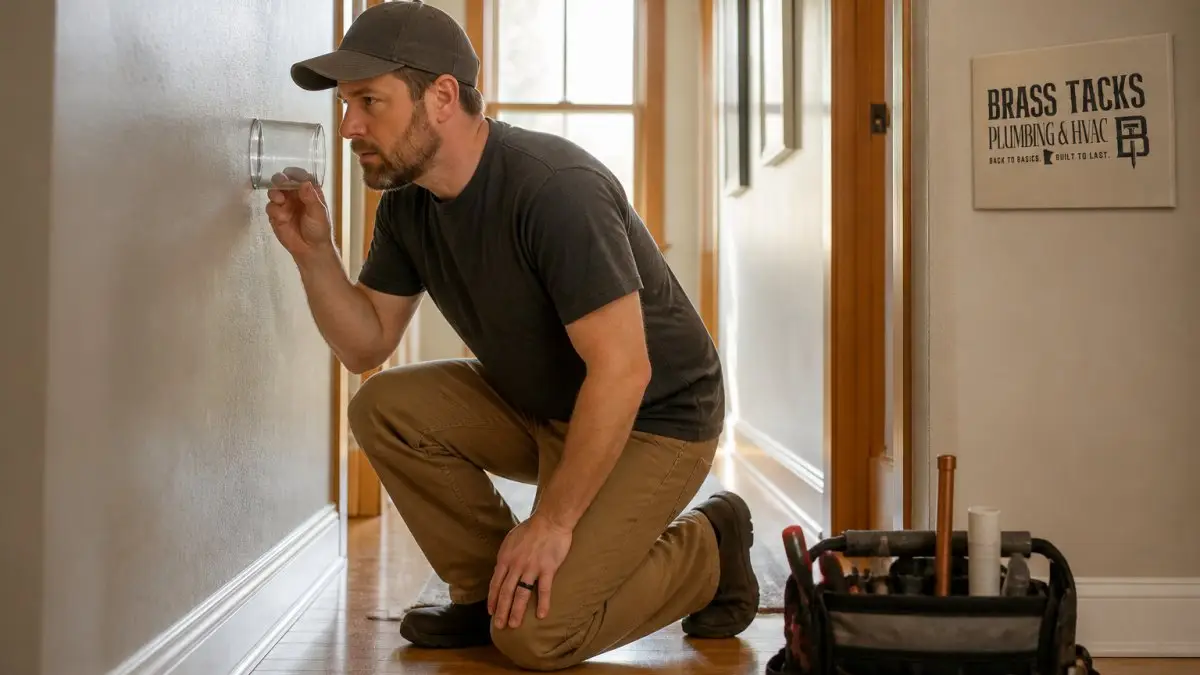
A cheap mechanic’s stethoscope, or even a screwdriver handle pressed to the wall, can pinpoint which stud bay a rattle comes from. Move it along the wall until the sound gets loudest. That is your target before you cut anything.
Measure your water pressure before you blame the pipes
High pressure is one of the most common and most overlooked causes of pipe noise, and it is easy to check.
If your gauge reads consistently above roughly 80 psi, pressure is likely amplifying every bang and whoosh in the house. A failing pressure-reducing valve is often the reason.
If pressure reads normal and the noise still follows one fixture, you have isolated the problem to that fixture or its branch line.
Step-by-Step: How to Stop Water Hammer in Pipes
The fix for how to stop water hammer in pipes depends on the cause, but the order below works for most homes. Start with the simplest checks and work toward the harder ones.
- Shut off the main water valve. Relieve pressure by opening a low faucet.
- Drain the system. Open faucets at the highest and lowest points to empty the lines.
- Restore air chambers. Many older systems use vertical air chambers that fill with water over time. Draining the lines refills them.
- Check the pressure. A pressure gauge on a hose bib tells you if the system runs high. High pressure makes hammer worse.
- Install water hammer arrestors. These small devices absorb the shock near the offending valve, such as behind a washing machine.
- Test one fixture at a time. Run each and listen for the return of the bang.
If the banging continues after these steps, the issue may be a failing valve or a pressure regulator that needs service. That is where a licensed plumber saves you from cutting into walls twice.
Fixing Rattling Pipes in Walls
Rattling pipes in walls usually come from loose pipes that vibrate against framing, against each other, or against a hole they pass through. The fix is to secure the pipe and put a barrier between metal and wood. The hard part is getting to the pipe without wrecking the wall.
Locate the pipe before you open anything
Use the listening method above to narrow the sound to a stud bay. Then confirm before cutting:
- Tap the wall. A dull thud versus a hollow ring helps map where studs and pipes sit.
- Check both sides of the wall. A pipe run in a shared wall may be closer to the neighboring room.
- Look for access points first. A nearby vanity, closet, or basement ceiling often gives you a view of the same pipe run without any drywall work.
- Trace from a known point. Follow the pipe back from a visible fixture or the water heater to estimate where it runs inside the wall.
Decide whether opening the wall is justified
Opening drywall is reasonable when the rattle is loud, persistent, and clearly localized to one bay. It is usually not worth it when the noise is faint, spread across several rooms, or traceable to pressure or water hammer instead.
When you do open the wall, cut a clean inspection opening rather than a large demolition hole. A small, square opening at the confirmed bay is easier to patch and gives you enough room to work.
Secure the pipe without creating new noise
Here is how we approach it once the pipe is exposed:
- Add rubber-lined clamps. These hold the pipe firm without metal-on-wood contact and are the single most effective fix for a rattle.
- Use pipe hangers or brackets where the pipe runs along joists, spaced so the pipe cannot sag or slap.
- Add a wood block behind a pipe that sits too far from the framing to clamp.
- Fill small gaps where a pipe passes through a stud with a flexible sealant or foam, not a rigid filler that will crack as the pipe moves.
- Separate pipes from each other. Two pipes touching will chatter together. A short piece of foam sleeve between them stops it.
Do not clamp a pipe so tight that it cannot expand when hot water runs through it. Over-clamping causes new ticking and can stress joints. The goal is firm but not rigid. Also, never open a wall until you have confirmed the exact bay with sound testing. Cutting in the wrong spot means a patch job and a second attempt.
Know when to stop and call
If the rattle comes from a pipe you cannot reach without major wall work, or if you find moisture, staining, or soft drywall near the noisy run, stop. Those signs point to a leak or a joint problem that needs an onsite diagnosis. If the noise traces back to the water heater itself, we also offer water heater repair to address sediment and pressure issues at the source.
Pipe Insulation for Noise Reduction
Pipe insulation for noise reduction works best on hot water lines and on pipes that pass through shared walls. Insulation does two jobs: it muffles vibration and it slows heat loss, which matters in a Minnesota winter.
The options we see homeowners use:
- Foam pipe sleeves slip over the pipe and cut down on rattle and tick.
- Pipe cladding adds a sturdier layer around the line.
- Sound dampening wrap goes on the wall cavity itself to absorb sound before it reaches the room.
Insulation is a sound fix, not a plumbing fix. It quiets the symptom but does not solve water hammer or high pressure. Use it alongside the repairs above, not instead of them.
Whistling Water Pipes: Causes and Fixes
Whistling water pipes almost always mean restricted flow. Water squeezing through a small opening makes that high tone, and the fix is to find the restriction.
Common causes and fixes:
| Cause | What You Notice | Fix |
|---|---|---|
| Clogged aerator | Whistle at one faucet | Remove and clean the screen |
| Worn faucet cartridge | Whistle when the tap opens | Replace the cartridge |
| Partly closed valve | Whistle at a shutoff | Open the valve fully |
| High water pressure | Whistle across the house | Check pressure at a hose bib |
| Failing pressure regulator | Whistle plus banging | Have a plumber test the regulator |
Start at the fixture. If the whistle follows one tap, the aerator or cartridge is the likely cause. If it happens everywhere, pressure is the suspect.
When to Call a Plumber for Noisy Water Pipes
Call a plumber when the noise comes with a drop in water flow, a leak, or banging that survives a drain and pressure check.
Reach out sooner if you notice:
- Water hammer that returns after draining the lines
- Pressure that stays high after checking the regulator
- Any leak, stain, or soft drywall near a noisy pipe
- Noise from the water heater itself, which can signal sediment buildup
A plumber can flush the water heater and test the pressure regulator to rule out the bigger causes. For noise that traces to the heater, our plumbing services include diagnosing and repairing the source.
Quiet pipes come from fixing movement, pressure, and flow, in that order. Insulation and clamps help, but they cannot fix water hammer or high pressure on their own.
Noisy pipes are usually a small fix caught early, but the same banging can point to pressure problems that wear out valves and water heaters over time.
Frequently Asked Questions
Is it normal to hear water pipes in the walls?
Hearing occasional soft sounds when water runs is normal, but loud banging, whistling, or rattling is not. Those noises usually point to a fixable issue like loose pipes, high water pressure, or water hammer. In Minnesota homes, cold winters can make pipes contract and become more prone to noise. If the sounds are frequent or getting louder, it is worth investigating before a small problem turns into a leak.
Can I just soundproof the wall instead of fixing the pipes?
Soundproofing can reduce noise, but it does not fix the underlying cause. If pipes are loose or water hammer is present, the movement and pressure surges still stress the plumbing. Fixing the source first, then adding pipe insulation for noise reduction, gives better long-term results. Soundproofing alone may mask a problem that could lead to pipe damage over time.
Why do my pipes only whistle when I run the hot water?
Whistling water pipes often occur when hot water flows through a restricted valve or a worn faucet cartridge. The sound is the water being forced through a narrow opening. It can also come from a failing pressure-reducing valve. Since hot water lines expand more than cold ones, the noise may only show up on the hot side. A plumber can pinpoint the restriction and replace the faulty part.
When should I call a plumber about noisy pipes?
Call a plumber if you hear banging or knocking that happens every time a faucet shuts off, if the noise is accompanied by low water pressure, or if you cannot access the pipes without cutting into a wall. Persistent rattling pipes in walls or whistling that does not stop after basic checks also warrant a professional visit. A licensed technician can diagnose the issue safely and recommend the right fix.
