

Plumbing Repairs for 1970s Homes: A Practical Guide

Table of Contents
- What Plumbing Materials Were Used in 1970s Homes
- Signs of Plumbing Failure in Older Homes
- Polybutylene Pipe Replacement: What You Need to Know
- Repair vs. Repiping: Making the Right Decision
- Plumbing Maintenance Checklist for Older Houses
- Professional Inspection and Leak Detection
- Frequently Asked Questions
Last Updated: September 3, 2026
What Plumbing Materials Were Used in 1970s Homes
Most homes built during the 1970s relied on three primary piping materials: galvanized steel, copper, and cast iron for sewer lines. Understanding what’s behind your walls matters because different materials fail in different ways, and knowing what you have changes how you approach repairs and long-term planning.
The 1970s represented a transition decade in residential plumbing. Older galvanized steel was still common in early-decade construction, while copper piping gained popularity as the decade progressed. Cast iron dominated sewer lines throughout the era. The material composition of your plumbing system is often the first clue to whether you’re looking at a simple repair or a larger infrastructure issue.
Galvanized Steel Pipes
Galvanized steel pipes dominated residential construction through much of the 1970s. These pipes were dipped in zinc coating to resist corrosion, but that protective layer wasn’t permanent. Over decades, the zinc coating deteriorates from the inside out as water gradually erodes it, exposing the steel underneath to oxidation. This process accelerates in areas with harder or more acidic water.
Signs of failing galvanized steel include reduced water pressure, rusty discoloration in your water (especially from hot water lines), and visible rust stains around pipe connections. Galvanized steel pipes typically last 40-60 years under normal conditions. A 1970s home is now at or past that threshold, making this material a primary concern during any plumbing inspection.
Copper Piping
Copper became increasingly popular in the 1970s as a superior alternative to galvanized steel. It resists corrosion naturally and can last 50 years or longer when properly installed and maintained. However, the most common problem is pinhole leaks, which develop when acidic water chemistry attacks the copper from the inside. These tiny holes often appear in clusters along a run of pipe, and multiple pinholes indicate systemic corrosion rather than a localized problem.
Water quality plays a major role in copper pipe longevity. Homes with naturally acidic groundwater or unmanaged water chemistry see premature pinhole leaks. The pH of your water, mineral content, and the presence of chlorine all influence how aggressively the water attacks copper. Copper solder joints are another vulnerability, as older soldering techniques sometimes failed prematurely, leading to leaks at connections.
Cast Iron Sewer Lines
Cast iron dominated sewer line construction in the 1970s but degrades over time through corrosion and structural breakdown. The interior develops scale and buildup from decades of drainage, reducing the pipe’s carrying capacity and creating conditions where tree roots can more easily penetrate cracks. Cast iron also becomes brittle with age, prone to cracking from ground movement or heavy vehicles passing overhead.
A common failure pattern is pipe bellies, where sections sag or collapse, creating low spots where debris accumulates. This reduces flow and increases the likelihood of backups.
Signs of Plumbing Failure in Older Homes
Identifying plumbing problems early can mean the difference between a simple repair and a costly replacement. Older homes show specific warning signs that point to different types of failures.
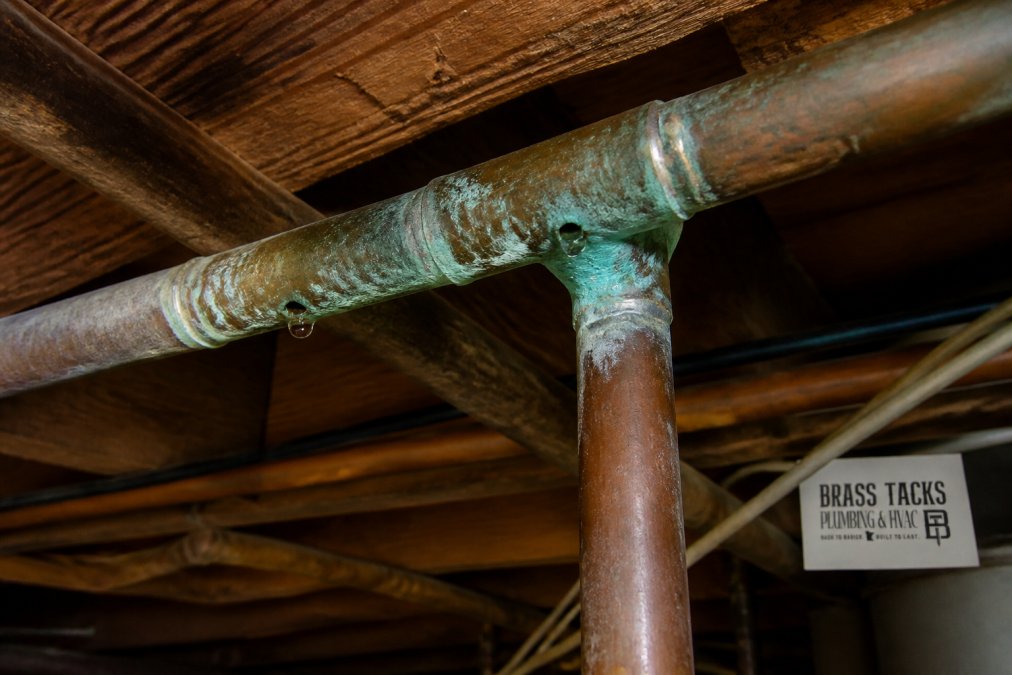
Pinhole Leaks and Corrosion
Pinhole leaks appear as tiny holes in copper pipes, often in clusters, with water seeping out slowly and creating stains on ceilings or walls below. The presence of pinhole leaks indicates that your water chemistry is actively attacking your copper pipes throughout your entire plumbing system, not just where you see the leak. A professional plumbing inspection using camera technology and pressure testing can identify early-stage corrosion before it reaches the pinhole stage.
Low Water Pressure and Flow Issues
Reduced water pressure in a 1970s home often points to scale buildup inside galvanized steel pipes or corrosion restricting flow in copper lines. Mineral deposits accumulate on the interior walls of pipes over decades, gradually narrowing the pipe opening. If multiple fixtures have low pressure simultaneously, the restriction is inside the pipes themselves, not at the fixture, signaling that your plumbing infrastructure needs attention.
Drainage Problems and Root Intrusion
Slow drains, recurring backups, or gurgling sounds indicate problems with your sewer line. Tree roots are a common culprit in older neighborhoods where mature trees have had decades to grow and seek out moisture sources. Cast iron sewer lines are particularly vulnerable to root intrusion, as roots exploit small cracks or loose joints and gradually work their way into the pipe.
Drainage problems often appear seasonally or worsen during wet weather. If your lowest-level fixtures drain slowly while upper-level fixtures work normally, this pattern suggests a blockage in the main sewer line rather than a localized drain issue.
Polybutylene Pipe Replacement: What You Need to Know
Polybutylene piping was used in some 1970s homes, though it became more common in the 1980s and early 1990s. If your home has polybutylene, replacement should be a priority. This plastic piping degrades when exposed to chlorine in municipal water supplies, becoming brittle over time with cracks that lead to leaks.
Many polybutylene failures occur suddenly without warning, sometimes resulting in significant water damage. Replacing polybutylene involves removing the old plastic piping and installing new copper or PEX tubing, which eliminates a known liability and restores confidence in your plumbing system.
Repair vs. Repiping: Making the Right Decision
The choice between spot repairs and whole-home repiping depends on the extent of existing damage, the material composition of your pipes, water quality, and your long-term plans for the home.
When Spot Repairs Make Sense
A single pinhole leak in an otherwise sound copper pipe might be repairable, as can a leaking solder joint or a localized sewer line blockage. Spot repairs work best when the damage is confined to one section, the rest of your plumbing system is in good condition, and the repair cost is significantly lower than replacement.
However, fixing one pinhole leak doesn’t address the underlying water chemistry issue causing the corrosion. You might find yourself making repeated repairs over the next few years.
When Whole-Home Repiping Is the Better Choice
Repiping becomes the more economical choice when multiple problems are present or when the existing material is known to be failing system-wide. Signs that repiping makes sense include multiple pinhole leaks in copper pipes, widespread corrosion on galvanized steel, persistent low water pressure, recurring drainage backups, polybutylene piping anywhere in the system, or plans to stay in the home for 10+ more years.
A whole-home repiping project replaces all or most of your plumbing infrastructure with new, durable materials. Modern PEX tubing or copper piping has a 50+ year lifespan and eliminates the corrosion and scale buildup problems that plague older systems. Repiping also provides an opportunity to upgrade your plumbing for modern needs, improve water pressure, and install water treatment systems to protect your new pipes.
| Approach | Best For | Timeline | Consideration |
|---|---|---|---|
| Spot Repair | Single localized leak | 1-2 days | May be temporary solution |
| Partial Repiping | One section or branch line | 3-7 days | Addresses problem area only |
| Whole-Home Repiping | Multiple failures or old material | 1-2 weeks | Long-term solution; higher upfront cost |
Plumbing Maintenance Checklist for Older Houses
Regular maintenance can extend the life of aging plumbing and catch problems before they become emergencies. These steps are especially important for 1970s homes where pipe degradation is a real concern.
Annual Inspections:
Have a professional inspect visible piping for corrosion, leaks, or scale buildup. Check water pressure at multiple fixtures and listen for unusual sounds like hissing or gurgling. Inspect basement or crawl space for water stains, rust, or drips.
Water Quality Testing:
Test your water for pH, hardness, and chlorine levels. High acidity or excessive hardness accelerates pipe corrosion. Consider water softening or pH adjustment if testing reveals problems.
Drain Maintenance:
Use drain screens to prevent hair and debris from entering pipes. Avoid pouring grease or food waste down drains. Have your sewer line inspected with a camera every 5-10 years.
Seasonal Preparation:
In Minnesota’s cold climate, ensure pipes in unheated spaces are insulated to prevent freezing. Drain exterior faucets and disconnect garden hoses before winter. Insulate exposed pipes in basements or crawl spaces.
Documentation:
Keep records of any repairs or replacements and note the date of your last professional inspection. This information helps professionals diagnose issues faster.
Professional Inspection and Leak Detection
A professional plumbing inspection provides a clear picture of your system’s condition and helps you make informed decisions about repairs versus replacement. Modern inspection techniques go far beyond visual assessment. Video camera inspection allows technicians to see inside your pipes without excavation, identifying corrosion, scale buildup, cracks, and root intrusion. Pressure testing measures how well your pipes hold water and can reveal slow leaks.
A professional inspection is especially valuable if you’re considering buying a 1970s home or planning to stay in yours long-term. When you schedule an inspection, ask the technician to explain what they find and discuss options for addressing any problems. A good plumber will help you prioritize repairs based on urgency and budget.
Aging plumbing systems in 1970s homes require different approaches than modern plumbing. Knowing what materials are behind your walls and recognizing the early warning signs of failure puts you in control of the situation. Whether you need spot repairs or are considering whole-home repiping, the key is making decisions based on accurate information about your system’s actual condition.
If you’re in the Twin Cities West Metro and need a professional assessment of your plumbing system, Brass Tacks Plumbing can help. Our licensed technicians have extensive experience with older homes and can provide honest recommendations about repairs, maintenance, or repiping without pressure to do unnecessary work. Contact us to schedule a plumbing inspection and get clarity on what your 1970s home’s plumbing really needs.
Frequently Asked Questions
Q: What type of plumbing was used in 1970s homes?
A: Most 1970s homes used galvanized steel for main water lines, copper for branch lines, and cast iron for sewer drains. Galvanized steel was the standard for supply lines because it was affordable and durable at the time. Copper became more common as the decade progressed. Cast iron sewer lines were universal for drainage. Each material has different failure patterns, so identifying what’s in your home is the first step in planning repairs.
Q: How do I know if my 1970s home needs repiping?
A: Signs include persistent pinhole leaks, low water pressure throughout the house, discolored or rusty water, slow drainage, or multiple repairs within a short period. If your galvanized steel pipes are more than 40-50 years old, corrosion is likely occurring inside even if you don’t see obvious leaks yet. A professional plumbing inspection with camera technology can identify hidden scale buildup and pipe degradation before they become emergencies.
Q: Are polybutylene pipes still a concern for 1970s homes?
A: Yes. Polybutylene was used in some 1970s homes and is known to become brittle and fail prematurely, especially when exposed to chlorinated water. If your home has polybutylene supply lines, replacement should be a priority because failures can happen suddenly and cause water damage. Unlike galvanized steel, which fails slowly, polybutylene can rupture with little warning.
Q: What’s the difference between spot repairs and whole-home repiping?
A: Spot repairs fix individual leaks or failed sections without replacing the entire plumbing system. This works well for isolated problems in newer pipes or when only one area is affected. Whole-home repiping replaces all or most of your water supply lines. It’s more expensive upfront but prevents future failures across your entire plumbing infrastructure. For 1970s homes with widespread corrosion, repiping often saves money and headaches long-term by avoiding repeated emergency repairs.
