

Should You Repair a 15-Year-Old Furnace?

Table of Contents
- How Long Do Furnaces Last?
- Signs of a Failing Furnace
- The Repair vs. Replace Decision: Weighing Your Options
- Furnace Repair vs. Replacement Cost Comparison
- Energy Efficiency and Your Utility Bills
- HVAC Maintenance Tips for Minnesota Winters
- Making Your Final Decision
- Frequently Asked Questions
Last Updated: September 25, 2026
How Long Do Furnaces Last?
Most furnaces last between 15 to 20 years with proper maintenance. That lifespan depends heavily on how well you maintain the system, the quality of the equipment, and how hard your heating system works during cold winters. In Minnesota, furnaces face intense seasonal demand, which can shorten their operational life compared to milder climates.
When you need to repair 15 year old furnace, you’re dealing with a system entering the later stages of its typical lifespan. The real question isn’t just age, it’s whether the system is still reliable and efficient enough to justify keeping it running.
According to Energy Star efficiency standards, modern furnaces operate at much higher efficiency rates than older units. A 15-year-old furnace likely operates at 78-82% AFUE (Annual Fuel Use Efficiency), while newer models often exceed 95% AFUE. That difference translates directly to your utility bills and your home’s environmental impact.
Signs of a Failing Furnace
A 15-year-old furnace that’s starting to fail will show specific warning signs. Recognizing them early helps you decide whether to repair the furnace or replace it before a complete breakdown leaves you without heat during a Minnesota winter.
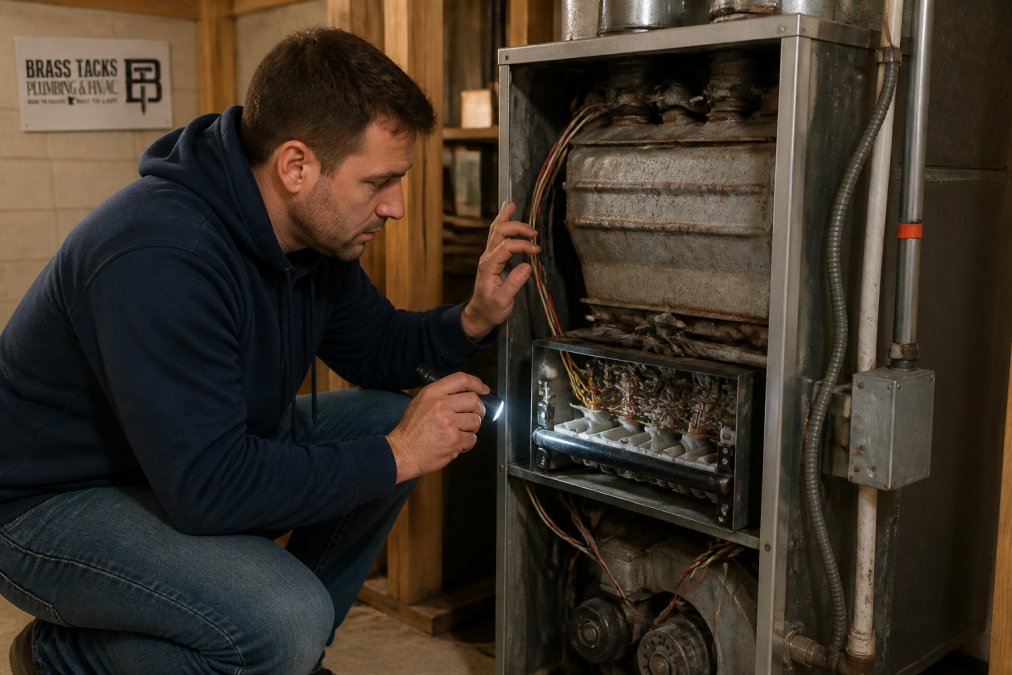
Watch for these indicators:
- Short cycling: The furnace turns on and off more frequently than normal, never running long enough to heat your home evenly. This strains the system and wastes energy.
- Uneven heating: Some rooms stay warm while others stay cold, even with the thermostat set the same. This suggests the blower motor or heat exchanger isn’t distributing air properly.
- Unusual noises: Banging, rattling, or grinding sounds during operation point to loose components or a failing burner assembly.
- Yellow pilot light: The pilot light should be blue. A yellow or orange flame indicates incomplete combustion and potential carbon monoxide concerns, a serious safety issue that requires immediate professional inspection.
- Visible rust or corrosion: Rust on the furnace cabinet or visible deterioration of the heat exchanger means the unit is breaking down internally.
- Increased repair frequency: If you’re calling a technician more than once per heating season, the system is likely approaching the end of its useful life.
- Higher utility bills: A furnace losing efficiency will work harder to maintain temperature, driving up your heating costs noticeably month to month.
Any of these signs warrants a professional evaluation. At Brass Tacks Plumbing, Heating & Cooling, we recommend having an HVAC technician inspect your system to determine whether repairs can extend its life or whether replacement makes more sense financially.
The Repair vs. Replace Decision: Weighing Your Options
The answer depends on several factors: the furnace’s age, the cost of repairs, your system’s current efficiency, and how much longer you plan to stay in your home.
The 50% Rule
The 50% rule is a widely used guideline: if the cost of a repair exceeds 50% of the cost of a new furnace, replacement is often the more financially sound choice.
This rule is a starting point for the conversation. A furnace at 15 years old is already in the danger zone for major failures.
Age and Frequency of Repairs
How often your furnace needs repairs is a critical signal. A system that’s needed multiple repairs over the past two or three years is telling you the components are wearing out across the board.
Furnace Repair vs. Replacement Cost Comparison
Understanding the financial picture helps clarify your decision. Costs to repair a 15-year-old furnace can range widely depending on what’s failing. Replacement involves a larger upfront investment but often comes with warranties, improved efficiency, and the peace of mind of a functioning system.
| Factor | Repair | Replacement |
|---|---|---|
| Immediate cost | Lower upfront expense | Higher initial investment |
| Warranty coverage | Limited or none on older parts | Full warranty on new equipment |
| Efficiency gains | None; system stays at original AFUE | 15-20% improvement in energy efficiency |
| Risk of future failure | High; other components may fail soon | Low; new system is reliable |
| Expected lifespan after service | 1-3 years, possibly longer | 15-20 years |
| Long-term utility savings | Minimal | Substantial over the system’s life |
The Hidden Cost: Parts Availability
One factor most homeowners overlook is parts obsolescence. Furnaces manufactured 15 years ago used components that manufacturers no longer produce in volume. Parts may be discontinued or available only through specialty suppliers at premium prices.
Calculating Long-Term ROI
A 15-year-old furnace is likely less efficient than a modern furnace. Over a new furnace’s lifespan, the efficiency gains can often offset the replacement cost through utility savings, plus you gain reliability and avoid emergency repairs.
When Repair Still Makes Sense
Repair is the right choice if:
- The furnace is 12 years old or younger and this is the first major repair
- The repair cost is less than 30% of replacement cost
- The part being repaired is still readily available from the manufacturer
- You plan to move or sell your home within 2-3 years
- Your repair history shows only occasional, isolated problems
For a detailed assessment of your specific situation, professional guidance matters. A licensed HVAC technician can evaluate your furnace, run diagnostics, and explain whether the parts you need are still available and how long the repair is likely to extend your system’s life.
Energy Efficiency and Your Utility Bills
A 15-year-old furnace is significantly less efficient than modern equipment. This gap compounds over time, especially in a Minnesota climate where heating demands are intense for half the year or more.
Measuring the Real Cost of Inefficiency
Compare your heating bills year to year. Rising costs with unchanged habits suggest your furnace is working harder. Ask your technician to measure actual AFUE during an inspection. Monitor short cycling: if your furnace cycles every 10-15 minutes instead of 20-30 minutes, it’s wasting fuel during startup and shutdown.
The Environmental Case for Replacement
A 15-year-old furnace is generally less efficient than a modern furnace. While manufacturing a new furnace has environmental costs, replacing an older, less efficient furnace with a modern, high-efficiency model can be a lower-impact choice environmentally over its lifespan.
Maximizing Efficiency with Smart Controls
If you’re keeping your older furnace for now, you can reduce waste by pairing it with a smart thermostat. A programmable or smart thermostat allows you to lower heating during hours when your home is empty or when you’re sleeping, reducing the total fuel your furnace burns.
The Long-Term Picture
If you’re planning to stay in your home for the long term, replacing an aging furnace with a modern, efficient model can reduce your heating costs. Utility savings can accumulate year after year, potentially offsetting a significant portion of the replacement cost. You also gain a reliable system that is less likely to fail unexpectedly during a cold snap.
HVAC Maintenance Tips for Minnesota Winters
Proper maintenance extends furnace life and catches problems early, especially important in Minnesota’s harsh winters.
Before winter arrives:
- Have your furnace professionally inspected and cleaned. Dust and debris reduce efficiency and strain the blower motor.
- Replace or clean your air filter. A clogged filter forces the furnace to work harder and increases utility costs.
- Check your thermostat settings. Programming it to lower temperatures when you’re away or sleeping reduces heating demand without sacrificing comfort.
During the heating season:
- Monitor your furnace for unusual sounds, smells, or performance changes. Early detection prevents emergency breakdowns.
- Keep the area around your furnace clear. Blocked vents reduce airflow and efficiency.
- If you notice short cycling, uneven heating, or rising utility bills, call a technician promptly. Small problems caught early are cheaper to fix.
After the heating season:
- Have a professional inspect the heat exchanger and burner assembly for wear. This identifies potential safety issues before next winter.
Making Your Final Decision
The decision to repair a 15-year-old furnace depends on repair cost versus the 50% rule, your repair history, your plans to stay in the home, and safety concerns. If your furnace shows signs of incomplete combustion (yellow pilot light, carbon monoxide concerns, or visible corrosion), replacement is necessary.
Frequently Asked Questions
How do I know if my furnace is failing?
Watch for uneven heating, strange noises like grinding or squealing, yellow pilot light flames, increased utility bills, and frequent repair calls. A furnace that short cycles (turns on and off rapidly) or struggles to reach your thermostat setting is also showing age. If you notice any of these signs in a furnace that’s 12 to 15 years old, have a licensed technician inspect it to determine whether repair or replacement is the right move.
What is the average lifespan of a residential furnace?
Most furnaces last 15 to 20 years with regular maintenance. In cold climates with heavy heating demands, furnaces may wear out faster due to longer run times. Minnesota’s harsh winters put extra stress on HVAC systems, so some homeowners see their furnaces decline toward the lower end of that range. Professional maintenance extends lifespan and helps you catch problems early.
Should I repair or replace my 15-year-old furnace?
Consider the 50% rule: if the repair cost exceeds 50% of the replacement cost, replacement is often the better choice. Also consider the furnace’s condition, frequency of recent repairs, and your long-term plans. A 15-year-old furnace with one major repair and good maintenance history might be worth fixing. One that’s needed multiple repairs in the past two years is signaling the end of its life. A professional inspection gives you the clarity you need.
Does a 15-year-old furnace qualify for energy efficiency rebates?
Most federal and state rebates apply only to new, high-efficiency systems that meet Energy Star standards. A 15-year-old furnace does not qualify. However, if you replace it with a modern, high-efficiency unit, you may be eligible for federal tax credits or utility company rebates. Check with your local utility provider for current incentives available in your area.
How does Minnesota’s climate impact furnace longevity?
Minnesota’s cold winters mean furnaces run longer and harder than in milder climates. Extended heating seasons and temperature swings put strain on the heat exchanger, blower motor, and burner assembly. This accelerates wear, which is why regular maintenance is critical. Keeping your furnace clean and having it serviced annually helps it survive those demanding winter months and prevents emergency breakdowns during the coldest weeks.
