
How to Choose the Right MERV Rating for Home
Table of Contents
- What MERV Rating Should Your Home Use? Start Here
- How the MERV Rating Scale Works
- MERV 8 vs MERV 11 vs MERV 13: What’s the Real Difference?
- Can My Furnace Use a MERV 13 Filter? Check Before You Upgrade
- Furnace Filter Airflow and MERV Rating: The Trade-Off You Need to Understand
- How Often to Change Your Furnace Filter
- Matching MERV Ratings to Your Household: Pets, Allergies, Smoke, and More
- Frequently Asked Questions
Last Updated: October 13, 2026
What MERV Rating Should Your Home Use? Start Here
The short answer: most West Metro homes do well with a MERV 8 filter. Moving to MERV 11 or MERV 13 only makes sense once you know your system can handle the extra resistance. The right MERV rating for home use matches filtration to your equipment, ductwork, and what is actually floating around your house, not the highest number on the shelf.
The Short Answer for Most Homes
A MERV rating is a number from 1 to 16 that tells you how well an air filter captures particles of different sizes. Higher numbers capture more, but they also restrict airflow more.
For a typical Twin Cities home, here is the practical breakdown:
- MERV 6 to MERV 8: Standard protection, good airflow, fine for most homes
- MERV 11: A step up for dust, pollen, and pet dander
- MERV 13: Strong particle capture, but only if your system can handle it
Why the Right Rating Matters in Minnesota
Our heating season runs long. A furnace in Plymouth or Maple Grove may run six or seven months straight, moving a lot of air through one filter. A filter that is too restrictive makes the blower work harder every day, and over a winter that adds up to real strain on equipment.
How the MERV Rating Scale Works
MERV stands for Minimum Efficiency Reporting Value. The scale was developed by ASHRAE, and the ASHRAE Standard 52.2 method for testing filter performance is what manufacturers use to rate filters.
The scale runs from 1 to 16 for residential filters. Each step up means the filter catches a higher share of particles in a given size range.
Particle Size and Capture Efficiency
Filters are tested against particles measured in microns. For reference, a human hair is roughly 70 microns wide.
| MERV Rating | Captures Well | Typical Particles |
|---|---|---|
| MERV 6 | Larger particles | Dust, lint, pollen |
| MERV 8 | Mid-size particles | Dust, pollen, mold spores |
| MERV 11 | Smaller particles | Pet dander, fine dust, smoke |
| MERV 13 | Very small particles | Bacteria, smoke, fine irritants |
MERV vs. Other Filtration Ratings
MERV is not the only rating you will see. HEPA filters capture more but are far too restrictive for a standard residential HVAC system. MPR and FPR are brand-specific scales that roughly map to MERV but are not identical, so stick with MERV when comparing filters across brands.
MERV 8 vs MERV 11 vs MERV 13: What’s the Real Difference?
The jump from 8 to 11 is about allergens. The jump from 11 to 13 is about fine particles and smoke.
| Rating | Best For | Airflow Impact |
|---|---|---|
| MERV 8 | Most homes, standard protection | Low resistance |
| MERV 11 | Allergies, pets, dusty homes | Moderate resistance |
| MERV 13 | Smoke, fine particles, high sensitivity | High resistance |
A MERV 8 handles everyday dust and pollen. A MERV 11 catches more of the small stuff that triggers allergies. A MERV 13 goes after smoke and the finest irritants but pushes back on airflow the hardest.
Installing a MERV 13 filter in a system designed for MERV 8 can choke airflow. The blower pulls harder, the heat exchanger runs hotter, and you may shorten the life of your equipment.
Can My Furnace Use a MERV 13 Filter? Check Before You Upgrade
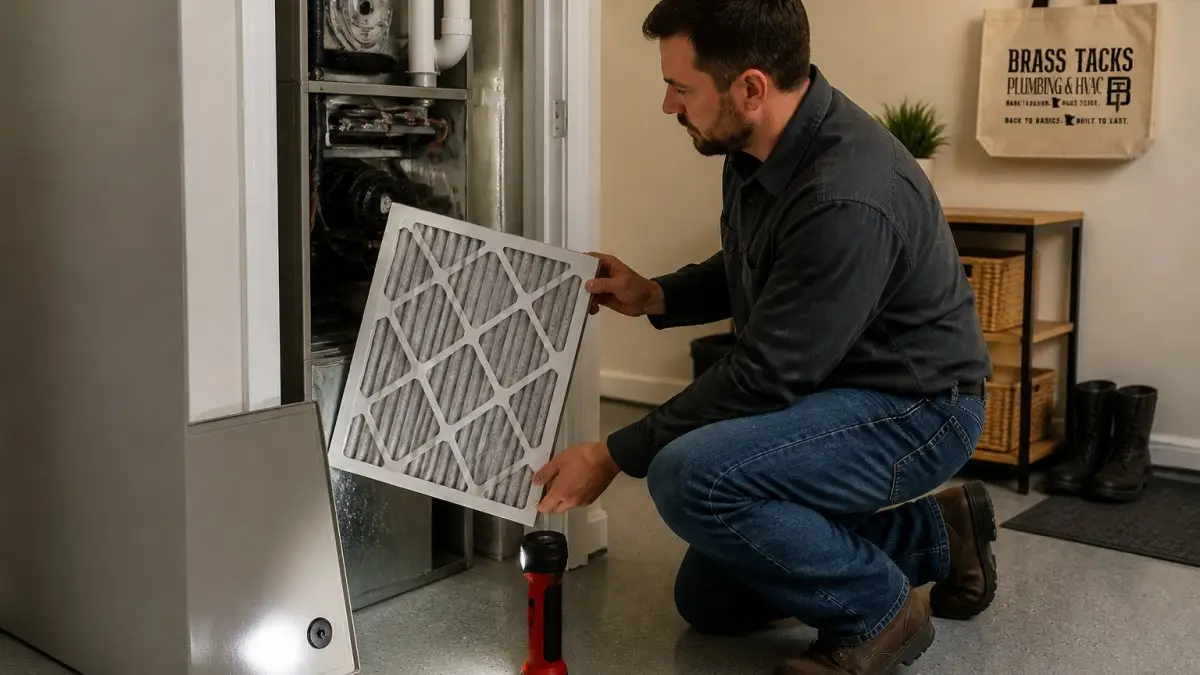
Most furnaces can physically hold a MERV 13 filter. The real question is whether your system can move enough air through it without straining the blower, overheating the heat exchanger, or leaving rooms uncomfortable.
How to Check Your System’s Compatibility
Start with your furnace manual.
If you cannot find the manual, check the filter slot.
Here is a practical compatibility check:
- Find your furnace model number and look up the manual online if you do not have a paper copy
- Note your current filter thickness (1 inch, 4 inch, or 5 inch)
- Check the manufacturer’s maximum recommended MERV or maximum static pressure
- Identify whether your filter is at the furnace or behind a return grille
- Look at your ductwork: undersized or flex-duct-heavy systems are more sensitive to added resistance
- Ask a technician to measure static pressure if you are unsure
If your manual caps the rating at MERV 8 or 11, do not force a MERV 13 in. The U.S. Department of Energy guidance on heating and cooling systems notes that restricted airflow hurts efficiency and equipment life.
Filter Thickness and Construction Matter
A thick filter has more surface area, so it moves air more easily at the same MERV rating. A four-inch MERV 13 may flow better than a one-inch MERV 13 because the air has more media to pass through. Pleat count and media quality also matter: a cheap MERV 13 with tight pleats and low-quality media can choke a system that a well-built MERV 13 would not.
If your system cannot handle a one-inch MERV 13, ask about a thicker filter or a media cabinet. The added surface area often solves the airflow problem without dropping your filtration level. A licensed HVAC technician can measure your system’s static pressure and tell you exactly what it can handle.
When to Call a Technician
If you have checked the manual, confirmed the filter size, and still are not sure, that is the point to call. A technician can measure static pressure across the filter and through the system, check blower performance, and tell you whether a higher MERV filter will work or whether you need a different filter setup. This is especially important in older homes or homes with finished basements where ductwork may have been modified.
What If Your System Cannot Handle MERV 13?
You still have options. Stay at MERV 11, which captures a meaningful share of fine particles without the same airflow penalty. Add a media cabinet to increase filter surface area. Or use a standalone portable air cleaner in the rooms where you spend the most time, which takes the filtration burden off your HVAC system entirely.
Furnace Filter Airflow and MERV Rating: The Trade-Off You Need to Understand
Every filter trades airflow for filtration. That is physics, not a flaw. The question is how much airflow your system can give up before it suffers, and pressure drop is the key.
What Is Pressure Drop?
Pressure drop is the resistance a filter creates as air moves through it, measured in inches of water column (in. w.c.).
A higher MERV filter creates more pressure drop. If your ductwork is undersized or your system is older, that extra resistance shows up fast. The “best” filter for your neighbor’s house may be the wrong one for yours.
How to Tell If Your System Is Struggling
When airflow drops, you feel it in a few ways:
- Rooms that never quite warm up, especially rooms farthest from the furnace
- A furnace that runs longer to hit the thermostat setting
- Higher energy use over the season
- More strain on the blower motor, which can lead to premature failure
- A whistling or whooshing sound at the filter slot or return grille
- The filter itself getting sucked inward or collapsing
If you notice any of these signs after upgrading your filter, it is likely too restrictive for your system. In Minnesota, where the heating season runs six or seven months, these symptoms compound quickly.
Filter Thickness and Ductwork: The Hidden Variables
A one-inch filter has less surface area than a four-inch or five-inch filter, so it creates more resistance at the same MERV rating.
Ductwork matters too. Homes with long runs, lots of flex duct, or undersized return ducts are more sensitive to filter resistance. If your ductwork is already near its limit, even a MERV 11 filter can push it over the edge.
Do not assume that a higher MERV filter is always better. A filter that is too restrictive for your system can reduce airflow enough to cause comfort problems, higher energy bills, and equipment damage. Always check your system’s limits before upgrading.
Balancing Filtration and Airflow
The goal is the highest MERV rating your system can handle without exceeding its static pressure limit. For many homes, that is MERV 8 or MERV 11. For systems with a media cabinet and well-designed ductwork, MERV 13 may be fine. If you want a professional opinion, our team at Brass Tacks Plumbing, Heating & Cooling can measure your system’s static pressure and recommend a filter that balances air quality with equipment protection.
How Often to Change Your Furnace Filter
Change a one-inch filter every one to three months. Change a four-inch or five-inch filter every six to twelve months.
During a Minnesota winter, your furnace runs far more than it does in milder climates, so the filter loads up faster.
A dirty filter does the same damage as an overly restrictive one. It cuts airflow, strains the blower, and can push dust back into your home.
Matching MERV Ratings to Your Household: Pets, Allergies, Smoke, and More
The right MERV rating depends on what is in your air. Match the filter to the problem, not the highest number on the shelf.
Homes With Pets
Pet dander is small and sticky, and it circulates every time the furnace kicks on. A MERV 11 filter captures dander well without overloading most systems, so it is a reasonable target for multiple pets. Just check your system’s limit first.
Homes With Allergy Sufferers
For pollen, mold spores, and fine dust, MERV 11 to MERV 13 helps. If someone in the house deals with seasonal allergies, a higher rating can reduce the irritants that reach living spaces. Pair it with regular filter changes, since a loaded filter stops helping.
Smoke, Wildfire, and Fine Particles
Wildfire smoke drifts into Minnesota some summers, and it carries very fine particles. A MERV 13 filter captures more of that smoke than a MERV 8.
Match your MERV rating to your household first, then confirm your furnace can handle it. The highest rating your system supports is not always the right one for your home.
Choosing the right MERV rating for home use comes down to one honest question: what can your system actually handle? We offer furnace repair, HVAC services, and honest recommendations based on your home, not a sales quota.
Frequently Asked Questions
What MERV rating is best for a home furnace?
For most homes, a MERV 8 filter provides a solid balance of filtration and airflow. If someone in the house has allergies or you have pets, a MERV 11 is a reasonable step up. A MERV 13 captures more fine particles but can restrict airflow in systems not designed for it. Check your system specifications or ask an HVAC technician before moving to a higher-rated filter, especially in older Minnesota homes where furnaces work hard through long winters.
Is MERV 11 better than MERV 8 for home use?
MERV 11 captures more particles in the 1-to-3 micron range, which includes pet dander, mold spores, and some pollen. That makes it a better choice for households with allergy sufferers or pets. However, MERV 11 filters have higher air resistance than MERV 8, so your system needs to handle the added pressure drop. If your furnace or air conditioner struggles with airflow, sticking with MERV 8 may be the smarter call.
Can I use a MERV 13 filter in my furnace?
Not every furnace can handle a MERV 13 filter. These filters create more pressure drop, and if your blower motor or ductwork was not sized for that resistance, you risk reduced airflow, higher energy use, and strain on equipment. Check your system’s manufacturer recommendations and the filter slot depth. A thicker MERV 13 filter, such as a 4-inch or 5-inch media cabinet, often handles the airflow demand better than a 1-inch version.
How often should I change my furnace filter in Minnesota?
During heating season in Minnesota, check your filter every month. A 1-inch filter typically needs replacement every 1 to 3 months, while thicker media filters can last 6 to 12 months. Homes with pets, smokers, or ongoing construction should change more often. A clogged filter restricts airflow, which makes your furnace work harder and can raise energy bills. Mark your calendar or set a reminder so you stay on schedule.
