How Can You Tell If Your Furnace Heat Exchanger Is Cracked?
Last Updated: October 26, 2026
Quick Summary
A cracked heat exchanger means the metal has split or fractured, creating an opening where combustion gases including carbon monoxide can leak into the air you breathe. Watch for yellow or orange burner flames, chemical odors, soot buildup, visible rust or cracks, and unusual furnace noises as warning signs that warrant a professional inspection.
- Yellow or orange flames instead of blue, flickering flames, or flames lifting away from the burner indicate possible combustion problems.
- Metallic, sharp, sweet, or musty odors from your furnace are abnormal and warrant immediate inspection by a technician.
- Black or gray soot powder around the burner area suggests incomplete combustion or gas leakage from inside the furnace.
- Visible rust spots, pitting, separated seams, or obvious cracks on the heat exchanger allow combustion gases to escape.
- A carbon monoxide detector alarm is an emergency; evacuate immediately, call 911, and do not re-enter until cleared by responders.
Table of Contents
- What Is a Heat Exchanger and Why It Matters
- Signs of a Cracked Furnace Heat Exchanger
- Carbon Monoxide Detector and Cracked Heat Exchanger Safety
- How HVAC Technicians Inspect a Heat Exchanger
- What to Do If a Furnace Heat Exchanger Is Cracked
- Schedule a Professional Furnace Inspection
- Frequently Asked Questions
What Is a Heat Exchanger and Why It Matters
A heat exchanger is the part of your furnace that transfers heat from the burning gas to the air flowing through your home. Think of it as a metal box with hot combustion gases on one side and your home’s air on the other. The metal walls separate them, letting heat pass through without mixing gases into your breathing air.
This component is critical for safety. When a heat exchanger cracks, combustion gases including carbon monoxide can leak into the air you breathe. In Minnesota’s harsh winters, a cracked heat exchanger is a serious concern that demands immediate attention.
A cracked heat exchanger means the metal has split or fractured, creating an opening where it shouldn’t exist. This isn’t a repair you can ignore or put off until spring. The longer a furnace with a cracked heat exchanger runs, the greater the risk to your family.
Signs of a Cracked Furnace Heat Exchanger
A cracked heat exchanger may not announce itself with one obvious symptom, so watch for patterns and combinations of these indicators.
Burner Flame Disturbance and Color Changes
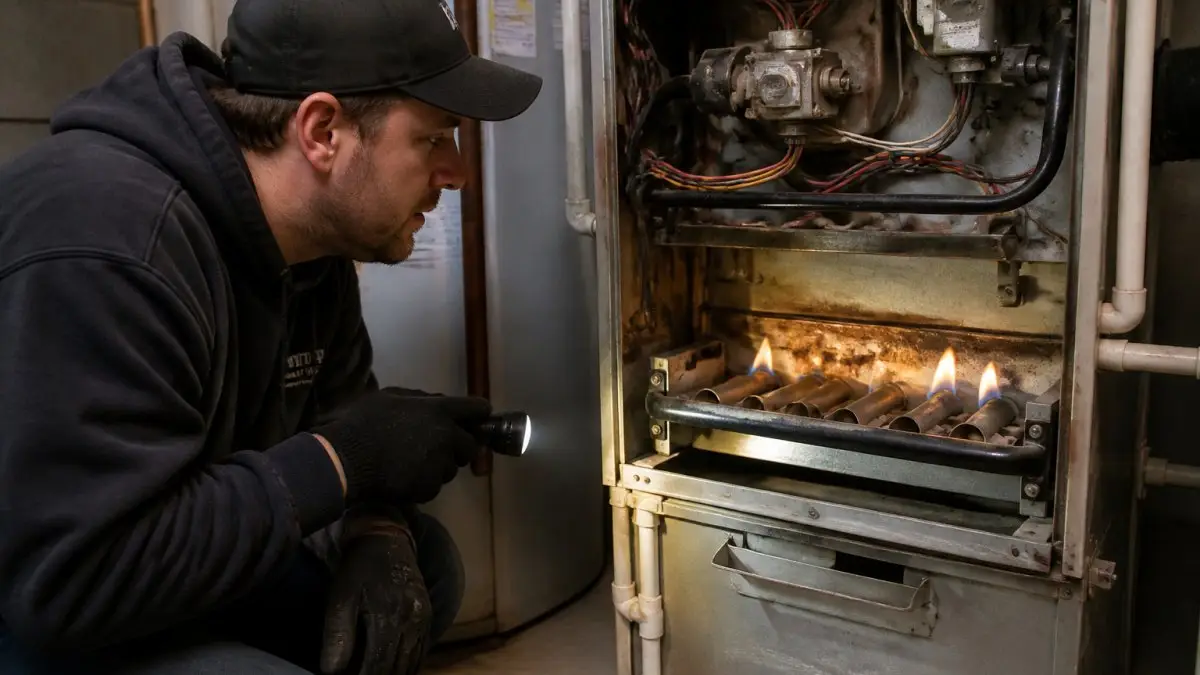
The burner flame can offer clues about what’s happening inside your furnace. A steady, blue flame is one possible burner appearance.
You might notice:
- Yellow or orange flames instead of blue
- Dancing or flickering flames that move erratically
- Flames that seem unstable or don’t hold a steady shape
- Flames that lift away from the burner or appear to float
If you can safely observe your burner through a small front window, watch for these changes.
Unusual Odors and Chemical Smells
A furnace odor may be noticeable even when there is no visible sign of a problem.
Common odors include:
- Metallic or sharp chemical smell – like burning metal or electrical burning
- Sweet or sickly odor – sometimes described as similar to formaldehyde
- Musty or smoky smell – different from normal furnace startup smells
A persistent chemical odor is abnormal. If the smell seems wrong, it probably is.
Soot Buildup and Discoloration
Soot is unburned fuel particles.
Look for:
- Black or gray powder around the burner area
- Discoloration on the furnace exterior or on the metal surfaces you can see
- Streaking or staining on the heat exchanger itself (if visible)
- Soot on the blower housing or other nearby components
Rust, Corrosion, and Physical Damage
Metal exposed to moisture and temperature changes can corrode over time.
Watch for:
- Visible rust spots on the heat exchanger surface
- Orange or brown discoloration that looks like oxidation
- Pitting or pinholes in the metal
- Seams that look separated or pulled apart
- Obvious cracks or splits you can see with a flashlight
Furnace Noises and Blower Issues
Unusual furnace noises can have different causes.
Listen for:
- Loud banging or popping when the furnace starts or cycles
- Rattling or vibration that seems excessive
- Whistling or hissing sounds
- Blower that doesn’t turn on or takes longer than usual to start
Watch for these warning signs that may indicate a cracked heat exchanger in your furnace.
| Warning Sign | What to Look or Listen For | Why It Matters |
|---|---|---|
| Burner flame changes | Yellow or orange flames, flickering, or flames lifting away | Blue flame is normal; color changes suggest combustion problems |
| Chemical odors | Metallic, sharp, sweet, or musty smells from furnace | Persistent unusual odors are abnormal and warrant inspection |
| Soot buildup | Black or gray powder around burner or heat exchanger | Indicates incomplete combustion or gas leakage |
| Rust and corrosion | Visible rust spots, pitting, or separated seams | Metal damage can allow combustion gases to escape |
| Furnace noises | Loud banging, rattling, whistling, or delayed blower start | Unusual sounds may signal internal damage or stress |
| Carbon monoxide alarm | Detector sounds or anyone has headache, dizziness, nausea | Treat as emergency; evacuate and call 911 immediately |
Carbon Monoxide Detector and Cracked Heat Exchanger Safety
Carbon monoxide is a colorless, odorless gas. Because you cannot see or smell it, a working carbon monoxide detector is an important safety measure, but it is not a substitute for inspection.
What to do if your carbon monoxide detector alarms
If an alarm sounds or anyone in the home has symptoms, treat it as an emergency. The sequence matters:
- Get everyone outside immediately. Do not stop to open windows, gather belongings, or investigate the furnace.
- Call 911 from outside or from a neighbor’s home. Tell them a carbon monoxide alarm has activated and whether anyone has symptoms.
- Do not re-enter until emergency responders or a qualified technician has cleared the home.
- Do not restart the furnace or any fuel-burning appliance until it has been inspected and cleared.
- Seek medical attention for anyone with headache, dizziness, nausea, confusion, or chest pain, even if symptoms seem mild and improve after leaving the house.
Symptoms of carbon monoxide exposure include headache, dizziness, nausea, chest pain, confusion, and flu-like symptoms that improve when you leave the home. If you suspect exposure, get medical care and do not wait to see whether symptoms pass.
Never use a furnace, oven, or gas range to heat a home, and never run a generator indoors or in an attached garage. These are common sources of carbon monoxide that have nothing to do with a cracked heat exchanger, but the response is the same: get out and call for help.
Where to place carbon monoxide detectors
Follow the detector manufacturer’s instructions for installation, testing, battery replacement, and end-of-life replacement.
What a detector can and cannot tell you
A carbon monoxide detector does not tell you where gas came from, and a normal reading does not prove your heat exchanger is intact.
A detector is not a diagnostic tool. If your detector has alarmed, or if you notice any of the warning signs in this guide, learn when to call an HVAC professional and schedule an inspection rather than relying on a detector reading alone.
How HVAC Technicians Inspect a Heat Exchanger
A visual inspection can be part of assessing a heat exchanger.
Visual Inspection
Combustion Analysis
Flame Pattern Observation
Pressure Testing
Thermal Imaging
What to Do If a Furnace Heat Exchanger Is Cracked
If a professional has confirmed a cracked heat exchanger, the next steps depend on the furnace’s age, condition, warranty status, and the available repair or replacement options.
First, shut the furnace off
If a professional confirms a crack, ask them what steps to take before using the furnace again. In a Minnesota cold snap, losing heat is uncomfortable. Never bring a fuel-burning appliance indoors.
Repair versus replacement: the real trade-offs
- Replace the heat exchanger only. This can make sense when the furnace is relatively young, otherwise in good condition, and the part is covered by warranty. The labor to access and swap a heat exchanger is substantial because the furnace must be largely disassembled, so the job is not as simple as swapping a filter.
- Replace the entire furnace. This often makes more sense when the furnace is older, has a history of repairs, or when the cost of the heat exchanger job approaches a meaningful share of a new furnace. A new furnace also comes with a new warranty and updated efficiency.
Factors that should shape your decision
- Furnace age. Ask the technician how the rest of the furnace looks, not just the failed part.
- Warranty coverage. Check your paperwork for warranty information.
- Labor versus part cost. Even a warranty-covered heat exchanger involves labor. Ask for the labor estimate in writing and compare it against a furnace replacement quote.
- Efficiency and operating cost. A new furnace may run more efficiently than an older unit, which affects long-term operating cost. Ask for the efficiency rating of any proposed replacement and compare it to your current unit.
- Second opinion. If you are uncertain, it is reasonable to ask for an explanation of the inspection findings before making a decision.
There is no single right answer for every home. Base your decision on the furnace’s age, warranty status, and overall condition.
Do not delay the decision
If a professional confirms a cracked heat exchanger, ask what steps to take before using the furnace again. Understand why regular HVAC maintenance helps catch heat exchanger problems early.
Schedule a Professional Furnace Inspection
Warning signs alone do not establish whether a heat exchanger is cracked. Book a professional furnace inspection with a trusted local HVAC company to have the concern assessed.
At Brass Tacks Plumbing, Heating & Cooling, our licensed technicians provide furnace services. We offer honest recommendations without sales pressure and communicate clearly.
If you’re noticing any of the warning signs described in this guide, contact us to schedule furnace service.
Frequently Asked Questions
What are the signs of a cracked furnace heat exchanger?
Possible warning signs include changes in burner flame appearance, unusual odors, soot or rust, and unusual furnace noises. These signs do not establish that a heat exchanger is cracked. A carbon monoxide alarm should be treated as an emergency.
Will a carbon monoxide detector alert you to a cracked heat exchanger?
A carbon monoxide detector can alert you to carbon monoxide, but it cannot confirm whether a heat exchanger is cracked. Follow the detector manufacturer’s instructions. If your CO detector alarms, leave the house and call emergency services.
How do HVAC technicians inspect a heat exchanger for cracks?
A professional assessment can help evaluate concerns about a heat exchanger. Ask the technician to explain the findings and what they do or do not establish.
What should I do if I suspect my furnace heat exchanger is cracked?
If your carbon monoxide detector alarms, leave the house and call emergency services. For concerns about your furnace, contact a licensed HVAC technician for an assessment. Do not attempt repairs yourself.
A cracked heat exchanger puts your family at risk. The warning signs are real, but they’re not always obvious. The safest path forward is a professional inspection that confirms what’s actually happening inside your furnace. Brass Tacks Plumbing, Heating & Cooling serves the Twin Cities West Metro with honest, upfront furnace diagnostics and repairs. We’ll tell you exactly what’s wrong and what needs to happen next, without pressure or guesswork.

