

Cost of Water Heater Installation: What Homeowners Pay

Table of Contents
- What Drives the Cost of Water Heater Installation?
- Tankless vs Tank Water Heater Cost: What Changes the Price
- Water Heater Replacement Labor Rates: What You’re Paying For
- Signs Your Water Heater Needs Replacing
- Average Lifespan of a Residential Water Heater
- Hidden Costs of Code Compliance and Permits
- How to Get an Accurate Installation Quote
- Frequently Asked Questions
Last Updated: September 21, 2026
What Drives the Cost of Water Heater Installation?
The biggest factors in the cost of water heater installation are the unit type, the size of your home, and what your existing plumbing and venting can support. A straight swap of a same-size tank in a Minnesota basement is a very different job than a tankless conversion that needs a new gas line and upgraded venting.
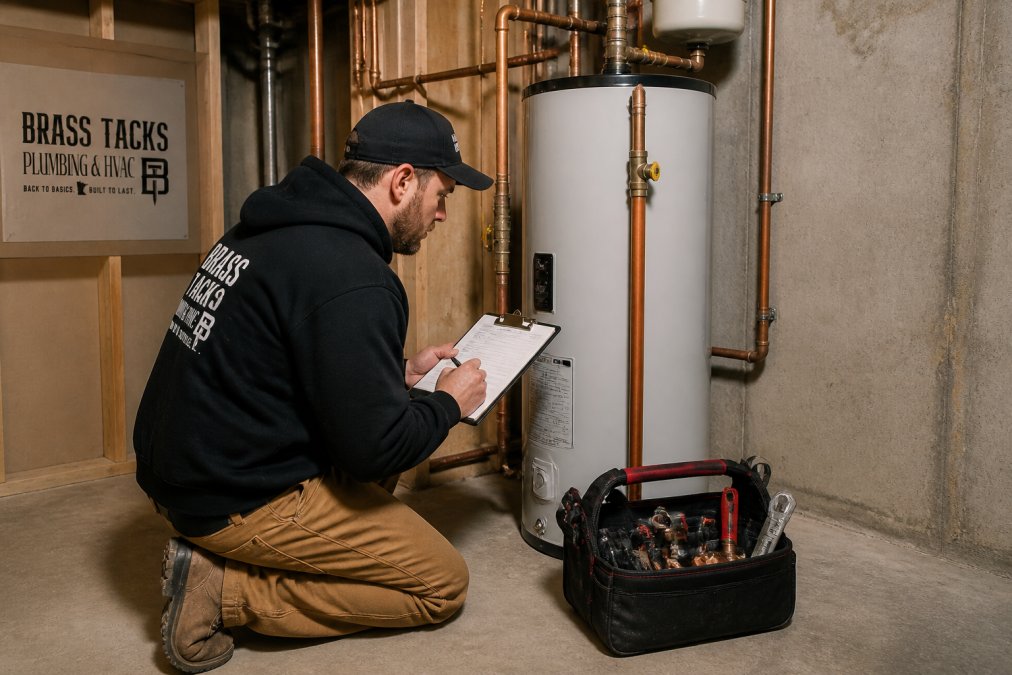
- Unit type and capacity. A standard tank and a tankless unit sit in different price brackets, and larger households need larger equipment.
- Fuel source. Gas and electric units carry different equipment costs and different installation requirements.
- Site conditions. Tight mechanical closets, finished basements, and older pipework all add labor time.
- Code and permit work. Venting, expansion control, and inspections are not optional, and they are not free.
- Disposal. The old unit has to come out and get hauled away.
The unit price is only part of the bill. Labor, permits, code upgrades, and disposal are where estimates diverge the most between contractors.
Tankless vs Tank Water Heater Cost: What Changes the Price
Tankless units almost always cost more upfront than tank models, and the gap comes from installation, not just the equipment. A tankless unit typically needs a larger gas supply, a different venting arrangement, and sometimes an electrical upgrade for the controls.
| Factor | Tank Water Heater | Tankless Water Heater |
|---|---|---|
| Upfront equipment cost | Lower | Higher |
| Installation complexity | Usually a direct swap | Often needs gas, vent, or electrical work |
| Space needed | Several square feet | Wall-mounted, minimal footprint |
| Hot water supply | Limited by tank size | Continuous, limited by flow rate |
| Maintenance | Flush and anode rod checks | Annual descaling recommended |
What makes a tankless conversion cost more than a tank swap?
The biggest cost driver in a tankless conversion is the gas line. Most tankless units need a higher BTU input than a standard tank, so the existing half-inch gas line often has to be replaced with a three-quarter-inch line, which can mean running new pipe from the meter.
How does regional cost variance affect the tank vs tankless decision?
National averages for water heater installation hide a lot of regional variance. Labor rates, permit fees, and code requirements differ by state and even by city. In the West Metro, labor rates tend to run higher than rural areas because of the cost of living and the demand for licensed plumbers.
What is the total cost of ownership for tank vs tankless?
The honest answer for most West Metro homes: if your current tank is the right size and your venting is sound, replacing like for like is the simplest path. If you are short on space, adding a bathroom, or tired of running out of hot water, tankless is worth pricing out, but budget for the gas, vent, and electrical work that a conversion often requires.
Water Heater Replacement Labor Rates: What You’re Paying For
Water heater replacement labor rates cover the hours a licensed plumber spends removing the old unit, prepping the space, making the connections, testing for leaks, and hauling the old tank away. A straightforward swap takes a few hours; a conversion or a job with corroded fittings can run most of a day.
A cheap installation that skips the expansion tank or vents a unit incorrectly can fail inspection, void the manufacturer’s warranty, and create a carbon monoxide risk. The savings disappear the moment something goes wrong.
Signs Your Water Heater Needs Replacing
Signs your water heater needs replacing include rusty or metallic-tasting hot water, visible corrosion or moisture around the tank base, rumbling noises from sediment buildup, and hot water that runs out faster than it used to. Any one of these is worth a professional look before the unit fails completely.
Watch for these:
- Puddles or damp spots under the tank
- Rust streaks on the tank body or fittings
- Hot water that smells or tastes metallic
- Popping or rumbling sounds during heating cycles
- Water that turns lukewarm sooner than it used to
Average Lifespan of a Residential Water Heater
The average lifespan of a residential water heater is roughly 8 to 12 years for a standard tank and closer to 20 years for a well-maintained tankless unit. Actual life depends on water quality, how hard the unit works, and whether it gets routine maintenance.
Having the tank flushed annually and the anode rod inspected every few years can meaningfully extend service life. It is one of the least expensive maintenance items a homeowner can schedule.
Hidden Costs of Code Compliance and Permits
Permits and code compliance are the costs homeowners most often overlook, and they are why two quotes for the “same” job can differ. A water heater installation generally requires a plumbing permit and an inspection, and the work has to meet current code even if the old unit was installed under older rules.
- Thermal expansion tank. Required in a closed plumbing system to handle pressure from thermal expansion.
- Venting corrections. Older installations sometimes vent in ways current code no longer allows.
- Gas line sizing. A larger or tankless unit may need a bigger supply line.
- Electrical circuit. Electric units may need a dedicated circuit that matches the new unit’s requirements.
- Shut-off valve and connectors. Old, corroded fittings get replaced while the system is open.
Why do code upgrades sometimes double the quote?
Code upgrades are not a single line item. They are a series of small requirements that add up. A thermal expansion tank is a modest part, but it requires a fitting and labor to install. A venting correction can mean running new pipe through a wall or roof. A gas line upgrade can mean running new pipe from the meter.
What does a water heater permit actually cover?
A water heater permit is not just a fee. It covers an inspection by the local authority having jurisdiction. The inspector checks that the installation meets current plumbing and mechanical codes, that the venting is correct, that the pressure relief valve is routed to a safe discharge point, and that the gas connections are leak-free. If the installation fails inspection, the contractor has to correct the work and schedule a re-inspection, which adds time and cost.
How does Minnesota code affect water heater installation?
Minnesota follows the Minnesota State Plumbing Code, which adopts the Uniform Plumbing Code with state amendments. The code requires a temperature and pressure relief valve, a discharge pipe that terminates within six inches of the floor or outside, and a thermal expansion tank on closed systems. Venting must meet the manufacturer’s instructions and the mechanical code. Gas connections must be leak-tested.
What should you ask about code compliance before you hire?
Ask whether the quote includes the permit and inspection fee, what happens if code upgrades are needed once work begins, and whether the contractor will pull the permit or expects you to. Ask whether the quote includes a thermal expansion tank if your system is closed, and whether the venting and gas line will be inspected and brought up to code.
Minnesota Department of Labor and Industry plumbing code information
How to Get an Accurate Installation Quote
An accurate water heater installation quote comes from an onsite look at your unit, your venting, your gas or electrical supply, and your available space. Phone estimates are useful for budgeting, but they cannot account for the conditions that drive the final number.
- Ask whether the quote includes the permit and inspection fee
- Confirm whether removal and disposal of the old unit is included
- Ask what happens if code upgrades are needed once work begins
- Confirm the unit’s capacity and first-hour rating match your household
- Ask about the warranty on both the equipment and the labor
- Get the scope in writing before any work starts
Frequently Asked Questions
What factors influence the total cost of a water heater installation?
Several factors affect the cost of water heater installation, including the type of unit (tank or tankless), fuel source (gas or electric), and the complexity of the job. Labor rates, permit fees, and any necessary upgrades to venting, gas lines, or electrical circuits also play a role. Site conditions like accessibility and existing plumbing can add to the total. Getting a detailed quote helps you understand what applies to your home.
How do gas and electric water heater installation costs differ?
Gas water heater installation often costs more due to venting requirements and potential gas line upgrades. Electric models typically have lower installation costs but may require a dedicated circuit or electrical panel upgrade. The difference in cost comes down to the infrastructure needed. A licensed plumber can assess your home and explain which option fits your setup and budget.
What is the average lifespan of a water heater?
The average lifespan of a residential water heater is typically 8 to 12 years for tank models and up to 20 years for tankless units, depending on maintenance and water quality. In Minnesota, hard water and cold incoming temperatures can shorten that lifespan. Regular flushing and anode rod checks can help extend it. If your unit is over 10 years old and showing signs of failure, replacement is often more cost-effective than repair.
Is it more cost-effective to repair or replace an aging water heater?
If your water heater is over 10 years old, repairs can be a temporary fix. A major repair, such as a failed tank or heating element, often costs a significant portion of a new unit. Replacement also improves energy efficiency and reliability. For homeowners in Plymouth or Minnetonka, where cold winters put extra demand on water heaters, upgrading to a new unit can lower monthly bills and prevent unexpected breakdowns.
What should I look for in a professional plumbing quote?
A professional plumbing quote should itemize the unit cost, labor, permit fees, and any additional parts or upgrades. It should also specify the warranty on both the equipment and the installation. Ask about disposal of the old unit and whether the quote includes code compliance updates. A clear, upfront quote from a licensed contractor helps you avoid surprises and compare options fairly.
