Affordable Plumber Near Me: How to Find and Hire One
Table of Contents
- How to Find an Affordable Plumber Near Me
- What to Ask for in a Plumbing Repair Estimate
- Questions to Ask a Plumber Before Hiring
- How Plumber Reviews and Ratings Help You Choose
- Frozen Pipe Repair: When to Call and What to Do First
- Emergency and 24/7 Plumbing Availability
- Ways to Reduce Plumbing Costs Safely
- Frequently Asked Questions
Last Updated: October 17, 2026
How to Find an Affordable Plumber Near Me
Finding an affordable plumber near me starts with knowing what “affordable” actually means. It rarely means the lowest number on the invoice.
The Minnesota climate raises the stakes. A supply line that freezes in January can split and flood a basement within hours. Choosing on price alone is how homeowners end up paying twice.
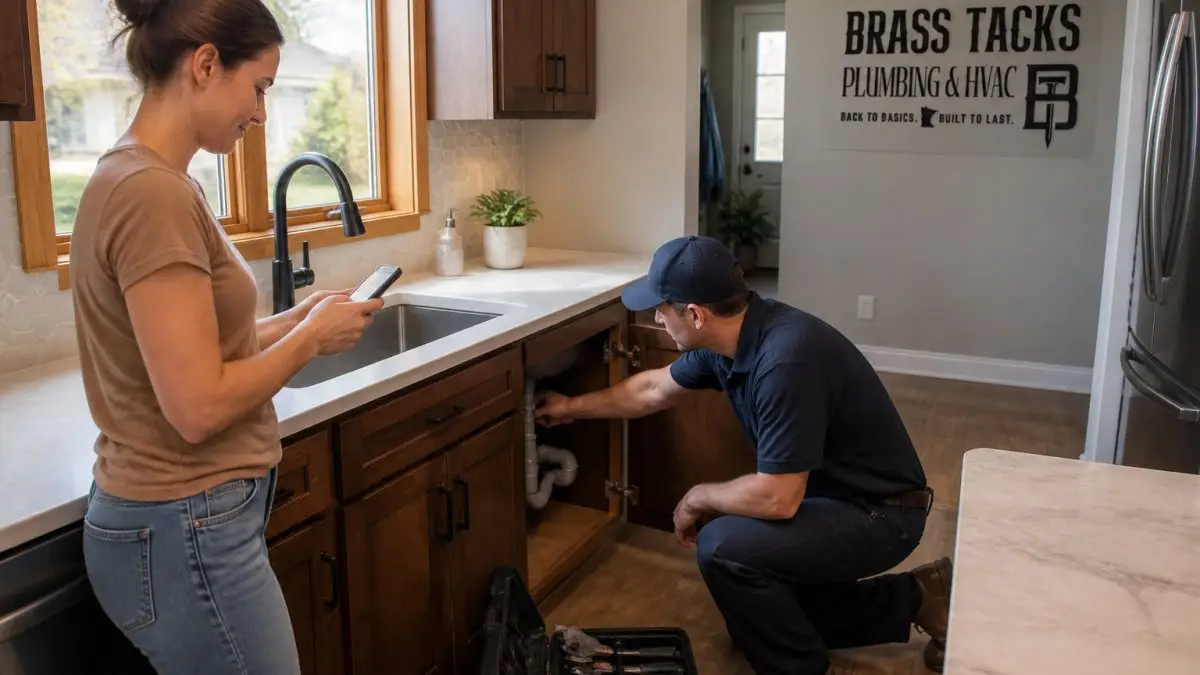
Start With Local Plumbers Who Serve Your Area
Local matters more than most homeowners realize. A plumber who works your suburb every week knows the housing stock: the 1970s copper and galvanized lines in older Plymouth neighborhoods, the slab-on-grade layouts in parts of Maple Grove, and the well and water softener setups on the western metro edges.
Start your search with companies whose service area explicitly lists your city. Then confirm three things before you call:
- A physical local address and a real service area page
- A phone number answered by a person, not a national call center
- Clear statements about licensing and insurance
A common mistake is hiring from a lead-generation site where the “local” plumber is a subcontractor from two counties away. The price looks competitive because the overhead is low. The accountability is low too.
Check Licensing and Insurance Before You Call
Licensing and insurance are the two checks that separate a professional from a gamble. In Minnesota, plumbing work is regulated at the state level, and you can verify a contractor’s license through the Minnesota Department of Labor and Industry license lookup before anyone sets foot in your home.
Ask two direct questions when you call:
- “What is your license number, and who holds the qualifying license?”
- “Can you send a certificate of insurance showing general liability and workers’ compensation?”
A legitimate company answers both without hesitation. If the person on the phone dodges, that’s your answer.
Hiring an uninsured plumber seems like a way to save money until something goes wrong. If an uninsured worker damages a supply line and floods your basement, your homeowner’s policy may deny the claim, and you’re left covering the repair yourself.
What to Ask for in a Plumbing Repair Estimate
A plumbing repair estimate is a written breakdown of the work, parts, and labor needed to fix a specific problem, given before work begins.
A useful estimate answers five questions: What is broken? What will be done to fix it? What parts are included? What could change the price once work starts?
That fourth question matters most.
What a Written Estimate Should Include
Use this as a checklist when an estimate lands in your inbox. If a line is missing, ask about it before you sign.
- Company identification: Legal business name, license number, and a phone number you can call back.
- Scope of work: The specific fixture, line, or appliance being repaired, and what the fix involves.
- Parts: Brand, model, or grade where it matters, especially for water heaters, faucets, and valves.
An estimate that is silent on permits, disposal, and exclusions is not cheaper. It is incomplete, and the missing lines reappear as charges later.
Comparing Quotes and Spotting Hidden Fees
Two estimates for the same job can look identical on the surface and differ wildly in what they cover. Compare them line by line, not by the bottom number.
Watch for these common gaps:
- Diagnostic fee treatment: Is the service call fee credited toward the repair if you proceed?
- Parts markup: Is the part listed at a flat price, or cost plus a percentage?
- Disposal and cleanup: Is hauling away the old water heater or debris included?
A simple three-column worksheet (line item, Company A, Company B) makes gaps obvious. If one column has blanks where the other has entries, have that conversation before hiring.
Ask each company to quote the same scope in writing, then compare the line items side by side. When one estimate is dramatically lower, the missing line is usually the reason, not efficiency. Ask the lower bidder to confirm in writing that permits, disposal, and cleanup are included.
How to Read a Change Order
Even a careful estimate can change once a wall is open or a fixture is removed. A change order is the written approval for added work and added cost. Ask how the company handles it before work starts.
A fair change order names the discovery, the added work, the added cost, and the effect on the timeline, and it gets your approval before work continues.
When to Walk Away From an Estimate
Some estimates are not worth negotiating. Walk away when the quote is verbal only, when the company cannot produce a license number, when the scope is vague enough that any price could be justified, or when the estimate pressures you to decide on the spot. A company confident in its work will give you time to compare.
Questions to Ask a Plumber Before Hiring
The right questions to ask a plumber before hiring reveal how the company operates before money changes hands. Ask them on the phone and listen for specifics, not reassurances.
- “Will you explain the problem and show me what you find before starting work?”
- “Is the price firm once you’ve diagnosed it, or can it change mid-job?”
- “Who actually does the work: your employees or subcontractors?”
- “Do you offer a warranty on parts and labor, and what does it cover?”
- “How do you protect floors and clean up afterward?”
- “What’s your availability for emergencies, and is there an after-hours charge?”
- “Can you give me a written estimate before I commit?”
Vague answers to any of these are a signal. A company confident in its process will explain it plainly.
How Plumber Reviews and Ratings Help You Choose
Plumber reviews and ratings are useful, but only when you read them the right way. A wall of five-star ratings with no detail tells you little. The reviews worth your time describe a specific job, a specific problem, and how the company handled it.
Read for patterns, not scores:
- Do multiple reviews mention the same strength, like clear explanations or clean work areas?
- Do negative reviews get a substantive response from the owner?
- Are complaints about price, or about surprise charges after the fact?
One angry review is noise. Three reviews describing the same surprise fee is a pattern.
Sort reviews by newest and read the two-star and three-star reviews first. They’re usually the most detailed and the most honest about how a company behaves when something goes wrong.
Frozen Pipe Repair: When to Call and What to Do First
Frozen pipe repair is urgent when water stops flowing or a pipe bulges, and it’s an emergency the moment a pipe splits. Minnesota winters make this the most common after-hours call we see.
Here’s how to triage it before anyone arrives:
- No water from one fixture: Likely a frozen section nearby. Shut off the supply to that line if you can reach it, open the faucet, and warm the area gently with a hair dryer.
- No water from multiple fixtures: The freeze is probably in a main line. Call a plumber.
- Visible bulge, frost, or a hiss: Shut off the main water valve immediately and call for emergency service. A split is imminent or already happening.
Never use an open flame, a torch, or a heat gun on a pipe. Never pour boiling water on a frozen line. Both can crack the pipe or start a fire.
The most expensive mistake with a frozen pipe is leaving for work while a space heater runs in the basement. If the pipe thaws and splits while you’re gone, the damage compounds for hours. Stay home or shut the water off before you leave.
Emergency and 24/7 Plumbing Availability
Emergency and 24/7 plumbing availability separates companies that answer the phone at 2 a.m. from companies that route you to voicemail.
When you call a company, ask three things: Is a live person available after hours? Is there an after-hours surcharge, and how is it calculated?
Fast response matters most for burst pipes, sewage backups, and no-heat situations in winter.
Ways to Reduce Plumbing Costs Safely
Reducing plumbing costs safely comes down to prevention, timing, and knowing the line between a homeowner task and a job for a licensed plumber. The goal is to spend less over the life of the system, not less on this one invoice.
What Homeowners Can Safely Do Themselves
Some plumbing tasks are low risk and worth doing. Others look simple and cause expensive damage. Here is a practical split.
Safe for most homeowners:
- Replace a showerhead, faucet aerator, or toilet flapper.
- Test the main water shutoff valve a few times a year so it does not seize.
- Know where the main shutoff is and label it for everyone in the house.
Stop and call a plumber:
- Anything behind a wall, under a slab, or inside a crawlspace.
- Gas line work of any kind.
- Water heater repairs involving the tank, gas valve, or electrical elements.
A common pattern is a homeowner who saves on a small repair and pays for water damage later. The safe rule: if the fix requires opening a wall, touching gas, or working on the water heater tank, call a licensed plumber.
Prevent the Expensive Failures
Prevention is the cheapest plumbing work you will ever do. In a Minnesota winter, a few habits matter more than any coupon.
- Insulate pipes in exterior walls and crawl spaces before the first hard freeze. Pay attention to pipes along the rim joist and in unheated garages.
- Disconnect garden hoses before the first freeze so the outdoor spigot can drain.
- Have the water heater flushed on a maintenance schedule. Sediment buildup shortens tank life and raises energy use.
Time Non-Urgent Work
Schedule planned repairs during normal business hours and bundle small fixes into one visit instead of paying multiple service call fees. If a water heater is aging but still working, get a written estimate and compare repair against replacement before it fails on a holiday weekend.
Ask About the Fix, Not Just the Price
When a plumber recommends replacement, ask what a repair would cost and how long it would last. Sometimes replacement is right. Sometimes a repair buys years. A good plumber will explain both and let you decide.
Check for Rebates and Financing
Utility rebates and manufacturer promotions on high-efficiency equipment change often, so ask what is currently available rather than assuming. Your utility provider publishes current programs, and a licensed contractor can tell you which ones apply to your equipment.
Get the Warranty in Writing
A repair backed by a written work guarantee is cheaper over time than a bargain repair with no recourse. Ask what the warranty covers, how long it lasts, and whether it covers labor as well as parts.
| Situation | Best Move | Why It Saves Money |
|---|---|---|
| Slow drain, one fixture | Schedule during normal hours | Avoids after-hours surcharge |
| No water, multiple fixtures | Call immediately | Prevents a split pipe |
| Water spraying or pooling | Shut off main, then call | Limits water damage |
| Aging water heater, still working | Get a written estimate, compare repair vs. replace | Avoids emergency replacement pricing |
| Small leaks and drips | Bundle into one visit | One service call instead of several |
| Outdoor spigot before freeze | Disconnect hose, drain line | Prevents a split pipe inside the wall |
The most expensive savings are the ones that create a bigger repair. Never use an open flame to thaw a pipe, never patch a gas line yourself, and never ignore a water stain on a ceiling. Those three shortcuts account for a large share of the emergency calls we see after the first cold snap.
At Brass Tacks Plumbing, Heating & Cooling, we quote the work in writing before we start and explain what we found before we charge for it. You can see current pricing on our water heater replacement page or reach us through our plumbing services page.
Frequently Asked Questions
How do I find an affordable plumber near me?
Start by searching for local plumbers who serve your specific suburb, then check that each one is licensed and insured. Look at plumber reviews and ratings on Google and the Better Business Bureau, and ask for a written plumbing repair estimate before any work begins. Comparing two or three quotes helps you spot outlier pricing. Ask directly whether the quote includes the service call fee, parts, and labor, so the final bill matches what you were told.
What should I ask a plumber before hiring?
Ask whether they are licensed and insured, how long they have worked in your area, and whether the estimate is flat-rate or hourly. Request the total cost in writing, including the service call fee and any diagnostic charge. Ask who performs the work and whether permits are needed. Also ask about their warranty on parts and labor, and how they handle unexpected problems found mid-job. Clear answers to these questions separate organized shops from ones that surprise you at billing.
When should I call a plumber for a frozen pipe?
Call a plumber if you can see visible frost on a pipe, hear banging or whistling, or have no water at one or more fixtures during a cold snap. If a pipe has already burst, shut off the main water valve and call for emergency plumbing service right away. Never use an open flame to thaw a pipe. A licensed plumber can thaw it safely and check for cracks that only show up after pressure returns.
Can I get a plumbing repair estimate over the phone?
Many shops can give a ballpark range over the phone for common jobs like a running toilet or a dripping faucet, but a firm plumbing repair estimate usually requires an on-site look. Ask whether the service call fee is credited toward the repair if you approve the work. Get the estimate in writing before anyone starts, and confirm what is included so you can compare quotes fairly.
